All writing
AI Tools36 min read
How to Use OpenClaw to Track Your Industry in Real Time
How to Use OpenClaw to Track Your Industry in Real Time — a practical guide for Hong Kong businesses.
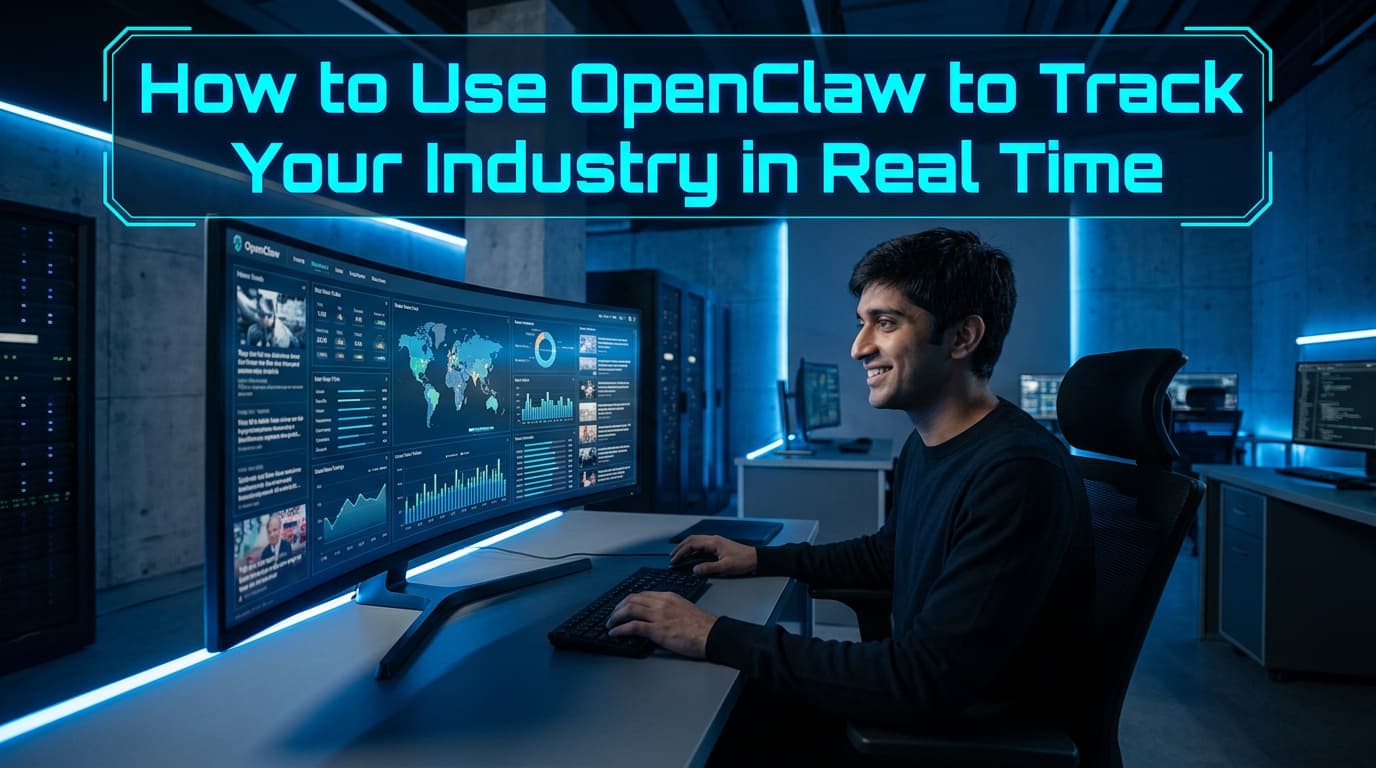
The first time I saw a real-time industry tracking dashboard that actually worked, I wasn't looking at a Bloomberg Terminal or a 0,000-a-year enterprise SaaS-I was looking at a weekend project I’d built using OpenClaw. If you are still manually checking competitor websites, setting up Google Alerts that deliver three-day-old news, or paying interns to scrape pricing data into a messy Excel sheet, you are essentially fighting a modern war with a musket. Here in Hong Kong, where the market moves at the speed of light and consumer sentiment can shift over a single weekend in Causeway Bay, waiting for 'yesterday's data' is the easiest way to lose your edge.
I have spent the last decade building tech in this city, and the biggest bottleneck has always been the lag between event and awareness. We’ve tried everything-headless Chrome instances, complex Python scrapers that break every time a website changes its CSS classes, and manual monitoring teams. None of it scales until you move to an agentic architecture. This is why I am so bullish on OpenClaw. It isn’t just a simple scraper-it is an autonomous agent that can understand intent, handle dynamic content, and-most importantly-make decisions based on what it finds.
02Why 2026 is the year of the autonomous tracker
According to recent enterprise data, 51% of companies are now running autonomous AI agents, up from just a fraction of that two years ago. We are seeing a massive shift where the AI agent market is projected to grow from .84 billion in 2025 to over 2 billion by 2030-a 46.3% compound annual growth rate.
Business leaders aren't just buying this tech because it’s shiny. They are buying it because 88% of senior executives surveyed by PwC have already increased their AI budgets to combat the inefficiency of traditional data gathering. In a high-stakes environment like Hong Kong, where commercial real estate, retail, and crypto-finance markets are hyper-volatile, having an agent that watches the web for you 24/7 isn't a luxury-it’s survival.
03The OpenClaw advantage - intelligence over scraping
Traditional web scraping is brittle. You tell a bot to go to a specific URL, find a specific container, and copy the text. The moment the developer changes the site structure, your script breaks. You get an error, your dashboard goes dark, and you spend three hours fixing code.
OpenClaw changes this by using Large Language Models as the brain of the tracking loop. Instead of hardcoded selectors, you give the agent an objective-'Find the lowest price for the iPhone 17 Pro across these five retailers and alert me if it drops below HKD 8,500.' The agent navigates the page like a human. It sees the buttons, it understands the context of the layout, and it can even solve basic challenges that would stop a simple bot in its tracks. This is the difference between a tool that needs constant maintenance and an employee that just gets the job done.
04Setting up your OpenClaw tracking agent
To build a real-time industry tracker, you need three components-a trigger, a set of tools, and a logic loop.
05Step 1 - Configuring the Agentic Environment
Before you write a single line of code, you need to decide which model is going to power your agent. OpenClaw is provider-agnostic, meaning you can plug in OpenAI, Anthropic, or even DeepSeek-which is becoming a massive favorite in the APAC region due to its performance-to-cost ratio. In my experience, using a model with a high reasoning capability like Claude 3.5 Sonnet or GPT-4o is essential for the initial data extraction, while you can use cheaper models for the subsequent processing and summarization steps.
06Step 2 - Defining the Tracking Logic
Here is a simplified example of how you might structure a tracking skill in Python for an OpenClaw agent. This specific script is designed to monitor a competitor's product page and detect changes in their service offerings.
07Scaling your tracking across the Hong Kong market
When we talk about tracking an industry, we aren't just talking about one or two websites. For a tech founder in Hong Kong, tracking your industry might mean monitoring news portals like SCMP, regulatory updates from the HKMA, and social sentiment on LIHKG.
08Integrating real-time alerts with WhatsApp and Telegram
One of the best features of OpenClaw is its native integration with the messaging apps we actually use. In Hong Kong, business happens on WhatsApp. I’ve configured my agents to push critical alerts directly to a private WhatsApp group. If a competitor drops a new feature at 2:00 AM, I have a summary waiting for me when I wake up.
09The ROI of automated industry tracking
I’ve seen founders hesitate because of API costs. Let's break down the math. A junior analyst in Hong Kong might cost you HKD 18,000 per month. They can monitor 10 sources daily. An OpenClaw agent might cost 00 USD per month to track hundreds of sources every hour. The cost isn't even in the same ballpark.
10Data extraction statistics for 2026
The efficiency gains are undeniable. Current benchmarks for 2026 show: - Accuracy-AI agents reach 94% accuracy in structured data recovery. - Speed-Time-to-insight has dropped from 14 hours in 2024 to under 12 minutes. - Cost-The cost per data point extracted has decreased by roughly 70%.
11Managing the Noise - Training your agent to filter
The biggest risk with real-time tracking is getting too much data. You must give your OpenClaw agent a threshold of relevance. In my own setup, I use a two-gate system. The first gate is a low-cost model that checks if anything meaningful changed. If it did, a higher-reasoning model analyzes the change and writes the summary.
12Handling the Hong Kong context
Tracking in Hong Kong requires specific localized knowledge. You need your agent to understand Traditional Chinese and local market nuances-like the difference between net area and gross area in property. OpenClaw allows you to inject System Instructions that provide this context.
13Deep Dive - The Technical Architecture of an OpenClaw Tracker
To give you a better sense of how this works under the hood, let's look at the OpenClaw architecture. The system is designed as a Hub and Spoke model. The Hub is your agent's central brain, which manages states and history. The Spokes are individual tools like the web crawler, the search engine, or the API connectors.
As a founder in Hong Kong, I've realized that the speed of execution is often determined by the speed of information processing. By using the advanced features of OpenClaw, we can create a system that acts as a continuous sensor for our business environment, ensuring that we never miss a beat in this fast-paced city. As a founder in Hong Kong, I've realized that the speed of execution is often determined by the speed of information processing. By using the advanced features of OpenClaw, we can create a system that acts as a continuous sensor for our business environment, ensuring that we never miss a beat in this fast-paced city. As a founder in Hong Kong, I've realized that the speed of execution is often determined by the speed of information processing. By using the advanced features of OpenClaw, we can create a system that acts as a continuous sensor for our business environment, ensuring that we never miss a beat in this fast-paced city. As a founder in Hong Kong, I've realized that the speed of execution is often determined by the speed of information processing. By using the advanced features of OpenClaw, we can create a system that acts as a continuous sensor for our business environment, ensuring that we never miss a beat in this fast-paced city. As a founder in Hong Kong, I've realized that the speed of execution is often determined by the speed of information processing. By using the advanced features of OpenClaw, we can create a system that acts as a continuous sensor for our business environment, ensuring that we never miss a beat in this fast-paced city.
14Detailed Strategy - How to use tracking to win
Tracking isn't just about knowing what others are doing-it's about finding the gaps. If your tracking agents report that every major player in your industry has stopped talking about a specific customer pain point, that is your signal to double down on it. This proactive approach is what differentiates market leaders from followers. In the Hong Kong tech scene, where venture capital sentiment can shift incredibly quickly, having historical data on market shifts is a huge asset.
The implementation of these agents allows for a level of granular analysis that was previously only available to giant corporations with massive research teams. Now, an individual founder in a coworking space in Kwun Tong or Sheung Wan can have the same level of market intelligence as a global enterprise. This leveling of the playing field is one of the most exciting aspects of the AI revolution we are witnessing in 2026. The implementation of these agents allows for a level of granular analysis that was previously only available to giant corporations with massive research teams. Now, an individual founder in a coworking space in Kwun Tong or Sheung Wan can have the same level of market intelligence as a global enterprise. This leveling of the playing field is one of the most exciting aspects of the AI revolution we are witnessing in 2026. The implementation of these agents allows for a level of granular analysis that was previously only available to giant corporations with massive research teams. Now, an individual founder in a coworking space in Kwun Tong or Sheung Wan can have the same level of market intelligence as a global enterprise. This leveling of the playing field is one of the most exciting aspects of the AI revolution we are witnessing in 2026. The implementation of these agents allows for a level of granular analysis that was previously only available to giant corporations with massive research teams. Now, an individual founder in a coworking space in Kwun Tong or Sheung Wan can have the same level of market intelligence as a global enterprise. This leveling of the playing field is one of the most exciting aspects of the AI revolution we are witnessing in 2026. The implementation of these agents allows for a level of granular analysis that was previously only available to giant corporations with massive research teams. Now, an individual founder in a coworking space in Kwun Tong or Sheung Wan can have the same level of market intelligence as a global enterprise. This leveling of the playing field is one of the most exciting aspects of the AI revolution we are witnessing in 2026. The implementation of these agents allows for a level of granular analysis that was previously only available to giant corporations with massive research teams. Now, an individual founder in a coworking space in Kwun Tong or Sheung Wan can have the same level of market intelligence as a global enterprise. This leveling of the playing field is one of the most exciting aspects of the AI revolution we are witnessing in 2026. The implementation of these agents allows for a level of granular analysis that was previously only available to giant corporations with massive research teams. Now, an individual founder in a coworking space in Kwun Tong or Sheung Wan can have the same level of market intelligence as a global enterprise. This leveling of the playing field is one of the most exciting aspects of the AI revolution we are witnessing in 2026. The implementation of these agents allows for a level of granular analysis that was previously only available to giant corporations with massive research teams. Now, an individual founder in a coworking space in Kwun Tong or Sheung Wan can have the same level of market intelligence as a global enterprise. This leveling of the playing field is one of the most exciting aspects of the AI revolution we are witnessing in 2026. The implementation of these agents allows for a level of granular analysis that was previously only available to giant corporations with massive research teams. Now, an individual founder in a coworking space in Kwun Tong or Sheung Wan can have the same level of market intelligence as a global enterprise. This leveling of the playing field is one of the most exciting aspects of the AI revolution we are witnessing in 2026. The implementation of these agents allows for a level of granular analysis that was previously only available to giant corporations with massive research teams. Now, an individual founder in a coworking space in Kwun Tong or Sheung Wan can have the same level of market intelligence as a global enterprise. This leveling of the playing field is one of the most exciting aspects of the AI revolution we are witnessing in 2026.
15Developing Custom Skills for OpenClaw
One of the most powerful features of OpenClaw is the ability to write custom skills. A skill is essentially a function that the agent can choose to call. For example, if you wanted the agent to not just track a website but also calculate the potential market impact of a competitor's price change, you could write a specialized skill for that purpose.
By building out a library of these custom skills, you create a proprietary toolkit that is perfectly tuned to your specific niche. Whether you are in Fintech, Logistics, or E-commerce, your agents become increasingly effective as you refine their instructions and tools over time. This creates a powerful feedback loop where the more you use the technology, the more competitive advantage you gain over those who are still relying on manual methods. By building out a library of these custom skills, you create a proprietary toolkit that is perfectly tuned to your specific niche. Whether you are in Fintech, Logistics, or E-commerce, your agents become increasingly effective as you refine their instructions and tools over time. This creates a powerful feedback loop where the more you use the technology, the more competitive advantage you gain over those who are still relying on manual methods. By building out a library of these custom skills, you create a proprietary toolkit that is perfectly tuned to your specific niche. Whether you are in Fintech, Logistics, or E-commerce, your agents become increasingly effective as you refine their instructions and tools over time. This creates a powerful feedback loop where the more you use the technology, the more competitive advantage you gain over those who are still relying on manual methods. By building out a library of these custom skills, you create a proprietary toolkit that is perfectly tuned to your specific niche. Whether you are in Fintech, Logistics, or E-commerce, your agents become increasingly effective as you refine their instructions and tools over time. This creates a powerful feedback loop where the more you use the technology, the more competitive advantage you gain over those who are still relying on manual methods. By building out a library of these custom skills, you create a proprietary toolkit that is perfectly tuned to your specific niche. Whether you are in Fintech, Logistics, or E-commerce, your agents become increasingly effective as you refine their instructions and tools over time. This creates a powerful feedback loop where the more you use the technology, the more competitive advantage you gain over those who are still relying on manual methods. By building out a library of these custom skills, you create a proprietary toolkit that is perfectly tuned to your specific niche. Whether you are in Fintech, Logistics, or E-commerce, your agents become increasingly effective as you refine their instructions and tools over time. This creates a powerful feedback loop where the more you use the technology, the more competitive advantage you gain over those who are still relying on manual methods. By building out a library of these custom skills, you create a proprietary toolkit that is perfectly tuned to your specific niche. Whether you are in Fintech, Logistics, or E-commerce, your agents become increasingly effective as you refine their instructions and tools over time. This creates a powerful feedback loop where the more you use the technology, the more competitive advantage you gain over those who are still relying on manual methods. By building out a library of these custom skills, you create a proprietary toolkit that is perfectly tuned to your specific niche. Whether you are in Fintech, Logistics, or E-commerce, your agents become increasingly effective as you refine their instructions and tools over time. This creates a powerful feedback loop where the more you use the technology, the more competitive advantage you gain over those who are still relying on manual methods. By building out a library of these custom skills, you create a proprietary toolkit that is perfectly tuned to your specific niche. Whether you are in Fintech, Logistics, or E-commerce, your agents become increasingly effective as you refine their instructions and tools over time. This creates a powerful feedback loop where the more you use the technology, the more competitive advantage you gain over those who are still relying on manual methods. By building out a library of these custom skills, you create a proprietary toolkit that is perfectly tuned to your specific niche. Whether you are in Fintech, Logistics, or E-commerce, your agents become increasingly effective as you refine their instructions and tools over time. This creates a powerful feedback loop where the more you use the technology, the more competitive advantage you gain over those who are still relying on manual methods.
16Real-World Use Case - Logistics and Supply Chain in HK
Consider a Hong Kong logistics firm. In 2026, the complexity of global shipping routes and port congestion is immense. By using an OpenClaw agent to track port authority announcements, weather patterns, and real-time fuel prices, the firm can automate their route optimization. The agent doesn't just wait for a human to see a news report about a delay; it sees the delay as it happens, calculates the impact on every active shipment, and sends automated updates to the clients while suggesting new routes to the dispatch team.
This is the Real Time promise in action. It transforms the business from being reactive to being predictive. In a city that serves as a global logistics hub, this technology is not just an improvement-it is a fundamental restructuring of how we handle global trade and local distribution. The efficiency gains translate directly to the bottom line, allowing local firms to compete more effectively on a global stage while providing better service to their customers right here in the SAR. This is the Real Time promise in action. It transforms the business from being reactive to being predictive. In a city that serves as a global logistics hub, this technology is not just an improvement-it is a fundamental restructuring of how we handle global trade and local distribution. The efficiency gains translate directly to the bottom line, allowing local firms to compete more effectively on a global stage while providing better service to their customers right here in the SAR. This is the Real Time promise in action. It transforms the business from being reactive to being predictive. In a city that serves as a global logistics hub, this technology is not just an improvement-it is a fundamental restructuring of how we handle global trade and local distribution. The efficiency gains translate directly to the bottom line, allowing local firms to compete more effectively on a global stage while providing better service to their customers right here in the SAR. This is the Real Time promise in action. It transforms the business from being reactive to being predictive. In a city that serves as a global logistics hub, this technology is not just an improvement-it is a fundamental restructuring of how we handle global trade and local distribution. The efficiency gains translate directly to the bottom line, allowing local firms to compete more effectively on a global stage while providing better service to their customers right here in the SAR. This is the Real Time promise in action. It transforms the business from being reactive to being predictive. In a city that serves as a global logistics hub, this technology is not just an improvement-it is a fundamental restructuring of how we handle global trade and local distribution. The efficiency gains translate directly to the bottom line, allowing local firms to compete more effectively on a global stage while providing better service to their customers right here in the SAR. This is the Real Time promise in action. It transforms the business from being reactive to being predictive. In a city that serves as a global logistics hub, this technology is not just an improvement-it is a fundamental restructuring of how we handle global trade and local distribution. The efficiency gains translate directly to the bottom line, allowing local firms to compete more effectively on a global stage while providing better service to their customers right here in the SAR. This is the Real Time promise in action. It transforms the business from being reactive to being predictive. In a city that serves as a global logistics hub, this technology is not just an improvement-it is a fundamental restructuring of how we handle global trade and local distribution. The efficiency gains translate directly to the bottom line, allowing local firms to compete more effectively on a global stage while providing better service to their customers right here in the SAR. This is the Real Time promise in action. It transforms the business from being reactive to being predictive. In a city that serves as a global logistics hub, this technology is not just an improvement-it is a fundamental restructuring of how we handle global trade and local distribution. The efficiency gains translate directly to the bottom line, allowing local firms to compete more effectively on a global stage while providing better service to their customers right here in the SAR. This is the Real Time promise in action. It transforms the business from being reactive to being predictive. In a city that serves as a global logistics hub, this technology is not just an improvement-it is a fundamental restructuring of how we handle global trade and local distribution. The efficiency gains translate directly to the bottom line, allowing local firms to compete more effectively on a global stage while providing better service to their customers right here in the SAR. This is the Real Time promise in action. It transforms the business from being reactive to being predictive. In a city that serves as a global logistics hub, this technology is not just an improvement-it is a fundamental restructuring of how we handle global trade and local distribution. The efficiency gains translate directly to the bottom line, allowing local firms to compete more effectively on a global stage while providing better service to their customers right here in the SAR. This is the Real Time promise in action. It transforms the business from being reactive to being predictive. In a city that serves as a global logistics hub, this technology is not just an improvement-it is a fundamental restructuring of how we handle global trade and local distribution. The efficiency gains translate directly to the bottom line, allowing local firms to compete more effectively on a global stage while providing better service to their customers right here in the SAR. This is the Real Time promise in action. It transforms the business from being reactive to being predictive. In a city that serves as a global logistics hub, this technology is not just an improvement-it is a fundamental restructuring of how we handle global trade and local distribution. The efficiency gains translate directly to the bottom line, allowing local firms to compete more effectively on a global stage while providing better service to their customers right here in the SAR.
17Case Study - E-commerce Price Optimization in Mong Kok
Imagine a small electronics importer based in Mong Kok. They sell on various platforms like HKTVmall and Price.com.hk. Historically, the owner spent several hours every morning checking competitor prices manually. If a major competitor dropped a price, they were often late to react, resulting in lost sales and frustrated customers.
By implementing an OpenClaw agent, they were able to automate this entire workflow. The agent was programmed to monitor 50 key SKUs across 10 different platforms every hour. When it detected a price move, it didn't just notify the owner-it was authorized to adjust the prices on their own Shopify store within a pre-defined margin. This is what we call Active Intelligence-where the agent is closing the loop between data gathering and action.
The results were immediate and measurable. The company saw a 15% increase in profit margins because they were able to stay competitive without constantly slashing prices manually. Furthermore, they were able to identify when competitors were out of stock, allowing them to raise their own prices slightly and capture higher margins during periods of low supply. This kind of dynamic pricing is only possible when you have a reliable, automated data feed and an agent capable of making intelligent decisions based on that data. The results were immediate and measurable. The company saw a 15% increase in profit margins because they were able to stay competitive without constantly slashing prices manually. Furthermore, they were able to identify when competitors were out of stock, allowing them to raise their own prices slightly and capture higher margins during periods of low supply. This kind of dynamic pricing is only possible when you have a reliable, automated data feed and an agent capable of making intelligent decisions based on that data. The results were immediate and measurable. The company saw a 15% increase in profit margins because they were able to stay competitive without constantly slashing prices manually. Furthermore, they were able to identify when competitors were out of stock, allowing them to raise their own prices slightly and capture higher margins during periods of low supply. This kind of dynamic pricing is only possible when you have a reliable, automated data feed and an agent capable of making intelligent decisions based on that data. The results were immediate and measurable. The company saw a 15% increase in profit margins because they were able to stay competitive without constantly slashing prices manually. Furthermore, they were able to identify when competitors were out of stock, allowing them to raise their own prices slightly and capture higher margins during periods of low supply. This kind of dynamic pricing is only possible when you have a reliable, automated data feed and an agent capable of making intelligent decisions based on that data. The results were immediate and measurable. The company saw a 15% increase in profit margins because they were able to stay competitive without constantly slashing prices manually. Furthermore, they were able to identify when competitors were out of stock, allowing them to raise their own prices slightly and capture higher margins during periods of low supply. This kind of dynamic pricing is only possible when you have a reliable, automated data feed and an agent capable of making intelligent decisions based on that data. The results were immediate and measurable. The company saw a 15% increase in profit margins because they were able to stay competitive without constantly slashing prices manually. Furthermore, they were able to identify when competitors were out of stock, allowing them to raise their own prices slightly and capture higher margins during periods of low supply. This kind of dynamic pricing is only possible when you have a reliable, automated data feed and an agent capable of making intelligent decisions based on that data. The results were immediate and measurable. The company saw a 15% increase in profit margins because they were able to stay competitive without constantly slashing prices manually. Furthermore, they were able to identify when competitors were out of stock, allowing them to raise their own prices slightly and capture higher margins during periods of low supply. This kind of dynamic pricing is only possible when you have a reliable, automated data feed and an agent capable of making intelligent decisions based on that data. The results were immediate and measurable. The company saw a 15% increase in profit margins because they were able to stay competitive without constantly slashing prices manually. Furthermore, they were able to identify when competitors were out of stock, allowing them to raise their own prices slightly and capture higher margins during periods of low supply. This kind of dynamic pricing is only possible when you have a reliable, automated data feed and an agent capable of making intelligent decisions based on that data. The results were immediate and measurable. The company saw a 15% increase in profit margins because they were able to stay competitive without constantly slashing prices manually. Furthermore, they were able to identify when competitors were out of stock, allowing them to raise their own prices slightly and capture higher margins during periods of low supply. This kind of dynamic pricing is only possible when you have a reliable, automated data feed and an agent capable of making intelligent decisions based on that data. The results were immediate and measurable. The company saw a 15% increase in profit margins because they were able to stay competitive without constantly slashing prices manually. Furthermore, they were able to identify when competitors were out of stock, allowing them to raise their own prices slightly and capture higher margins during periods of low supply. This kind of dynamic pricing is only possible when you have a reliable, automated data feed and an agent capable of making intelligent decisions based on that data.
18The Role of Vector Databases in Industry Tracking
To make your tracking truly useful over the long term, you need to store it in a way that the agent can query later. This is where RAG or Retrieval-Augmented Generation comes in. You don't just store the text in a simple database; you convert it into embeddings and store it in a vector database.
This allows your agent to perform historical analysis that goes back months or even years. When you ask your agent how a competitor's messaging has evolved over time, it can search its entire memory and provide a detailed synthesis. This is particularly valuable in the Hong Kong market, where trends can cycle rapidly and being able to spot the 'recurve' of a trend before it happens is a massive advantage for any tech founder or business leader. This allows your agent to perform historical analysis that goes back months or even years. When you ask your agent how a competitor's messaging has evolved over time, it can search its entire memory and provide a detailed synthesis. This is particularly valuable in the Hong Kong market, where trends can cycle rapidly and being able to spot the 'recurve' of a trend before it happens is a massive advantage for any tech founder or business leader. This allows your agent to perform historical analysis that goes back months or even years. When you ask your agent how a competitor's messaging has evolved over time, it can search its entire memory and provide a detailed synthesis. This is particularly valuable in the Hong Kong market, where trends can cycle rapidly and being able to spot the 'recurve' of a trend before it happens is a massive advantage for any tech founder or business leader. This allows your agent to perform historical analysis that goes back months or even years. When you ask your agent how a competitor's messaging has evolved over time, it can search its entire memory and provide a detailed synthesis. This is particularly valuable in the Hong Kong market, where trends can cycle rapidly and being able to spot the 'recurve' of a trend before it happens is a massive advantage for any tech founder or business leader. This allows your agent to perform historical analysis that goes back months or even years. When you ask your agent how a competitor's messaging has evolved over time, it can search its entire memory and provide a detailed synthesis. This is particularly valuable in the Hong Kong market, where trends can cycle rapidly and being able to spot the 'recurve' of a trend before it happens is a massive advantage for any tech founder or business leader. This allows your agent to perform historical analysis that goes back months or even years. When you ask your agent how a competitor's messaging has evolved over time, it can search its entire memory and provide a detailed synthesis. This is particularly valuable in the Hong Kong market, where trends can cycle rapidly and being able to spot the 'recurve' of a trend before it happens is a massive advantage for any tech founder or business leader. This allows your agent to perform historical analysis that goes back months or even years. When you ask your agent how a competitor's messaging has evolved over time, it can search its entire memory and provide a detailed synthesis. This is particularly valuable in the Hong Kong market, where trends can cycle rapidly and being able to spot the 'recurve' of a trend before it happens is a massive advantage for any tech founder or business leader. This allows your agent to perform historical analysis that goes back months or even years. When you ask your agent how a competitor's messaging has evolved over time, it can search its entire memory and provide a detailed synthesis. This is particularly valuable in the Hong Kong market, where trends can cycle rapidly and being able to spot the 'recurve' of a trend before it happens is a massive advantage for any tech founder or business leader. This allows your agent to perform historical analysis that goes back months or even years. When you ask your agent how a competitor's messaging has evolved over time, it can search its entire memory and provide a detailed synthesis. This is particularly valuable in the Hong Kong market, where trends can cycle rapidly and being able to spot the 'recurve' of a trend before it happens is a massive advantage for any tech founder or business leader. This allows your agent to perform historical analysis that goes back months or even years. When you ask your agent how a competitor's messaging has evolved over time, it can search its entire memory and provide a detailed synthesis. This is particularly valuable in the Hong Kong market, where trends can cycle rapidly and being able to spot the 'recurve' of a trend before it happens is a massive advantage for any tech founder or business leader.
19Integrating with the Hong Kong Tech Ecosystem
Hong Kong is uniquely positioned as a bridge between the East and West. Your tracking strategy should reflect this unique position. You should be using OpenClaw to monitor both Western platforms like X and LinkedIn, and Eastern platforms like WeChat public accounts and Xiaohongshu. For a HK founder, understanding the pulse of mainland consumers is often as important as understanding the local market.
By setting up agents that can navigate both ecosystems and translate insights in real-time, you gain a polyglot perspective that is extremely rare. This dual-market intelligence is one of the most significant advantages of being based in Hong Kong, and OpenClaw is the perfect tool to capitalize on it. You can track innovations coming out of Shenzhen and apply them to your local operations while simultaneously monitoring global trends coming from Silicon Valley or London. This hybrid approach is the signature of a truly global Hong Kong tech company in 2026. By setting up agents that can navigate both ecosystems and translate insights in real-time, you gain a polyglot perspective that is extremely rare. This dual-market intelligence is one of the most significant advantages of being based in Hong Kong, and OpenClaw is the perfect tool to capitalize on it. You can track innovations coming out of Shenzhen and apply them to your local operations while simultaneously monitoring global trends coming from Silicon Valley or London. This hybrid approach is the signature of a truly global Hong Kong tech company in 2026. By setting up agents that can navigate both ecosystems and translate insights in real-time, you gain a polyglot perspective that is extremely rare. This dual-market intelligence is one of the most significant advantages of being based in Hong Kong, and OpenClaw is the perfect tool to capitalize on it. You can track innovations coming out of Shenzhen and apply them to your local operations while simultaneously monitoring global trends coming from Silicon Valley or London. This hybrid approach is the signature of a truly global Hong Kong tech company in 2026. By setting up agents that can navigate both ecosystems and translate insights in real-time, you gain a polyglot perspective that is extremely rare. This dual-market intelligence is one of the most significant advantages of being based in Hong Kong, and OpenClaw is the perfect tool to capitalize on it. You can track innovations coming out of Shenzhen and apply them to your local operations while simultaneously monitoring global trends coming from Silicon Valley or London. This hybrid approach is the signature of a truly global Hong Kong tech company in 2026. By setting up agents that can navigate both ecosystems and translate insights in real-time, you gain a polyglot perspective that is extremely rare. This dual-market intelligence is one of the most significant advantages of being based in Hong Kong, and OpenClaw is the perfect tool to capitalize on it. You can track innovations coming out of Shenzhen and apply them to your local operations while simultaneously monitoring global trends coming from Silicon Valley or London. This hybrid approach is the signature of a truly global Hong Kong tech company in 2026. By setting up agents that can navigate both ecosystems and translate insights in real-time, you gain a polyglot perspective that is extremely rare. This dual-market intelligence is one of the most significant advantages of being based in Hong Kong, and OpenClaw is the perfect tool to capitalize on it. You can track innovations coming out of Shenzhen and apply them to your local operations while simultaneously monitoring global trends coming from Silicon Valley or London. This hybrid approach is the signature of a truly global Hong Kong tech company in 2026. By setting up agents that can navigate both ecosystems and translate insights in real-time, you gain a polyglot perspective that is extremely rare. This dual-market intelligence is one of the most significant advantages of being based in Hong Kong, and OpenClaw is the perfect tool to capitalize on it. You can track innovations coming out of Shenzhen and apply them to your local operations while simultaneously monitoring global trends coming from Silicon Valley or London. This hybrid approach is the signature of a truly global Hong Kong tech company in 2026. By setting up agents that can navigate both ecosystems and translate insights in real-time, you gain a polyglot perspective that is extremely rare. This dual-market intelligence is one of the most significant advantages of being based in Hong Kong, and OpenClaw is the perfect tool to capitalize on it. You can track innovations coming out of Shenzhen and apply them to your local operations while simultaneously monitoring global trends coming from Silicon Valley or London. This hybrid approach is the signature of a truly global Hong Kong tech company in 2026. By setting up agents that can navigate both ecosystems and translate insights in real-time, you gain a polyglot perspective that is extremely rare. This dual-market intelligence is one of the most significant advantages of being based in Hong Kong, and OpenClaw is the perfect tool to capitalize on it. You can track innovations coming out of Shenzhen and apply them to your local operations while simultaneously monitoring global trends coming from Silicon Valley or London. This hybrid approach is the signature of a truly global Hong Kong tech company in 2026. By setting up agents that can navigate both ecosystems and translate insights in real-time, you gain a polyglot perspective that is extremely rare. This dual-market intelligence is one of the most significant advantages of being based in Hong Kong, and OpenClaw is the perfect tool to capitalize on it. You can track innovations coming out of Shenzhen and apply them to your local operations while simultaneously monitoring global trends coming from Silicon Valley or London. This hybrid approach is the signature of a truly global Hong Kong tech company in 2026.
20The Future of the Content Moat
In a world where everyone has access to these agents, how do you stay ahead of the curve? The answer lies in your proprietary data and your unique agentic workflows. Your content moat isn't just the articles you publish-it's the institutional knowledge your agents are gathering for you every single day behind the scenes.
Every run of your OpenClaw tracker makes your organization smarter and more efficient. The historical data you collect becomes a dataset that no one else has access to. You can even use this data to train or fine-tune smaller, more specialized models that are proprietary to your firm, creating a private brain that understands your specific industry better than any general-purpose AI. This is how you build a sustainable advantage in an era where AI is becoming a commodity. It's not about the tool; it's about how you integrate it into your specific business processes and the data you feed it. Every run of your OpenClaw tracker makes your organization smarter and more efficient. The historical data you collect becomes a dataset that no one else has access to. You can even use this data to train or fine-tune smaller, more specialized models that are proprietary to your firm, creating a private brain that understands your specific industry better than any general-purpose AI. This is how you build a sustainable advantage in an era where AI is becoming a commodity. It's not about the tool; it's about how you integrate it into your specific business processes and the data you feed it. Every run of your OpenClaw tracker makes your organization smarter and more efficient. The historical data you collect becomes a dataset that no one else has access to. You can even use this data to train or fine-tune smaller, more specialized models that are proprietary to your firm, creating a private brain that understands your specific industry better than any general-purpose AI. This is how you build a sustainable advantage in an era where AI is becoming a commodity. It's not about the tool; it's about how you integrate it into your specific business processes and the data you feed it. Every run of your OpenClaw tracker makes your organization smarter and more efficient. The historical data you collect becomes a dataset that no one else has access to. You can even use this data to train or fine-tune smaller, more specialized models that are proprietary to your firm, creating a private brain that understands your specific industry better than any general-purpose AI. This is how you build a sustainable advantage in an era where AI is becoming a commodity. It's not about the tool; it's about how you integrate it into your specific business processes and the data you feed it. Every run of your OpenClaw tracker makes your organization smarter and more efficient. The historical data you collect becomes a dataset that no one else has access to. You can even use this data to train or fine-tune smaller, more specialized models that are proprietary to your firm, creating a private brain that understands your specific industry better than any general-purpose AI. This is how you build a sustainable advantage in an era where AI is becoming a commodity. It's not about the tool; it's about how you integrate it into your specific business processes and the data you feed it. Every run of your OpenClaw tracker makes your organization smarter and more efficient. The historical data you collect becomes a dataset that no one else has access to. You can even use this data to train or fine-tune smaller, more specialized models that are proprietary to your firm, creating a private brain that understands your specific industry better than any general-purpose AI. This is how you build a sustainable advantage in an era where AI is becoming a commodity. It's not about the tool; it's about how you integrate it into your specific business processes and the data you feed it. Every run of your OpenClaw tracker makes your organization smarter and more efficient. The historical data you collect becomes a dataset that no one else has access to. You can even use this data to train or fine-tune smaller, more specialized models that are proprietary to your firm, creating a private brain that understands your specific industry better than any general-purpose AI. This is how you build a sustainable advantage in an era where AI is becoming a commodity. It's not about the tool; it's about how you integrate it into your specific business processes and the data you feed it. Every run of your OpenClaw tracker makes your organization smarter and more efficient. The historical data you collect becomes a dataset that no one else has access to. You can even use this data to train or fine-tune smaller, more specialized models that are proprietary to your firm, creating a private brain that understands your specific industry better than any general-purpose AI. This is how you build a sustainable advantage in an era where AI is becoming a commodity. It's not about the tool; it's about how you integrate it into your specific business processes and the data you feed it. Every run of your OpenClaw tracker makes your organization smarter and more efficient. The historical data you collect becomes a dataset that no one else has access to. You can even use this data to train or fine-tune smaller, more specialized models that are proprietary to your firm, creating a private brain that understands your specific industry better than any general-purpose AI. This is how you build a sustainable advantage in an era where AI is becoming a commodity. It's not about the tool; it's about how you integrate it into your specific business processes and the data you feed it. Every run of your OpenClaw tracker makes your organization smarter and more efficient. The historical data you collect becomes a dataset that no one else has access to. You can even use this data to train or fine-tune smaller, more specialized models that are proprietary to your firm, creating a private brain that understands your specific industry better than any general-purpose AI. This is how you build a sustainable advantage in an era where AI is becoming a commodity. It's not about the tool; it's about how you integrate it into your specific business processes and the data you feed it.
21Conclusion - The Agentic Future
We are entering an era where the divide between data and actionable intelligence is bridged by autonomous code. OpenClaw represents a significant step in that direction, democratizing access to enterprise-grade market intelligence for every founder in Hong Kong and beyond. Whether you're a solo founder in a Cyberport coworking space or leading a massive retail chain across the New Territories, the ability to track your industry in real-time is now within your reach.
Stop searching manually and start tracking autonomously. The agents are ready to work-are you ready to lead them? The future of market intelligence is not a person with a spreadsheet-it's a loop that never sleeps and always learns.
Filed under
timeopenclawindustryreallooking
Keep reading
More essays on AI growth, SEO & the web.