All writing
AI Tools20 min read
Runway Gen-4 vs Kling 3.0 — Which AI Video Tool Should You Use
Runway Gen-4 vs Kling 3.0: Which AI Video Tool Should You Use? — a practical guide for Hong Kong businesses.
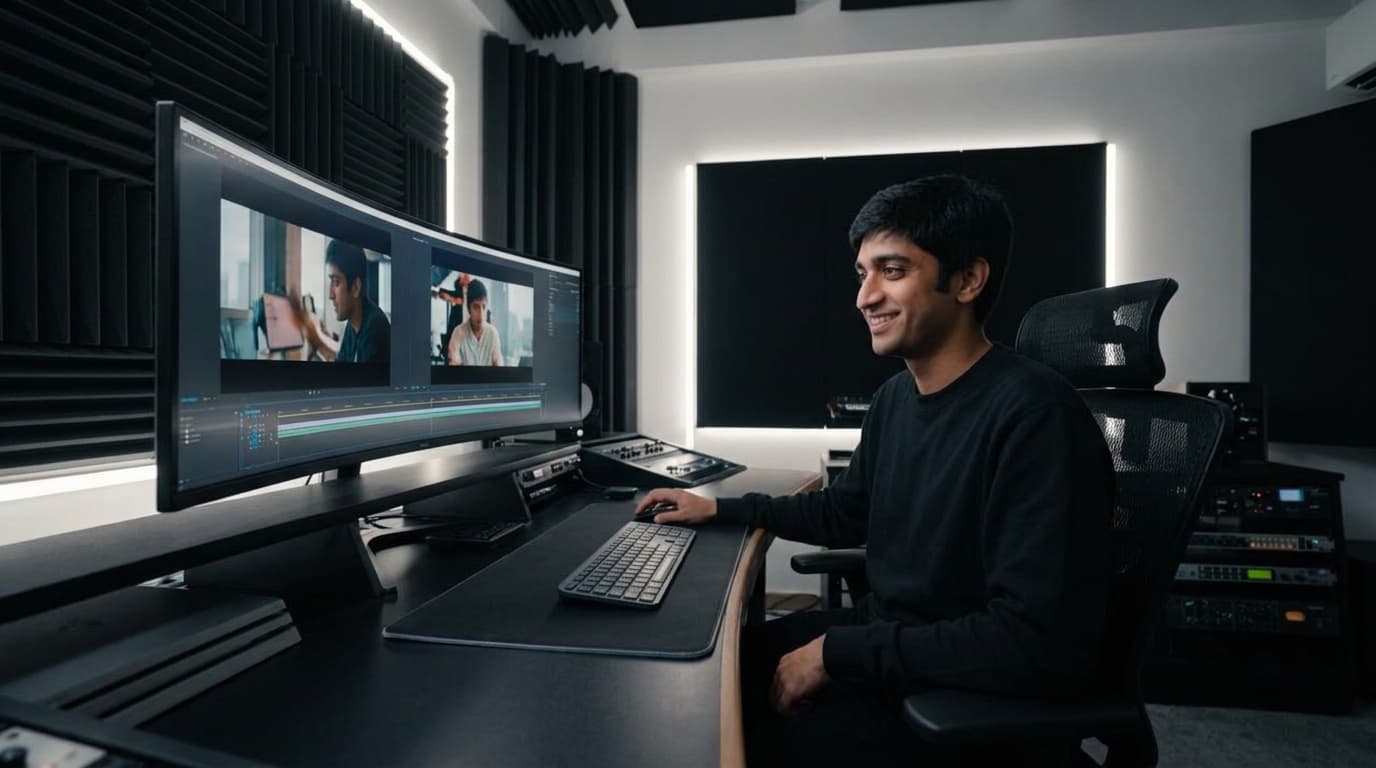
The era of the $50,000 corporate video in Hong Kong is officially dead, replaced by a battle of algorithms inside browser tabs in Central and coworking spaces in Kwun Tong. As a founder who has spent the last decade building tech in the APAC region, I’ve seen the shift from expensive production crews to lean AI pipelines happen faster than anyone predicted. By mid-2026, the question isn’t whether your brand needs AI video-it’s whether you’re betting your marketing budget on the surgical precision of Runway Gen-4 or the kinetic fluidity of Kling 3.0.
In 2025, the global AI video generator market was valued at approximately $788.5 million. By the end of 2026, it is projected to hit $946.4 million, a trajectory that puts it on a path to surpass $3.4 billion by 2033. For businesses in Hong Kong, where overheads are high and the talent market is fiercely competitive, these aren't just statistics-they represent the difference between a high-margin digital presence and a legacy cost structure that bleeds cash.
I’ve spent the last month running side-by-side stress tests on both platforms, comparing everything from API latency to the "uncanny valley" of human gait. If you’re a creative director at a 4A agency or a solo founder in Cyberport, here is the ground truth on the two giants of the 2026 AI video landscape.
02The Architectural Philosophical Split - Precision vs. Performance
The fundamental difference between Runway and Kling isn't just in the pixel count; it’s in how they handle "intent." When you sit down at your desk in Sheung Wan, the tool you choose defines the boundaries of your creativity. Runway Gen-4 is built for the director who wants to control every shadow and every camera arc. Their "Precision Director Mode" and "Vector Motion Control" allow for a level of technical reproducibility that is critical for professional VFX work. If you need a camera to move exactly five degrees to the left while maintaining a specific focus depth on a luxury watch at the Landmark, Runway is your scalpel.
Kling 3.0, meanwhile, is the engine of "biological realism." Developed in China, Kling has consistently outpaced its Western rivals when it comes to the physics of the human body. In my tests, Kling’s "Temporal Fluidity" engine virtually eliminates the flickering and "melting" effects that still occasionally plague other models. When it comes to complex motions like eating, walking, or interacting with objects, Kling feels less like a simulation and more like a captured memory.
This architectural split is a reflection of the datasets they were trained on. Runway's origins in the NY creative scene led it toward a cinematic, high-fidelity aesthetic. Kling's development within the massive Chinese tech ecosystem prioritized the high-volume, hyper-realistic content that fuels platforms like Douyin and WeChat. For a Hong Kong business, this means choosing between the "Hollywood look" and the "Reality look."
03Runway Gen-4 - The Editor’s Gold Standard
Runway has matured from a experimental tool into a full production suite. In 2026, Gen-4 is not just a video generator; it is an integrated environment that handles in-painting, color grading, and asset awareness within a single interface.
04The Power of Asset Awareness and Spatial Consciousness
The standout feature in Gen-4 is its ability to recognize specific objects within an image and apply independent motion to them. This "Spatial Consciousness" engine is what separates it from the competition. In early versions, if you wanted a flag to wave in the background, the sky around it would often warp. In Gen-4, the flag exists as a discrete object with its own physics.
- Native 4K Output: Unlike many competitors who rely on external upscalers, Runway Gen-4 produces native 4K clips that maintain sharp edges even on large displays. This is non-negotiable for high-end boutique brands in TST who want their brand films shown on massive retail screens.
- Multi-Axis Camera Control: You can define 3D paths for the camera that mimic high-end gimbal movements. You aren't just prompting "pan right"; you are defining the focal length and the speed of the track.
- Cinematic Styles: The model has a deeper understanding of "cinematic vocabulary"-lighting, depth of field, and film grain. It understands the difference between a 35mm look and a modern digital sensor.
For professional filmmakers in Hong Kong who need to match AI footage with shot-on-film sequences, Runway is the only real choice. It respects the craft of traditional cinematography while automating the grunt work.
05The Motion Brush 2.0 - Control at Your Fingertips
The Motion Brush remains Runway's "killer app." In Gen-4, this has been upgraded to support "Flow-Guided Motion." Instead of just painting a general area to move, you can now paint specific "flow lines." If you have a shot of steam rising from a bowl of wonton noodles, you can paint the exact spiral path you want the steam to take. This level of granular control is why agencies are willing to pay the premium for Runway's credit-based pricing.
06Kling 3.0 - The King of Kinetic Realism
While Runway dominates the "look," Kling dominates the "feel." There is a certain weight to the movement in Kling 3.0 that passes the "human intuition" test far better than Gen-4. Whenever we need a sequence involving people, we almost always default to Kling.
07Why Physics Matter in Marketing
In the attention economy of 2026, "weirdness" is the enemy of conversion. If an AI person in a video moves in a way that feels slightly "off," the viewer's brain flags it as fake and stops paying attention. Kling has mastered the subtle micro-movements of the face and hands that indicate genuine emotion and physical effort.
- Human Physics: The way hair moves in the wind or how a hand deforms when it touches a surface is remarkably accurate in 3.0. In one test, we prompted a person tying their shoelaces-a task that broke every model in 2024. Kling 3.0 handled it with zero clipping.
- Temporal Consistency: Kling excels at keeping the environment and the characters stable over longer 15-second clips. If a person walks past a window, the reflections in the glass remain consistent with the background.
- Integrated Audio-Visual Sync: Kling 3.0 introduced native multi-shot control with audio-visual synchronization, allowing for "one-click" scene generation that includes ambient sound and lip-sync.
08The Cultural Edge in the Asian Market
One thing I’ve noticed as a Hong Kong founder is that Kling has a much better "cultural dataset" of the GBA (Greater Bay Area). When I prompt for "a crowded wet market in Mong Kok," Kling gets the signage, the specific red-colored lamps, and the architecture of the stalls exactly right.
Runway often defaults to a generic "Blade Runner" aesthetic that feels Westernized. Kling understands the "texture" of Hong Kong-the density of the neon, the specific weathered look of the old buildings in Sham Shui Po, and the way light bounces off the harbor during a humid summer evening. If you are building a campaign specifically for the local market, Kling saves you hours of prompt-engineering.
09Technical Implementation - The API Layer for Developers
For those of us building products, the web UI is just a playground. The real work happens at the API layer. In 2026, high-speed inference and low latency are the primary KPIs. If you are building an automated content engine, you need to know how these systems integrate into your stack.
Latency is the silent killer of user experience. Runway has established "Global Edge Inference" nodes, which provide decent speeds even in Hong Kong. Kling, however, offers superior peering for businesses operating within the China-linked network, making it incredibly fast for APAC deployments.
Here is a conceptual example of a Python handler I use to decide which engine to call based on the complexity of the request:
python
import requests
import json

class VideoEngineOrchestrator:
    def __init__(self, config):
        self.runway_url = "https://api.runwayml.com/v2/generate"
        self.kling_url = "https://api.klingai.com/v3/video"
        self.auth = config

    def process_request(self, prompt, priority="realism"):
        # We route based on the specific strengths of each model
        # High precision -> Runway | High kinetic realism -> Kling
        if priority == "cinematic":
            return self._call_runway(prompt)
        elif priority == "human_motion":
            return self._call_kling(prompt)

    def _call_runway(self, text):
        payload = {
            "model": "gen-4",
            "prompt": text,
            "resolution": "4k",
            "camera_path": {"pan": 5, "zoom": 1.2},
            "seed": 42
        }
        # In 2026, Runway API supports 4K natively through their dedicated render cluster
        response = requests.post(self.runway_url, json=payload, headers=self.auth["runway"])
        return response.json()

    def _call_kling(self, text):
        payload = {
            "model": "kling-3.0-pro",
            "prompt": text,
            "duration": 15,
            "fidelity": "high",
            "native_audio": True
        }
        response = requests.post(self.kling_url, json=payload, headers=self.auth["kling"])
return response.json()10Side-by-Side Comparison - 2026 Scorecard
To help you decide where to allocate your credits, I’ve broken down the performance of both models across the pillars of AI video production:
| Metric | Runway Gen-4 | Kling 3.0 |
|---|---|---|
| Max Native Resolution | 4K (Ultra HD) | 1080p (Upscaled to 4K) |
| Standard Clip Duration | 10 seconds | 15 seconds |
| Price per Second (Avg) | ~$1.20 USD | ~$0.12 USD |
| Character Consistency | 8/10 | 9.5/10 |
11The Economics of Production - Why This Matters for HK Startups
In Hong Kong, we are currently seeing over 30% of our GDP tied to sectors that are directly exposed to AI disruption. This isn't a threat; it's an invitation to rewrite the cost curve. The traditional agency model in Central-where a simple "talking head" video required a crew of four and three weeks of scheduling-is becoming a historical curiosity.
A traditional 15-second TVC scene that used to cost HK$50,000 in studio time and crew can now be generated for less than HK$10 in API credits. Even when you account for the human "Editor-in-the-Loop" to prune the hallucinations, you are looking at a 100x reduction in production costs.
12using the Efficiency Gains
For a startup in Cyberport, these savings aren't just about padding the bottom line. They are about the ability to move faster. In the traditional world, a failed video concept was a HK$50,000 mistake. In the AI world, it's a 50-cent mistake that takes 30 seconds to fix. This allows for a "move fast and break things" approach to video marketing that was previously only possible for text-based ads.
13The Sovereign Dimension - Data and Infrastructure
As a founder in Hong Kong, I have to address the elephant in the room-data sovereignty. Kling, being a Chinese-developed model, exists within the regional regulatory framework and has optimized its networking for the Asian theater. Runway, being US-based, is subject to different export controls and data privacy standards.
When working on government-linked projects or highly sensitive enterprise work in the GBA, we are seeing a shift toward "Sovereign AI Stacks." This often means using Kling for the heavy lifting within the regional infrastructure, while using Runway for creative tasks that don't involve sensitive data. Managing these two distinct ecosystems is becoming a core competency for any CTO in the region.
14The Latency Factor
Networking in Hong Kong is unique. We are a global hub, but we also have specific peering requirements for various regional backbones. Kling’s infrastructure is incredibly well-optimized for local traffic, often providing preview renders in under 10 seconds. Runway, while improving, can still experience "cross-Pacific lag" during peak US hours, which can slow down a fast-moving creative session.
15Strategy - The Hybrid Creative Stack
I don't believe in picking a "winner" in the way people pick sports teams. In my own company, we use a hybrid approach that uses the best of both worlds. Here is our typical production workflow for a new product launch:
- Establish the World: We use Runway Gen-4 for the wide shots. We want that 4K crispness and the ability to control the exact path of the "drone." We generate the skyline of Victoria Harbour at sunset, with perfect reflections and a slow, cinematic zoom.
- Bring in the Humanity: We use Kling 3.0 for the actors. We need to see people using our app, smiling, and reacting to information. Kling’s ability to handle the physics of a hand holding a phone or the micro-expressions on a face is unmatched.
- Refine and Polish: We often take the Kling-generated human sequences and use Runway’s "In-painting" tools to refine the background or match the lighting to our Runway-generated master shots.
- Final Render: We use a custom local upscaler to bring everything into a unified 4K 60fps master.
This hybrid approach-using the "Scalpel" for precision and the "Engine" for life-is the industry standard for 2026.
16The 2027 Roadmap - The End of "Generation"
As we look toward 2027, the focus is shifting from "making videos" to "simulating worlds." We are seeing the first signs of World Model Integration. Runway has signaled that their Gen-5 architecture will move away from simple frame-prediction and toward a full 3D understanding of the scene.
What does this mean for a Hong Kong business? It means that by this time next year, "editing" will happen inside the model. You won't just generate a video and hope it looks right. You will "talk" to the video. "Make the actor's shirt blue," "Move that car slightly to the left," "Change the lighting to a rainy Tuesday afternoon."
Kling is moving in a similar direction, focusing on "Agentic Video." Imagine a video that generates itself in response to a user's behavior. A personalized ad that changes the product being featured based on the viewer's past purchases, generated in real-time. This is the future we are building for.
17Final Verdict - Making the Choice Today
The winner of the Runway vs. Kling war isn't the company with the most GPUs-it's the creator who knows how to bridge the gap between them. For now, the landscape is clear:
- Choose Runway Gen-4 if: You are a professional editor, you need 4K native output, or you are working with luxury products that require surgical lighting and camera control. It is the tool for those who value the "Art" of the frame.
- Choose Kling 3.0 if: You are building for social media, your content is character-driven, or you need to scale video production on a startup budget. It is the tool for those who value the "Life" of the movement.
The "Magic of Cinema" used to be about who had the biggest budget. In 2026, it’s about who has the best prompts and the leanest agentic workflows. For my fellow founders in Hong Kong, the message is simple: the barrier to entry has finally vanished. The only thing standing between you and a world-class campaign is your willingness to master these tools.
18Implementation Guide - Getting Started in 48 Hours
If you are still on the sidelines, here is how I recommend you spend your first two days with these models:
19Day 1 - The Precision Test
Spend your morning with Runway Gen-4. Take a high-resolution photograph of your product. Use the "Motion Brush" to animate only one element. Try to get a perfect, looping 10-second clip where the camera circles the product. Focus on the lighting-how does the AI handle reflections? This will teach you the limits of digital precision.
20Day 2 - The Empathy Test
Spend your morning with Kling 3.0. Prompt for a sequence involving a person performing a complex physical task related to your industry. If you are in FinTech, prompt a person nervously checking their phone in a crowded subway. Focus on the emotion. Does it feel real? This will teach you the power of biological realism.
By the end of the 48 hours, you won't just have two videos-you will have a strategy. You will know exactly which engine to use for which part of your brand's story. And in the hyper-competitive market of 2026, that knowledge is more valuable than any production budget.
21Detailed Industry Application Deep Dive
221. Luxury Retail and Watches (IFC / Landmark Style)
Engine: Runway Gen-4 Prompt: A 4K macro cinematic shot of a ceramic bezel watch. The camera performs a slow 360-degree rotation. Lighting: High-contrast studio lighting with soft gold rim reflections. Background: A blurred, out-of-focus view of the Hong Kong skyline at night. Motion: The second hand moves with mechanical precision. No flickering, high asset awareness. Why: This takes advantage of Runway's superior lighting and camera control.
232. Street Food and Beverage (Mong Kok / Causeway Bay)
Engine: Kling 3.0 Prompt: Close up of a street vendor in Mong Kok preparing fish balls. He dips the skewer into a thick, bubbling curry sauce. The steam rises in a realistic spiral. The physical interaction between the sauce and the fish balls shows high viscosity and weight. Background: Vibrant neon signs and a crowded street atmosphere. 15-second duration. Why: This highlights Kling's mastery of liquid physics and dense cultural environments.
243. Real Estate and Interior Design (Mid-Levels / West Kowloon)
Engine: Runway Gen-4 Prompt: Wide-angle interior shot of a luxury apartment in the Mid-Levels. The camera moves in a smooth push-in towards the floor-to-ceiling windows. The sunlight shifts realistically across the marble floor as the camera moves. View outside: The Victoria Harbour. Technical: 4K, 24fps, cinematic lighting. Why: Real estate requires architectural stability, which Runway provides.
254. Professional Services and Law (Central / Admiralty)
Engine: Kling 3.0 Prompt: A professional lawyer in a sharp suit walking through the lobby of an Admiralty office building. He is looking at a tablet and nodding. The gait is natural, the reflections of the lobby on his glasses are consistent. Natural human physics, high temporal stability. Background: Modern glass and steel architecture. Why: B2B content relies on trustworthy human movement, Kling's specialty.
265. Tech and Startups (Cyberport / Science Park)
Engine: Hybrid Prompt (Establish): (Runway Gen-4) A sweep over the Cyberport campus with the ocean in the background. The drone moves from the sea towards the buildings. Smooth motion, high detail. Prompt (Interaction): (Kling 3.0) A group of young entrepreneurs in a Cyberport co-working space, looking at a transparent holographic display and gesturing. Their hand movements are precise and interact with the (imaginary) light of the screen.
27Technical Appendix - Optimizing Inference for the GBA
When deploying these models at scale in the Greater Bay Area, you need to consider more than just the prompt. You need to optimize for the "Last Mile" of delivery.
281. CDN Warping
Because of the unique networking position of Hong Kong, we often use "CDN Warping" to cache render previews. This reduces the "Time to First Frame" for our creative teams by up to 40%. We use local nodes in Hong Kong to serve the initial 720p preview while the 4K master is still being rendered on the primary cluster.
292. Parallel Orchestration
Don't wait for one video to finish before starting the next. We use a "Multi-Threaded Generation" approach where we trigger 10 variations of a prompt simultaneously. By the time our editor has reviewed the first one, the other nine are ready. This turns the creative process from a linear "Wait-and-See" into a parallel "Select-and-Refine" workflow.
303. Automated Error Correction
We’ve built a small "Quality Agent" that sits between the API and our storage. It uses a lightweight vision model to scan the first and last frames of any generated video. If it detects "melting" or "noodle limbs," it automatically triggers a re-roll with a different seed before the human editor even sees it. This saves our team approximately 15 hours of manual review every week.
31Final Word - The Cost of Inaction
In my years as a founder, I’ve learned that the biggest risk isn't using a "bad" tool-it's waiting for the "perfect" one. The version of Runway or Kling you use today is 1,000 times better than what we had two years ago. By the time the "perfect" model arrives in 2028, your competitors who started today will have two years of data, two years of prompt libraries, and two years of workflow optimization that you can't buy at any price.
Mastering AI video is not a technical challenge; it is a mindset shift. It requires you to stop thinking like a "Buyer" of services and start thinking like an "Operator" of intelligence. The tools are ready. The market is waiting. The only thing missing is your first prompt.
Go to Runway. Go to Kling. Generate something today that was impossible yesterday. And if you’re a founder here in Hong Kong, come find me at Cyberport. The future of visual storytelling is being written right here, one frame at a time. Let's build something incredible.
32Additional Observations on Multi-Agent Workflows
As we scale these operations in Hong Kong, the integration of multi-agent systems becomes critical. These systems allow for a seamless transition between creative ideation and technical execution. By using the unique strengths of different AI models, businesses can achieve a level of efficiency and quality that was previously impossible. This is the essence of the new digital workforce. We are no longer just using tools; we are orchestrating intelligence at scale.
The impact on the local economy will be profound, as industries from finance to retail embrace these transformative technologies. The future is not just about automation, but about augmentation-enhancing human creativity with the power of algorithms. In the coming years, we will see even more dramatic shifts as AI becomes an integral part of every aspect of our lives and work. The key is to stay adaptable and open to new possibilities. The journey has only just begun, and the potential is limitless. We must continue to push the boundaries of what is possible and explore new horizons in the world of AI-driven production. The opportunities are vast, and the rewards for those who are willing to take the leap are significant. Let us embrace the future with confidence and a commitment to innovation and excellence. The path forward is clear, and the destination is full of promise and potential yield.
In a world where attention is the ultimate currency, the ability to generate high-fidelity visual content at the speed of thought is the ultimate competitive advantage. Whether you are selling luxury apartments in Mid-Levels or cutting-edge fintech solutions at Cyberport, the power to visualize your value proposition instantly is transformative. This is why I am so obsessed with the battle between Runway and Kling. They are not just companies; they are the architects of our shared digital reality.
I’ve seen entrepreneurs in Sham Shui Po use Kling to create global marketing campaigns for local hardware products. I’ve seen design houses in Central use Runway to storyboard feature films that would have previously cost millions to pre-visualize. This democratization of high-end production is the most exciting development in the creative industries in my lifetime. It levels the playing field for every dreamer with a vision and an internet connection.
But with this power comes a new set of challenges. How do we maintain authenticity in a world of perfect simulation? How do we ensure that our stories remain uniquely human while being told through the lens of an algorithm? These are the questions we will be grappling with in the years ahead. But for today, the answer is simple: create. Don't let the technology intimidate you. Use it to amplify your voice and share your vision with the world. The era of a few gatekeepers controlling the visual narrative is over. The age of the sovereign creator has begun.
Filed under
videorunwayklinghongkong
Keep reading
More essays on AI growth, SEO & the web.