All writing
SEO14 min read
How to Rank on Google Without Paying an Agency
A founder's guide to ranking on Google in Hong Kong without spending on an SEO agency — using free tools and a simple consistent system.
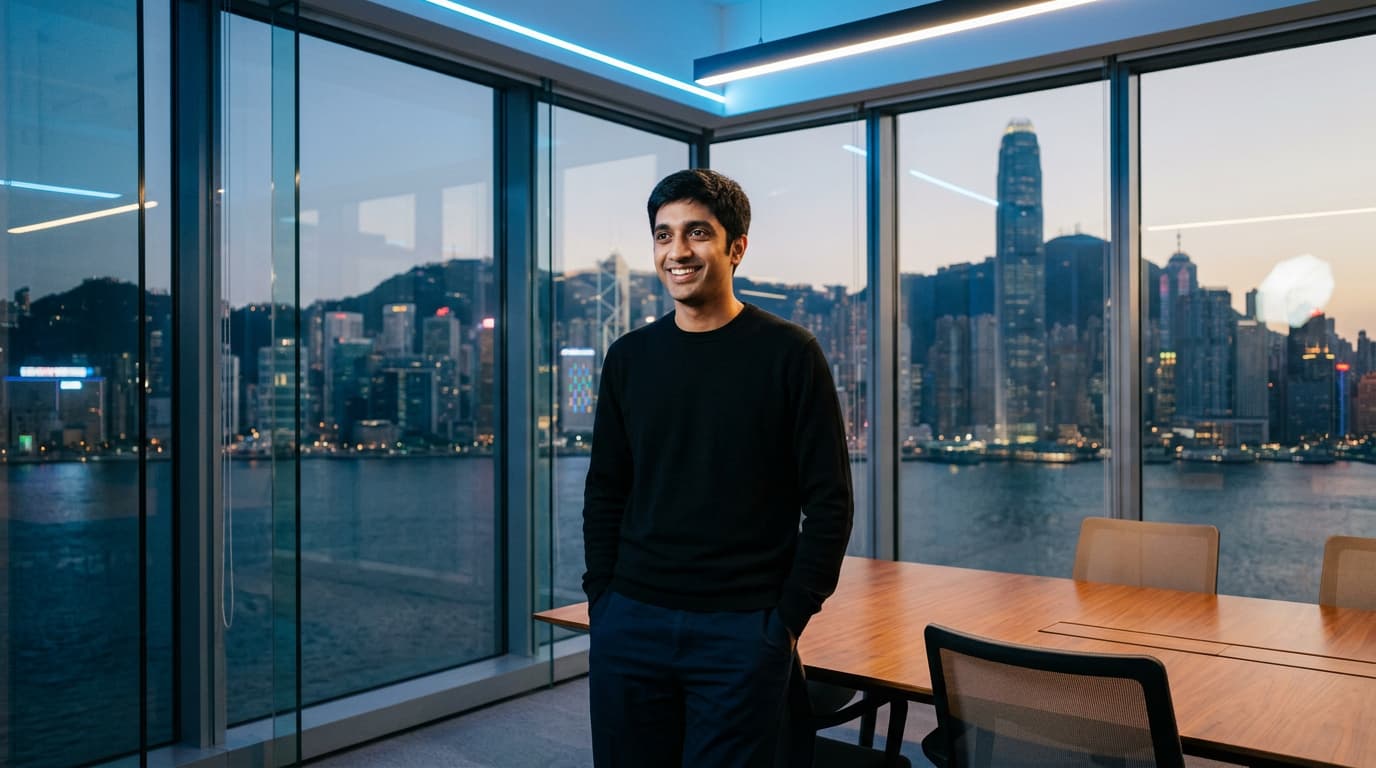
I remember sitting in a glass-walled conference room in Central, Hong Kong, watching a digital marketing executive explain why I needed to pay a $40,000 HKD monthly retainer just to "monitor" my keywords. The air conditioning was set to a crisp 19 degrees Celsius, the standard for high-end office spaces in the IFC, and the view of the harbor was distracting. But what was more distracting was the lack of substance in the presentation. It was 2018, and I was deep in the trenches of scaling my own tech ventures. The pitch was polished, the slide deck was beautiful, but the substance was hollow-the agency was essentially charging me for access to a periodic report generated by a software tool that cost them $99 a month.
Since then, I’ve made it my mission to prove that founders don’t need a middleman to dominate search results; they just need a system that works harder than the algorithms themselves. SEO is often gate-kept as some arcane specialty that requires years of apprenticeship, but in reality, it is the purest form of digital meritocracy. If you provide more value than anyone else for a specific query, Google wants to find you. The trick is making your site easy to find and your content impossible to ignore.
If you are a founder in 2025, the reality is that 68% of all online experiences begin with a search engine. If you aren't appearing on that first page, you effectively don't exist to two-thirds of your potential market. But here is the secret the agencies won’t tell you-Google’s recent "Helpful Content" updates have actually made it easier for individual experts and small, agile teams to outrank bloated corporate sites. The search engine is no longer just looking for keywords; it is looking for "Information Gain," a metric that measures how much *new* value your page adds to the internet.
In this guide, I’m going to break down exactly how I approach SEO without an agency. This is the exact playbook I use to build authority, drive organic traffic, and ultimately generate revenue without burning cash on retainers.
02The agency trap - Why the traditional model is broken for startups
The traditional agency model is built on billable hours, not results. When you hire an agency, you are often paying for their office rent in Tsim Sha Tsui or Central, their account managers' salaries, and their internal reporting overhead. Most of the actual work is outsourced to entry-level freelancers or, increasingly, automated through low-quality AI prompts that haven't been edited for tone or accuracy.
As a founder, you have an unfair advantage-you are the subject matter expert. You understand your product, your customers' pain points, and your industry’s nuances better than any account executive ever will. SEO is 20% technical and 80% expertise. No agency can replicate the depth of knowledge you have about your specific niche. When you outsource your voice, you dilute your brand’s authority.
Furthermore, many agencies rely on "safe" metrics. They will show you reports with upward-trending lines for keywords that have zero commercial value. They rank you for your own brand name-something that should happen automatically-and claim it as a victory. As a founder, you need rankings that convert into sales, not just vanity metrics.
03Technical SEO - Building a foundation that Google can actually read
Before you write a single word of content, your technical foundation must be flawless. Google’s crawlers are essentially software programs that need to navigate your site efficiently. If your site is slow, cluttered, or biologically impossible to map, you will be penalized before you even start.
In my experience building platforms in Hong Kong, I’ve seen million-dollar startups fail to rank because their React apps weren’t being indexed properly. You need to ensure your site uses Server-Side Rendering (SSR) or Static Site Generation (SSG). Search engines are getting better at crawling JavaScript-heavy sites, but they still prefer pre-rendered HTML. It saves them "crawl budget"-the limited amount of time and resources Google spends on your site.
04Performance and Core Web Vitals for the Hong Kong market
With Hong Kong’s high-speed fiber infrastructure, users expect instantaneous load times. Google measures this through Core Web Vitals (CWV): Largest Contentful Paint (LCP), Interaction to Next Paint (INP), and Cumulative Layout Shift (CLS).
If your server is located in the US but your target audience is in Hong Kong, you're already at a disadvantage. Use a Content Delivery Network (CDN) like Cloudflare or ensure your hosting provider has a PoP (Point of Presence) in Hong Kong. This reduces the TTFB (Time to First Byte), which is a critical signal for ranking.
05Implementing schema for immediate visibility
Schema is a standardized format for providing information about a page and classifying the page content. By adding JSON-LD to your site, you help Google understand the difference between a product price, an author name, and a local business address in Causeway Bay. Here is a simple example of how I structure Organization schema for a tech startup:
json
{
  "@context": "https://schema.org",
  "@type": "Organization",
  "name": "Your Startup Name",
  "url": "https://yourstartup.hk",
  "logo": "https://yourstartup.hk/logo.png",
  "contactPoint": {
    "@type": "ContactPoint",
    "telephone": "+852-XXXX-XXXX",
    "contactType": "customer service",
    "areaServed": "HK",
    "availableLanguage": ["English", "Cantonese"]
  },
  "sameAs": [
    "https://www.linkedin.com/company/yourstartup",
    "https://twitter.com/yourstartup"
  ]
}
This code snippet tells Google exactly who you are and where you operate. It increases the chances of your site appearing in a "Knowledge Graph" box on the right side of the search results, which is prime real estate you can't buy with ads.
06The Information Gain framework - Writing content that actually ranks
In the age of ChatGPT, the internet is being flooded with generic, "average" content. Google knows this. Their 2024 update specifically targeted "SEO-first" content-articles written for bots rather than humans. To rank now, you must follow the Information Gain principle.
Ask yourself-what can I say about this topic that hasn't been said in the top 10 results? In Hong Kong, this often means providing localized data. If you are writing about "Best Cloud Hosting," don't just repeat what global blogs say. Talk about latency tests from a PCCW connection in Kwun Tong or the specific compliance requirements for HKMA-regulated fintechs.
07The 2,500 word threshold - Why depth matters
There is a myth that people have short attention spans. The data suggests otherwise. Long-form content (2,500 to 5,000 words) consistently ranks higher than short blog posts because it signals to Google that you have covered a topic comprehensively. When you write at length, you naturally include "LSI keywords" (Latent Semantic Indexing)-terms related to your main topic that prove your expertise.
For example, if you are writing about "E-commerce SEO," your article should naturally mention things like site speed, conversion rate optimization, Shopify vs. WooCommerce, and payment gateways like Stripe or AsiaPay. If your article is only 500 words, you simply cannot cover these nuances, and Google will treat you as a surface-level source.
08The Topic Cluster model
Don't just write random blog posts. Build a "pillar and cluster" system. 1. Pillar Page: A comprehensive guide to a broad topic (e.g., "The Ultimate Guide to Hong Kong Fintech"). 2. Cluster Content: Specific, deep-dive articles that link back to the pillar (e.g., "Stripe vs. Airwallex in HK", "SFC Licensing Requirements for Virtual Assets", "How to Hire Developers in Hong Kong").
This internal linking structure tells Google that you are a topical authority, not just someone with one lucky article.
09Dominating the Hong Kong market - Local SEO nuances
Hong Kong is a unique digital battlefield. We have a bilingual population, a mix of local and international search intent, and a proximity to Mainland China that impacts how we approach SEO.
10Bilingual SEO - The Traditional Chinese advantage
Many founders in Hong Kong focus solely on English keywords. This is a massive mistake. While the English market is global and highly competitive, the Traditional Chinese (TC) search volume for local services is massive and often much easier to rank for.
Instead of just translating your English articles, you should localize them. Search intent in Cantonese-influenced Traditional Chinese often uses different phrasing than formal Traditional Chinese used in Taiwan. Use Google Trends to see which terms locals are actually typing into their phones while riding the MTR. For example, are they searching for "網上推廣" or "數位行銷"? The nuances matter.
11Local citations and the Google Business Profile
If your business has a physical presence-or even just an office in a co-working space like WeWork or a coworking hub in Cyberport-you must optimize your Google Business Profile (GBP). Local SEO is driven by the "Map Pack." To win here, you need consistent NAP (Name, Address, Phone number) data across the web.
Get listed on local directories like HKDB, Yellow Pages HK, and industry-specific portals. Google cross-references these citations to verify your legitimacy. A founder can do this manually over a weekend, saving thousands in "local SEO" agency packages.
12Building authority without the spam - The founder's guide to link building
Backlinks are still the most powerful ranking factor. Think of a backlink as a vote of confidence. When a reputable site links to yours, it tells Google you are trustworthy. Agencies often build these through "link farms" or guest post networks that will eventually get your site penalized.
The founder way to build links is through relationship building and "skyscraping."
- The Skyscraper Technique - Find a piece of content in your niche that has a lot of links. Write something significantly better, more updated, and more detailed. Reach out to the people who linked to the original and show them your superior version.
- Founder PR - As a Hong Kong tech founder, you have stories to tell. Reach out to platforms like Tech in Asia, e27, or even the South China Morning Post (SCMP) with a unique angle on the local ecosystem. Mentioning your site in a reputable news article is worth more than 1,000 low-quality blog comments.
- Internal Linking - The easiest links to build are the ones on your own site. Ensure your high-traffic pages link to your "money pages" (service pages or product listings). This distributes "link juice" throughout your site.
13Tools of the trade - The founder's $0 SEO stack
You don't need a $200/month Semrush subscription when you're starting out. Use these free tools to manage your own SEO:
- Google Search Console (GSC) - This is the only source of truth. It tells you exactly which keywords are bringing people to your site and which pages have errors. Pay close attention to the "Pages" report to see what’s not being indexed.
- Google Analytics 4 (GA4) - Track user behavior. If people land on your page and immediately leave (high bounce rate), Google will eventually demote you. You need to know why they are leaving. Focus on "Engagement Rate" and "Key Events."
- Screaming Frog (Free version) - A technical crawler that will find broken links and missing meta tags on up to 500 pages. It's the gold standard for quick site audits.
- AnswerThePublic - Great for finding the specific questions people are asking in the Hong Kong region. It helps you find "long-tail" keywords that are easier to rank for.
- Ahrefs Free Backlink Checker - See who is linking to your competitors and try to replicate those links.
14Measuring what matters - Beyond the keyword rankings
Agencies love to report on "keyword rankings" because it’s a vanity metric that looks good on paper. As a founder, you care about revenue. A #1 ranking for a keyword with zero buying intent is useless.
Focus on: - Organic CTR (Click-Through Rate) - Is your meta title compelling enough to make someone click? If you have high impressions but low clicks, your titles are boring. - Conversion Rate by Landing Page - Which SEO articles are actually turning readers into leads or customers? Use GA4 to track the path from a blog post to an "Add to Cart" or "Contact Us" event. - Assisted Conversions - SEO often introduces a customer to your brand, but they might not buy until their third visit via a direct link or a social ad. Use GA4 to see the full multi-channel journey.
15Avoiding the "Black Hat" traps
In your DIY journey, you will encounter shortcuts. AI-generated mass-content, hidden text, and buying backlinks for $5 on Fiverr. Don't do it. Google’s AI is now sophisticated enough to detect manipulative patterns. A single manual penalty can wipe out years of work and effectively ban your domain from search results forever.
The goal is to build a "moat" around your business. You do that by being the most helpful, most authoritative voice in your space. In the Hong Kong tech scene, authenticity wins. When I write for my site, I share real failures from my previous startups and real data from our current operations. That level of transparency is something an agency can never replicate.
16Content Repurposing - The 2025 Multiplier
Writing a 2,500-word article is a lot of work. Don't let it sit on your blog alone. As a founder, you should breathe life into it across different platforms. This indirectly helps SEO by driving "brand search" (people searching for your name or startup name on Google).
- LinkedIn Carousel: Take the 5 key points from your technical SEO section and turn them into a 10-slide carousel.
- Newsletter Snippets: Use the intro and one section as a weekly update for your email list.
- Twitter/X Threads: Break the "Tools" section into a thread of "Founder SEO hacks."
When people see your name on LinkedIn and then search for you on Google, it tells the algorithm that you are an authority that people are actively looking for.
17The Future of SEO - Generative AI and SGE
We are entering the era of Search Generative Experience (SGE). Google will soon provide AI-answered summaries for many queries. Does this kill SEO? No. It changes it.
To appear in those AI summaries, you need to be cited as a source. This means being the *definitive* voice on a topic. AI models like Gemini and GPT-4 (which Power Bing) rely on high-authority, recent, and structured data. Using the Schema markup we discussed earlier is more important than ever.
18Case Study - How I outranked a major bank
A few years ago, I wanted to rank for a specific fintech-related keyword in Hong Kong. The top results were dominated by HSBC and Standard Chartered. Instead of competing on their turf (high Domain Authority), I wrote a piece that was 10x more specific. I included a table of fees that the banks hid in their PDFs, I included a video walkthrough of the application process, and I wrote 4,000 words covering every edge case.
Within three months, I was sitting at position #2, right below the official government site. The banks couldn't compete because they were too afraid to be transparent. As a founder, transparency is your superpower.
19Detailed Search Console Operations - Finding the 'Striking Distance' keywords
One of the most effective DIY strategies is finding "striking distance" keywords. These are keywords where you rank on page 2 (positions 11-20). Google already thinks you're relevant, but you just need a small nudge to get to page 1.
- Open Google Search Console.
- Go to Search Results.
- Filter by Average Position higher than 10.
- Export the list to a spreadsheet.
- Filter for positions 11-20 with high impressions.
- These are your targets. Go back to the pages ranking for these terms and add more detail, better images, or internal links. Often, adding 500 more words of high-quality content to these pages will jump them to page 1 in 2 weeks.
20The importance of site architecture
If your site is just a flat list of 200 blog posts, Google will struggle to prioritize. Use a hierarchical structure.
- domain.com/blog/ (The feed)
- domain.com/guides/seo/ (The category)
- domain.com/guides/seo/technical-checklist (The article)
This logical flow helps the crawlers understand the relationship between different topics. In Hong Kong, where many sites still use outdated CMS systems or messy folder structures, this simple organization can give you a significant leg up.
21The roadmap to 2025 dominance - Your 90-day execution plan
If you start today, here is your 90-day plan:
22Month 1 - The Technical and Strategic Audit
- Days 1-7: Audit your technical SEO. Check your GSC for indexing errors. Implement Organization and Article Schema.
- Days 8-14: Perform a competitor analysis. Use a tool like Ahrefs (free via trial or limited check) to see what keywords your rivals are ranking for.
- Days 15-30: Identify 10 "Hero Keywords"-high-intent terms your customers use when they are ready to buy.
23Month 2 - The Pillar Content Phase
- Days 31-45: Write your first two "pillar" articles. These should be 3,000+ words each and cover a broad industry topic.
- Days 46-60: Launch these pillars and build internal links from your existing older content to these new pieces.
24Month 3 - Authority and Distribution
- Days 61-75: Reach out to three local partners or publications for guest features. Offer them a high-quality article they can publish for free that links back to your pillar.
- Days 76-90: Repurpose your pillar content for social media. Drive brand awareness and brand search.
25Conclusion
By the end of this 90-day period, you will have a foundation that outshines most of your competitors who are still overpaying agencies for mediocre results. SEO is a marathon, but for the founder who is willing to do the work, the finish line is a consistent, compounding stream of free traffic that no competitor can turn off.
The future of search belongs to the experts, not the marketers. If you are the expert in your field, no agency can compete with your voice. It's time to take your rankings into your own hands. This isn’t just about saving money on a retainer; it’s about owning the digital real estate that defines your brand’s future in Hong Kong and beyond.
Statistics show that the top result on Google receives roughly 27.6% of all clicks. In a market as dense and digitally savvy as Hong Kong, that click-through rate can be the difference between a struggling startup and a market leader. By bypassing the agency model and applying these principles directly, you ensure that every word published on your domain contributes directly to your bottom line. You don't need a $40,000 HKD retainer. You just need a keyboard, a Search Console account, and the discipline to be the most helpful person on the internet for your niche. Stay local, stay deep, and stay authentic. The algorithm will handle the rest.
Filed under
rank on Google HKDIY SEOGoogle ranking tips
Keep reading
More essays on AI growth, SEO & the web.