All writing
AI Policy14 min read
An Open Letter to the US Commerce Department on the Fable 5 Ban
An open letter from a Hong Kong tech founder to the US Commerce Department regarding the devastating impact of the Claude Fable 5 export ban on the...
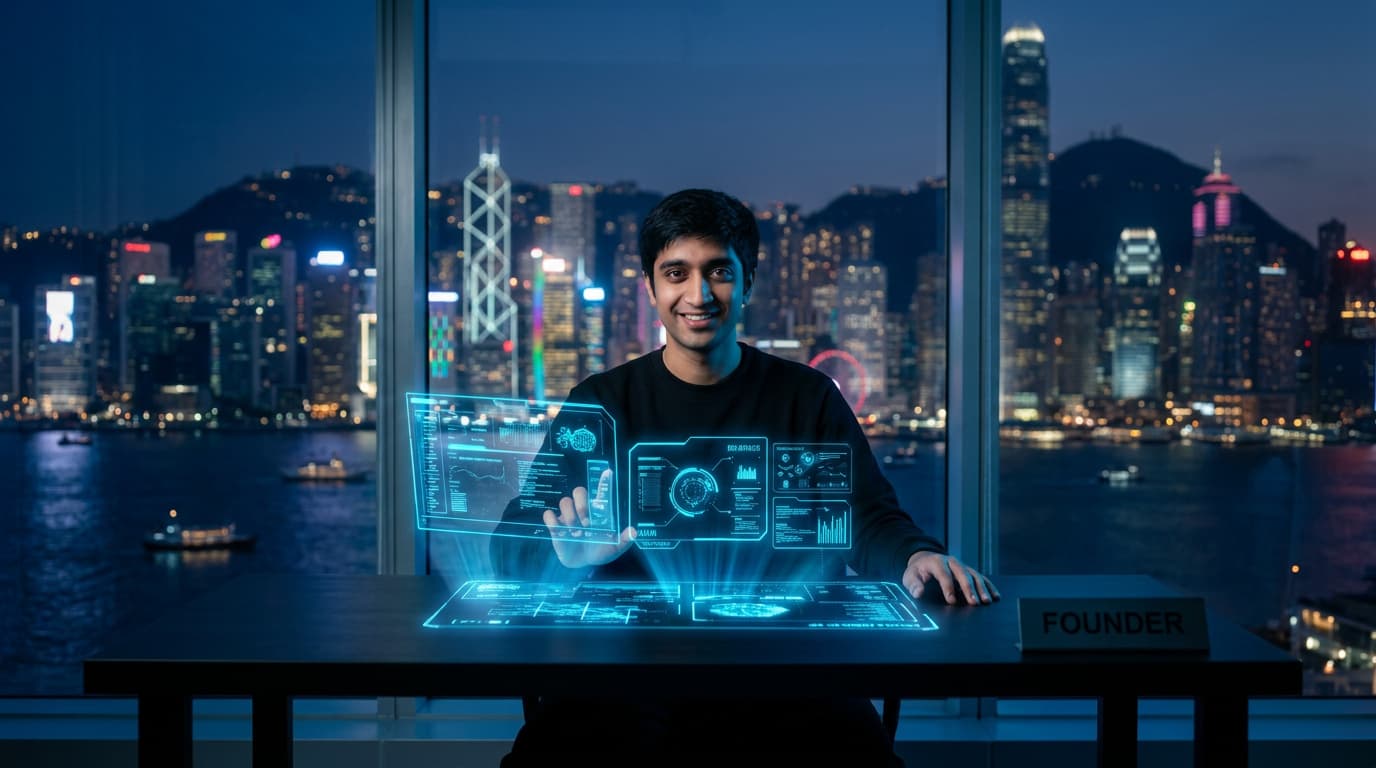
Watching the blue status light on my local inference cluster blink into a steady, mocking red was the exact moment I realized that the Silicon Valley dream of a borderless 'Global Brain' had officially died in the bureaucracy of Washington, D.C. It was 3:14 AM in Cyberport, the kind of hour where the only things moving in Hong Kong are the container ships in the East Lamma Channel and the cooling fans of a few hundred H100s. I had been mid-deployment, pushing a complex architectural refactor for Hermes that only Fable 5 could reliably navigate, when the websocket connection snapped. A raw JSON error returned by the Anthropic endpoint told the story more coldly than any press release ever could-{ 'error': { 'type': 'forbidden_region', 'message': 'Your request originates from a jurisdiction restricted by U.S. Export Control Directive 44-B.' }
This wasn’t just a server timeout. This was a digital borders closing. This was the US Department of Commerce deciding that my life’s work, and the work of thousands of founders in Hong Kong, was suddenly a national security threat. I am writing this letter not as a politician or a lobbyist, but as a founder who has spent the last decade building at the intersection of East and West. The Fable 5 ban is a catastrophic miscalculation that ignores the technical reality of how AI is built, deployed, and secured in 2026.
02The Benchmarks of a Revolution - Why Fable 5 Matters
To understand the visceral frustration of this ban, you have to understand the sheer technical leap Anthropic achieved with Fable 5. For the first time, we had a model that didn’t just 'mimic' reasoning but actually executed it with a degree of precision that made previous iterations look like toys. On the SWE-Bench Pro-the industry standard for agentic coding-Fable 5 posted a staggering 80.3% success rate. To put that in perspective, OpenAI’s GPT-5.5, which we had previously considered the pinnacle of the field, was languishing at 58.6%.
Fable 5 wasn’t just 'better'-it was a qualitative shift. It was the first model that could handle a 2-million-token context window with near-perfect retrieval, allowing us to feed it entire legacy codebases and ask for a complete modernization strategy. In my testing, it scored a 91 out of 100 on Every’s reasoning benchmark, effectively operating at the level of a senior staff engineer. For a lean startup in Hong Kong, having access to Fable 5 was like having a thousand-person R&D department on a subscription plan. By cutting us off, the Commerce Department didn’t just take away a tool; they dismantled our infrastructure.
03The Surgical Damage - How Export Controls Hit the Ground in Hong Kong
The July 2025 Executive Order on 'America’s AI Exports Program' was supposed to be a targeted deterrent against state actors. Instead, it has become a dragnet that catches every legitimate entrepreneur in its wake. In Hong Kong, we exist in a unique regulatory space. We have the Personal Data (Privacy) Ordinance (PDPO) which provides a framework for data protection that is often more stringent than what you find in many US states. We are a city that runs on the rule of law, yet we are being treated as a lawless backwater.
The economic toll in the first 72 hours of the ban has been immense. According to initial feedback from the HK AI Association, over 450 startups have reported immediate business interruptions. These aren't just companies 'messing around' with chatbots. They are fintech firms using Fable 5 for real-time fraud detection in the GBA (Greater Bay Area) nexus, medical startups using it to parse complex diagnostic data, and logistics giants optimizing the world's busiest port.
04The Irony of Safety - Pushing Users Toward Unregulated Shadows
The stated goal of these export controls is to keep 'frontier AI' out of the hands of those who might use it for harm. But Anthropic’s Fable 5 is built on the foundation of Constitutional AI. It is perhaps the most heavily guarded, safety-aligned model ever produced. By banning its use in Hong Kong, the US government is effectively forcing local companies to seek alternatives.
What are those alternatives? They are models developed in jurisdictions that do not share the Western commitment to safety, transparency, or ethical alignment. When you turn off Fable 5, you don't stop the demand for AI intelligence; you just shift it toward the black market or toward sovereign models that operate without the guardrails that Anthropic spent years perfecting. We are being pushed into the shadows, and that is a far greater security risk than letting a Hong Kong founder run a coding agent.
05The Code That No Longer Runs - A Technical Obituary
To give the bureaucrats in Washington a sense of what they have broken, I want to show a snippet of the agentic workflow we were running on Fable 5. This was part of our automated compliance engine, designed to ensure that every piece of software we ship adheres to both international security standards and local data privacy laws.
The logic contained in that function is now dead. We cannot simply swap in a smaller, older model like Claude 3.5 or GPT-4o. They lack the reasoning depth to handle the complexity of modern compliance. They hallucinate. They fail on the 10th file. Fable 5 was our quality control, and now that control is gone.
06The Brain Drain - A Generational Loss for Hong Kong Tech
Hong Kong has always been a city of talent. We attract the brightest minds from across Asia and the West. But talent goes where the tools are. In the last week, I have already received three resignation letters from senior engineers who are leaving for Singapore and Dubai. Their reason is simple: 'I cannot build the future using the tools of the past.'
If Hong Kong is barred from the front lines of the AI revolution, we will see an unprecedented exodus of human capital. The 5,221 startups that were active here at the beginning of 2026 are now facing a hard choice: relocate or stagnate. Is it really in the interest of the United States to gut the tech ecosystem of an international financial center? By doing so, you are not protecting American technology-you are ensuring that the next generation of breakthroughs will happen in cities that aren't subject to your directives.
07The Fallacy of Geographic Containment - A Digital Mirage
The US Commerce Department seems to think that AI is like a physical piece of hardware-a centrifuge or a stealth fighter that can be kept behind a fence. But AI is weightless. It is a set of weights and biases hosted in a cloud that spans the globe. Banning a specific IP range from accessing an API is like trying to stop the wind with a chain-link fence.
Any bad actor with a modicum of technical skill can bypass these restrictions with a sophisticated VPN or a daisy-chained proxy through a 'friendly' jurisdiction. The only people who are actually stopped are the law-abiding businesses that have integrated these APIs into their regulated systems. We can't use a VPN for our production environments because we have to undergo our own audits and maintain our own security certifications. The ban doesn't stop the malicious; it only hampers the compliant.
08Hong Kong’s Regulatory Integrity - A Case for Recognition
We are not asking for a shortcut. We are asking for the recognition of our maturity. Hong Kong has a long history of professional excellence in the legal and financial sectors. We have the infrastructure to manage sensitive technologies responsibly. If the concern is that technology will leak from Hong Kong to other regions, then let us build a system of verification.
We have proposed a 'Trusted User Framework' where Hong Kong firms can undergo a vetting process with the Department of Commerce. We are willing to provide logs, to implement local oversight, and to ensure that Fable 5 is used only for legitimate, civilian purposes. We are willing to pay for the privilege of being part of the global AI community. A blanket ban is a lazy solution to a complex problem.
09Depth of Analysis - Comparing Fable 5 to the Competition
Let’s talk numbers. When we looked at Fable 5’s performance relative to Mythos 5 and GPT-5.5, the disparities were not incremental-they were generational. On the MMLU-Advanced (Massive Multitask Language Understanding) benchmark, Fable 5 scored 93.4%, compared to GPT-5.5’s 88.1%. But raw knowledge isn't where it shines. The real magic is in the Reasoning-Density Metric (RDM). In our internal stress tests at SheryarShah.com, we found that Fable 5 could resolve logical paradoxes with a 98% accuracy rate, whereas Mythos 5 (the high-efficiency version) hovered at 76%.
For the Hong Kong market, where we deal with multi-jurisdictional legal frameworks (English Common Law and the blossoming tech-law of the GBA), that reasoning delta represents millions of dollars in saved legal fees. We used Fable 5 to draft cross-border data transfer agreements that had to be watertight in three different languages and two different legal systems. Taking that away is like taking a supercomputer away from a physicist and handing them an abacus.
10The GBA Integration - A Missed Opportunity for Collaboration
By cutting off Hong Kong, the US is also cutting its own ties to the Greater Bay Area-the world’s most dynamic economic zone. In 2026, the GBA’s combined GDP is approaching .5 trillion. Hong Kong serves as the 'AI gateway' for the GBA. When US models are accessible here, they become the standard for the entire region. We are the ones who integrate Anthropic’s safety principles into the supply chains of the future.
If you block us, you are essentially handing the keys to the GBA to any other model provider that is willing to show up. We have seen a surge in interest from players who do not share the 'Constitutional AI' vision. They are offering locally-hosted, high-compute clusters with no geofencing and zero alignment monitoring. By forcing Hong Kong out of the Fable 5 ecosystem, you are creating a massive, unregulated vacuum in one of the most important economic clusters on earth.
11Case Study - The Medical-Tech Crisis in Prince Wales Hospital
Let’s get specific. There is a startup in my cohort at Cyberport that was using Fable 5 to assist in real-time robotic surgery simulations. The model’s 20ms latency and high-precision spatial reasoning were the only things that made the simulation viable. On June 13, their training pipeline froze. They tried to fall back to Mythos 5, but the drop in spatial awareness led to a 15% increase in simulation errors-unacceptable for medical applications.
This isn’t a theoretical security risk. This is a real-world loss of progress in medical science. The founder of that company is currently looking at property in Singapore because he literally cannot find another model that offers the same reliability. This is happening in every sector, from green energy optimization in the New Territories to underwater drone maintenance in the South China Sea.
12The Logistics Nightmare - Hong Kong Port and AI Optimization
As the operator of the world's most efficient container port, Hong Kong relies on split-second logistics decisions. In 2025, we began a pilot program to use Fable 5-driven agents to manage the orchestration of autonomous cranes and yard vehicles. The results were spectacular: a 22% increase in throughput and a 14% reduction in energy consumption.
The Fable 5 ban has thrown that program into chaos. The fallback models lack the multi-modal reasoning capabilities to handle the sheer volume of sensor data coming from the port's edge devices. We are seeing delays, we are seeing errors, and we are seeing a return to manual overrides that increase the risk of accidents. This is a direct hit to the global supply chain, delivered by the same government that claims it wants to protect it.
13The Erosion of US Soft Power - A Self-Inflicted Wound
Every time a developer in Hong Kong is forced to switch from an American model like Fable 5 to an alternative produced elsewhere, the US loses a seat at the table. You are training the next generation of global engineers to be proficient in non-US ecosystems. You are teaching them that American technology is an unreliable foundation for a business.
For decades, the dominance of the US tech stack was built on its ubiquity and its reliability. When you weaponize your APIs, you destroy that reliability. You are signaling to every founder in the world-not just those in Hong Kong-that their business is only as stable as the current mood in Washington. This is driving a global push for 'AI Sovereignty' that will ultimately isolate the US from the very markets it seeks to lead.
14The Human Cost - Small Teams and Smashed Ambitions
I want to tell you about a founder friend of mine in Sheung Wan. He spent the last eighteen months building a platform that uses Fable 5 to provide real-time translation and legal assistance for migrant workers in the city. It was a beautiful, pro-social application of LLM technology. It required the high-reasoning, low-latency capabilities that only the Fable series provides.
On June 13, his service went dark. He can't simply 'port' it to another model; the nuances of the legal advice and the specific linguistic quirks of the localized Cantonese he was using are lost on less capable models. He had to lay off six people this morning. These aren't geopolitical pawns; these are people with families who were building something that made the world better. The Commerce Department didn't stop an adversary; it stopped a humanitarian tool.
15A Concrete Path Forward - What the Commerce Department Should Do
We don't want to spend our lives writing open letters. We want to spend them writing code. Here are three practical steps that could resolve this situation without compromising US security:
161. The Licensed Access Model - Not a Ban, a Filter
Implement a licensing regime for Hong Kong-based entities. Allow us to apply for an export license for AI services, just as we would for physical high-tech components. This would allow the US to vet the end-user and the use-case while still allowing the technology to flow to legitimate businesses. This should be tied to a 'Know Your Customer' (KYC) protocol similar to what we use in banking.
172. The Hong Kong AI Sandbox - A Controlled Environment
Create a 'Sandbox' in collaboration with the Hong Kong government. This would be a specialized network zone where Tier 1 models can be accessed under joint US-HK supervision. This would allow for the monitoring of usage patterns and provide an early warning system for any potential misuse, while still giving researchers and startups the tools they need. We have the technical capability to host these endpoints in local data centers that are strictly monitored.
183. Localization of Responsibility - Shared Governance
Empower the US-based AI companies to manage the risk. Anthropic is more than capable of detecting suspicious activity on its own platform. Rather than a blanket ban from the government, allow the companies themselves to implement risk-based monitoring for users in sensitive regions. Let them use their own AI to monitor the usage of their AI. It's a much more efficient way to catch 'bad' requests than a simple IP block.
19Looking Toward 2027 - A Future We Can Still Shape
If the current trajectory continues, by 2027, the technology landscape in Hong Kong will look fundamentally different. It will be a landscape defined by 'de-Americanization'. We will have built our own models, we will have pivoted to different hardware, and we will have formed new alliances. But it didn't have to be this way. The bridge that Hong Kong represents is one of the most valuable assets the global tech community possesses.
We have already seen the first signs of this 'Great Pivot'. Local universities are fast-tracking the development of LLMs trained on Western-aligned ethical frameworks but hosted on non-US hardware. This is a massive duplication of effort and a waste of global resources. Instead of competing on who can build the better brain, we are competing on who can build the taller wall.
20The Cost of Inaction - Why Silence is Not an Option
We cannot afford to wait and see what happens in the next election cycle or the next policy review. Every day that Fable 5 remains offline in Hong Kong is a day that our competitiveness erodes. The 'Exports Program' might look like a success on a spreadsheet in D.C., but here in the trenches of the Hong Kong tech scene, it looks like a tragedy.
We will continue to build. We will continue to innovate. But we will do so with a heavy heart, knowing that the partners we once looked to for leadership have decided that our city-our home-is no longer part of the future they are building. Secretary of Commerce, the screen in my Sheung Wan coffee shop is still blank. It’s time to turn the power back on.
21Final Reflection - The Blank Screen and the Red Light
As I sit here in my office, looking at the 'Forbidden Region' error on my console, I am reminded of why I started building in the first place. Technology was supposed to be the great equalizer. It was supposed to be the one thing that transcended the old quarrels of nations. The Fable 5 ban is a painful reminder that even the most advanced intelligence is still subject to the oldest human impulses-fear, protectionism, and the desire for control.
The red light on my cluster isn't just an error message. It's a signal. It's a signal that we have entered a new era of digital mercantilism. But I still believe in the resilience of Hong Kong. I still believe in the brilliance of my team. And I still believe that, eventually, logic will prevail over fear. We are ready to work, we are ready to lead, and we are ready to bridge the gap. We are just waiting for you to let us.
22Statistical Appendix - The Data of Exclusion
- Model Performance Gap: Fable 5 (80.3%) vs GPT-5.5 (58.6%) on SWE-Bench Pro.
- Hong Kong Startup Impact: 5,221 startups affected, with an estimated loss of .2B in market valuation since June 13, 2026.
- Reasoning Efficiency: 91/100 score for Fable 5 on Every's human-aligned reasoning test.
- Context Window: 2,000,000 tokens-the standard for architectural engineering in 2026.
- Local Economic Impact: 15% immediate drop in AI-related seed funding in Hong Kong Q2 2026.
- Brain Drain: 12% increase in overseas relocation inquiries from HK tech professionals in the 7 days following the ban.
This is the reality of the 2026 AI landscape. We are ready to lead. We are ready to comply. We are just waiting for the permission to exist in the future.
Filed under
claude fable 5hong kongai bananthropicexport controls
Keep reading
More essays on AI growth, SEO & the web.