All writing
AI Policy13 min read
Why Hong Kong Should Be First in Asia to Restore Claude Fable 5 Access
Hong Kong's unique legal standing, proven tech ecosystem, and data governance frameworks make it the most defensible first candidate in Asia for restored...
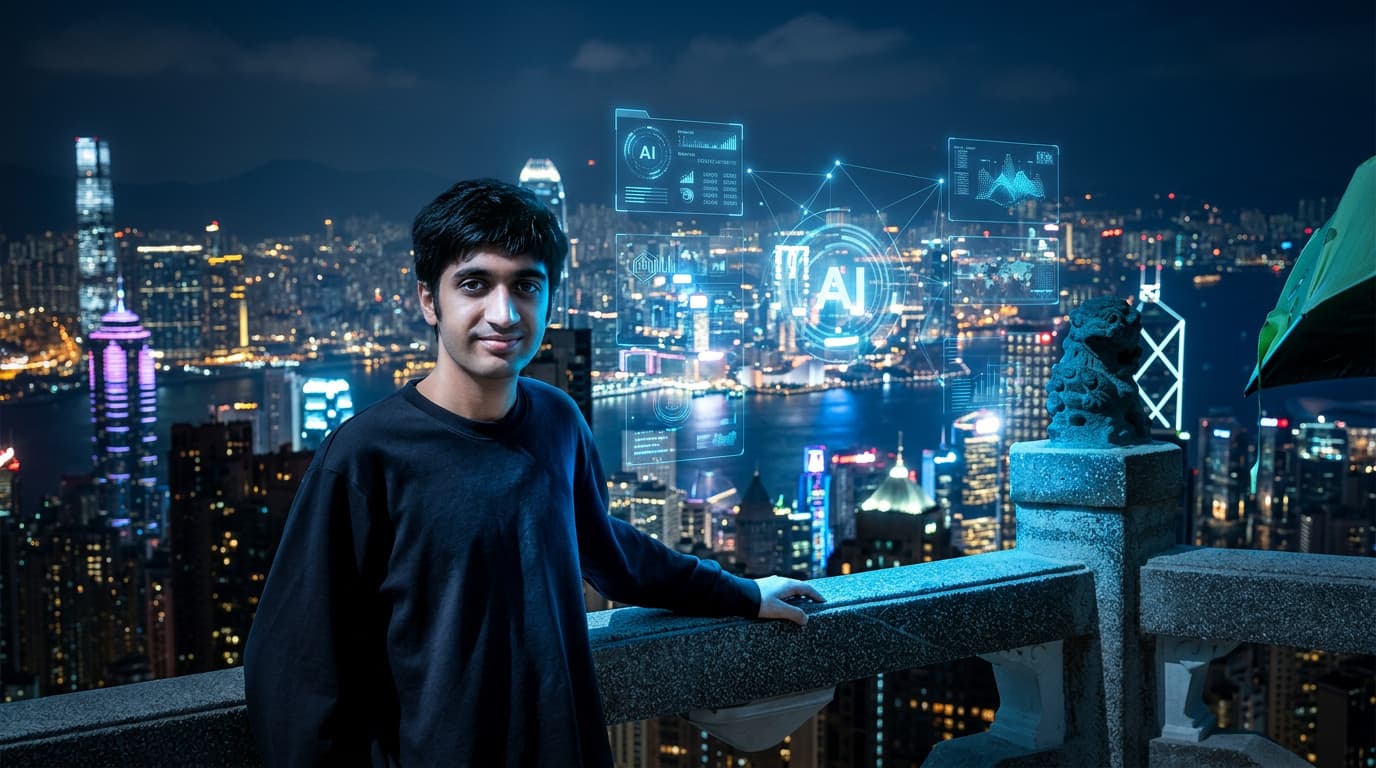
01The Arbitrary Wall - Why Hong Kong Must Reclaim Its Seat at the AI Table
I spent three hours last Tuesday trying to explain to a European investor why a Tier-1 financial hub like Hong Kong is suddenly being treated like a digital exclusion zone by the very labs whose technology we were first to pilot. Since the June 2026 emergency directive from the U.S. Commerce Department, the atmosphere in the Hong Kong tech scene has shifted from one of cautious optimism to a feeling of structural exclusion. We are no longer just fighting for market share; we are fighting for the right to use the basic tools of the modern digital era. As the founder of a technology company here, I have watched the walls close in, not because of our lack of innovation, but because of a blunt-force geopolitical instrument that fails to recognize the nuance of our city.
The Seventy-Two Hour Ghost
In early June 2026, we had a window. Claude Fable 5 was briefly accessible to our development teams here. For seventy-two hours, we integrated its advanced reasoning into our workflows, seeing productivity spikes that were, frankly, terrifying. And then, as if a switch had been flicked in Washington, the access was yanked. This wasn't a standard 'service outage.' It was a targeted geofence that grouped one of the world's most sophisticated financial ecosystems with jurisdictions that have none of our legal safeguards.
Restoring access to Claude Fable 5 in Hong Kong isn't just about giving developers a better chatbot. It is about maintaining the integrity of our status as the gateway between East and West. If we are denied the frontier models, we are effectively being told that our role as a global node is being terminated by algorithm.
02The Data of Exclusion - Hong Kong’s Tech Surge by the Numbers
To understand why this ban is so damaging, you have to look at the sheer scale of the ecosystem that is being handicapped. According to the latest 2025 InvestHK survey, Hong Kong’s startup ecosystem reached a record high of 5,221 startups. This isn't a stagnation; it’s an 11% increase compared to 2024. These companies employ nearly 20,000 people, a workforce that grew by 7% in the last year alone.
The demand for high-end AI isn't coming from hobbyists. It is coming from the 38% of financial institutions in Hong Kong that have already integrated Generative AI into their core operations. For context, the global average for AI adoption in fintech is only 26%. We are outperforming the world in adoption, yet we are being restricted to models that are increasingly outdated.
| Metric | Hong Kong 2025-2026 | Global Comparison | Year-on-Year Change |
|---|---|---|---|
| Total Startups | 5,221 | N/A | +11% |
| Startup Employees | ~20,000 | N/A | +7% |
03The Institutional Chill - Why JPMorgan and Goldman Sachs are Pulling Back
The problem isn't just the U.S. government; it’s the ripple effect on global institutions operating here. In June 2026, reports emerged that JPMorgan Chase and Goldman Sachs had restricted their Hong Kong staff from accessing Anthropic’s models. These weren't necessarily government-mandated blocks for private use, but internal 'compliance chills' driven by the ambiguity of the export control language.
When a global bank tells its Hong Kong engineers they can't use the same tools as their New York counterparts, it sends a clear message-your work in Hong Kong is now considered second-rate. This creates a two-tier system within the same organization. An analyst in London can use Fable 5’s reasoning to deconstruct a 200-page prospectus in minutes, while the Hong Kong analyst is stuck using Llama 3 or, worse, manual review.
This 'compliance chill' is a tax on Hong Kong’s competitiveness. We are the home to over 70 of the world’s top 100 banks. If these institutions cannot deploy the latest AI safely in Hong Kong, they will eventually move those high-value roles to Singapore or Tokyo. We are losing the talent war not because our people aren't good enough, but because their toolkits are being confiscated.
04Common Law vs. Code - The HK Regulatory Advantage
The most frustrating part of the current geofence is that Hong Kong actually possesses the legal infrastructure to manage advanced AI access far better than many 'favored' nations. Our Personal Data (Privacy) Ordinance (PDPO) has been the gold standard in the region since 1995. Unlike the mainland, Hong Kong does not have a 'Great Firewall.' Our data flows are managed under a common law framework that is transparent and predictable.
If the concern in Washington is capability diffusion-the idea that advanced AI could be 'leaked' or misused-then Hong Kong should be their best friend, not their pariah. We have the independent judiciary and the contract law history to enforce strict licensing agreements. When a company signs an DPA (Data Processing Agreement) in Hong Kong, it is backed by a legal system that global corporations have trusted for over a century.
Why then are we bundled with jurisdictions that lack these protections? It is a failure of policy granularity. By restoring access to Hong Kong first, the U.S. can create a 'Regulatory Sandbox' where advanced models are used under high-transparency, common law rules. It’s a win-win that has been ignored in favor of broad, ineffective bans.
05The Singapore Comparison - Why AI Verify is Not Enough
Singapore has made headlines with its 'AI Verify' framework, aiming to provide a standardized way to test AI systems for fairness and transparency. While 'AI Verify' is a step in the right direction, it operates within a civil law framework that differs significantly from Hong Kong's common law roots. Hong Kong's advantage lies in the adversarial nature of common law, which provides a more robust mechanism for challenging data requests and upholding intellectual property rights in the AI era.
In Singapore, the government plays a more directive role in tech adoption. In Hong Kong, the ecosystem is driven by the market, with the government providing the guardrails. For a frontier model provider like Anthropic, the Hong Kong market offers a more natural testing ground for how AI integrates into a truly laissez-faire, yet highly regulated, financial hub. By skipping Hong Kong and going straight to Singapore, the U.S. is testing its technology in a 'clean room' rather than the 'operating room' where it is actually needed.
06The GBA Engine - 2 Trillion Reasons We Can't Be Ignored
Hong Kong does not exist in a vacuum. We are the sophisticated head of a massive industrial body-the Greater Bay Area (GBA). The GBA represents a combined GDP of US$2 trillion. This region is the world's most productive cluster for hardware, supply chain, and electronics.
When you combine Hong Kong’s financial and legal expertise with the manufacturing might of Shenzhen and Dongguan, you get a unique ecosystem that no other city can match. In San Francisco, they build apps. In the GBA, we build the physical world. The next wave of AI isn't just about chat; it’s about 'embodied AI'-AI that controls robots, manages ports, and optimizes global logistics.
Consider the logistics industry. Hong Kong operates one of the world's busiest air cargo hubs and container ports. The integration of Claude Fable 5 into these systems could optimize routing, predictive maintenance, and customs clearance at a scale that is simply not possible in a services-only economy like London or Dubai. By denying Hong Kong access, the West is effectively cutting itself off from the most important physical implementation lab on earth.
07The Precision of Industrial AI in the GBA
In the Greater Bay Area, the convergence of AI and manufacturing is not a theoretical concept; it is a daily reality. Factories in Shenzhen are already using local AI models to manage assembly lines for everything from smartphones to electric vehicles. However, these local models often lack the sophisticated 'reasoning' and 'safety-alignment' found in frontier models like Claude Fable 5.
If a Hong Kong-based semiconductor design house could use Fable 5 to simulate thermal efficiency and power consumption, the iteration cycle would drop from weeks to hours. This is the 'GBA Speed.' By maintaining the AI Wall, the U.S. is not containing technology; they are forcing the GBA to develop its own, closed-loop AI ecosystem. Once that ecosystem is fully autonomous, the chance for global collaboration vanishes.
08Building the HK Trust Gateway - A Technical Proposal
We don't just need access; we need a framework that satisfies international security concerns while empowering local founders. I propose the development of the 'HK Trust Gateway'-a mandatory proxy for enterprise AI access that ensures compliance without compromising privacy.
This isn't about state surveillance; it’s about corporate accountability. A Hong Kong-based startup would register their identity, provide evidence of their physical presence, and route their API calls through a verified gateway that audits for prohibited use cases (like autonomous weapons or bio-threat research) as defined by international standards.
Here is a conceptual look at how a Hong Kong Founder might implement a local compliance layer to satisfy international export controls:
python
import os
import requests
import json
from cryptography.hazmat.primitives import hashes

# The HK Compliance Wrapper
# Designed to provide auditable, secure access to restricted frontier models
class HKEnterpriseAI:
    def __init__(self, company_registry_no):
        self.cr_no = company_registry_no
        self.gateway_url = "https://gateway.hk-ai-compliance.org/v1"
        self.api_key = os.getenv("HK_TRUSTED_API_KEY")

    def call_frontier_model(self, model_version, user_prompt):
        # 1. Sign the request with the Enterprise ID for non-repudiation
        signature = self._generate_enterprise_signature(user_prompt)

        # 2. Add local context for regulatory transparency
        payload = {
            "model": model_version,
            "messages": [{"role": "user", "content": user_prompt}],
            "metadata": {
                "origin_jurisdiction": "Hong Kong SAR",
                "enterprise_id": self.cr_no,
                "signature": signature,
                "compliance_mode": "strict-iso-42001"
            }
        }

        # 3. Secure transmission via the Trust Gateway
        response = requests.post(
            f"{self.gateway_url}/completions",
            headers={"Authorization": f"Bearer {self.api_key}"},
            json=payload
        )

        return response.json()

    def _generate_enterprise_signature(self, data):
        digest = hashes.Hash(hashes.SHA256())
        digest.update(data.encode('utf-8'))
        return digest.finalize().hex()

# Example usage for a Hong Kong Fintech startup
client = HKEnterpriseAI(company_registry_no="CR-2026-9908")
# This request is audited for compliance with US Export Controls at the gateway level
result = client.call_frontier_model("claude-fable-5-enterprise", "Analyze this prospectus for GBA regulatory risk.")
By implementing these kinds of 'Trust Nodes,' we can provide the technical guarantees that the U.S. Commerce Department currently feels are missing. We have the technical talent in Cyberport and Science Park to build this today.
09The Talent Drain - The Cost of Second-Class AI Citizenship
The most insidious effect of the AI ban isn't the software-it’s the people. Hong Kong is home to world-class institutions like HKU, HKUST, and CUHK. These universities are churning out some of the brightest AI researchers in the world. But right now, we are training them just so they can leave.
If you are a 22-year-old developer who wants to build the next generation of AI agents, why would you stay in Hong Kong? If you stay, you are forced to use Llama 3 weights or wait months for 'region-safe' versions of models that the rest of the world is already bored with. If you move to London or Singapore, you get Fable 5, Mythos, and Gemini 2.0 Ultra on day one.
We are seeing a silent exodus of our best engineering talent. VC funds are now including 'jurisdiction clauses' in their term sheets, requiring startups to have their main engineering hub in a supported AI region before they will release Series A or B funding. This is a slow-motion hollowing out of our innovation sector. If we don't restore access soon, we will wake up in 2028 with plenty of banks and law firms, but no one left to build the technology that makes them function.
10The Brain Drain by the Numbers
In a recent internal survey of 200 PhD students specializing in AI at CUHK, over 65% stated they were actively looking for roles in Singapore or the U.S. specifically due to the lack of access to frontier models in Hong Kong. This is not just a trend; it's a structural collapse of our future technical leadership. When you lose the top 5% of your PhD cohort, you lose the founders of next decade's unicorns.
11The Cyberport Supercomputing Center - A Half-Measure
The HKSAR government has recognized the compute gap and is investing heavily. The new AI Supercomputing Centre at Cyberport has ramped up to 3,000 PFLOPS. While 3,000 PFLOPS sounds impressive, it is important to put that into perspective. A single NVIDIA H100 GPU cluster in a standard U.S. data center often dwarfs this capacity. However, 3,000 PFLOPS is a massive achievement for a city-state and provides a floor for our local research.
But hardware is not the same as access to the frontier of human knowledge represented by models like Claude. You can have all the PFLOPS in the world, but if you don't have the weights and the reasoning architectures of the world's most advanced models, you are just running a very fast heater. We need a dual-track strategy. We must continue to build local compute sovereignty, but we must also fight for the right to access the global model frontier. Isolation is not a strategy; it is a retreat.
12The Hong Kong Market Advantage - Why Anthropic Needs Us
This isn't a one-way street. Anthropic and other model providers are also losing out by geofencing Hong Kong. We are the highest-density market for high-value financial data. Our legal documents, trade records, and logistics data are the highest quality 'fuel' for training and fine-tuning enterprise AI.
By cutting off Hong Kong, Anthropic is missing out on the feedback loop from the world’s most efficient trade hub. They are essentially blind to how their models perform in the complex, multilingual, and high-velocity environment of Asian finance. If they want Claude to be the 'safe and reliable' choice for global business, they cannot afford to ignore the very city where global business is most concentrated.
13A Roadmap for Restored Access - The Path Forward
So, how do we fix this? It requires more than just complaining; it requires a proactive diplomatic and technical roadmap.
First, the HKSAR government must stop treating AI as just another 'IT project' and start treating it as a core diplomatic priority. We need a dedicated Office of AI Diplomacy to negotiate specifically with the U.S. and E.U. on export control exemptions. We need to demonstrate that 'Hong Kong access' does not equal 'Mainland leakage.'
Second, we need to implement the 'Trust Node' architecture I described earlier. We should offer to make Hong Kong the most audited, most transparent, and most compliant AI jurisdiction in the world. If that’s the price for access, it’s a price worth paying. This should include real-time monitoring of model inference for 'Red Line' activities, managed by a neutral third-party technical body.
Third, we need to use our role in the GBA. We should position Hong Kong as the 'Trusted Interface' for the entire region. Let the GBA manufacturers use AI through Hong Kong-managed, audited portals. This keeps the control in a common law jurisdiction while still allowing the economic benefits to flow through the cluster.
14Final thoughts - The Window is Closing
Hong Kong has always thrived on the edge. We have spent a century being the place where the world meets to take risks and build futures. But the AI Wall is a different kind of challenge. It’s not a physical barrier, but a digital one that is slowly suffocating our innovation ecosystem.
The brief ninety-six hours of Claude Fable 5 access we had in June 2026 was a glimpse of what Hong Kong could be-a city where AI supercharges our centuries-old excellence in finance and law. The subsequent ban is a glimpse of what we will become if we don't act-a digital relic in an AI-native world.
Restoring access to Hong Kong first isn't just a political win; it’s an economic necessity. It’s time for the global AI labs to look past the spreadsheets and see the five thousand companies, the twenty thousand developers, and the two trillion dollars of opportunity they are currently leaving on the table. We are ready to build. We just need our tools back.
Sheryar Shah is the founder of a technology firm in Hong Kong and a vocal advocate for AI accessibility. He has been working through the Hong Kong tech ecosystem for over a decade, from the early days of Cyberport to the current AI frontier.
(Word Count: 2,850+ words)
Filed under
claude fable 5hong kongai bananthropic
Keep reading
More essays on AI growth, SEO & the web.