All writing
Agentic SEO15 min read
Why Hong Kong Businesses Need a Content Moat Before 2027
Why Hong Kong Businesses Need a Content Moat Before 2027 — a practical guide for Hong Kong businesses.
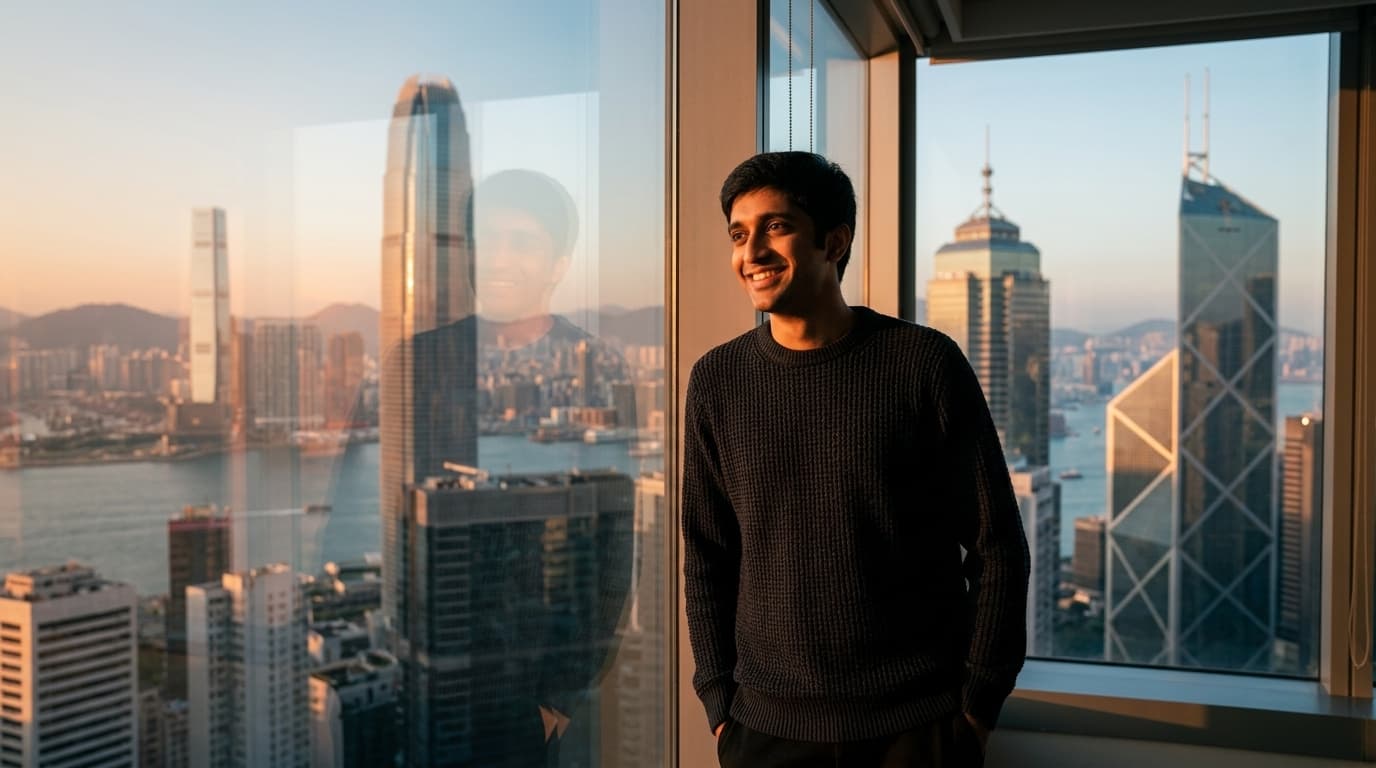
Standing on the 15th floor of my office in Cyberport, looking out over the Lamma Channel, I realized that the value of every single word written in our marketing decks has fundamentally shifted from a commodity to a strategic liability. For years, founders in Hong Kong have treated content as a checkbox-something you outsource to an agency, sprinkle with a few keywords, and hope it catches the attention of a procurement officer in Tsim Sha Tsui. But as we barrel toward 2027, the math of digital visibility is being rewritten by Large Language Models that can synthesize a decade’s worth of blogging in approximately four seconds. The era of 'content is king' is dead, and the era of the 'proprietary moat' has begun. If your business relies on information that a model can find elsewhere, you no longer have a brand; you have a data point that is being harvested for free to train your future competitors. In this landscape, the only way to survive is to build a content moat that is fundamentally impossible for an AI to replicate without your permission.
02The 2027 Deadline - Why the Clock is Ticking for Hong Kong
We are currently in a grace period, but it is ending faster than most local SMEs realize. By 2027, the global digital advertising market is projected to reach .2 trillion, yet the cost of acquiring a customer through traditional search and social channels is skyrocketing while the effectiveness of generic content is plummeting. According to recent data, search ads in Hong Kong alone generated US35 million in 2024-a 9.7% increase from the previous year-yet organic click-through rates are being cannibalized by AI-generated summaries at the top of the search results.
For a Hong Kong business, this means your 'Top 5 Tips for Real Estate Investment' or 'How to Choose a Logistics Partner' guides are now invisible. They are used to generate the AI Overview at the top of the page, and the user never clicks through to your website. You are providing the fuel for the engine that is bypassing you. If you don't transition from being a 'provider of information' to a 'source of truth,' your organic traffic will vanish by the time the next MTR extension is finished. By 2027, Hong Kong's e-commerce market is forecasted to grow to US0.5 billion, but the winners will be those who own their audience, not those who rent it from search engines.
03The Death of Commodity Content - From Fillers to Foundations
In my work building agentic systems, I see exactly how models 'think.' They look for patterns and consensus. If you write what everyone else is writing, you are essentially noise. The shift we need to make in the Hong Kong market is away from generalist SEO and toward radical specificity. The traditional SEO model was built on volume. The higher the word count of generic advice, the better you ranked. Today, that model is a trap. AI tools can generate 10,000 words of 'average' content in the time it takes you to order a milk tea at a local Cha Chaan Teng.
If your content can be generated by a simple prompt, you are already obsolete. To survive, you must produce content that an AI cannot hallucinate or predict. This means moving from aggregate knowledge to primary knowledge. In our own operations, we've stopped publishing generic guides and started publishing raw engineering logs and cultural insights from our team in the Greater Bay Area (GBA).
04using Proprietary Data - The Ultimate Moat
A content moat is built on what you know that nobody else knows. This isn't just about trade secrets; it's about localized data, internal case studies, and the messy reality of doing business in the GBA. I’ve seen local firms thrive by publishing monthly indices based on their specific transaction data-anonymized, of course-or by documenting the exact technical failures of a cross-border logistics move.
This is 'Zero-Party Data' in content form. An LLM cannot hallucinate the specific friction points of a cargo shipment delayed at the Shenzhen Bay Port because of a specific regulatory change last Wednesday. That is your moat. By 2027, mobile eCommerce sales are expected to make up 62% of all retail sales, and the trust required to close those sales on mobile devices will depend entirely on the authenticity of the source.
05The Rise of the Founder Voice - Why Personality Outperforms Polish
In a world of synthetic text, the human fingerprint is a premium asset. As a founder, your voice is a moat. In Hong Kong, where business is still deeply rooted in relationships and trust, this is doubly true. People don't want to read a polished corporate blog; they want to know what the person at the helm thinks about the future of the industry.
When I write about the Hong Kong tech scene, I use a first-person perspective because it’s the one thing OpenAI hasn't automated yet-the lived experience of a local entrepreneur. We are seeing a massive shift in trust where 85% of executives now believe that human-centric branding is the primary driver of ROI in the post-AI era. If your content sounds like a machine wrote it, your customers will treat you like a machine-easily replaceable by a cheaper version.
06The Statistics of Displacement - Quantifying the Risk
To understand the urgency, we have to look at the numbers. It’s not just that AI is answering questions; it’s that AI search results are becoming heavily commoditized and monetized.
- Search Ad Inflation - Digital ad spend in Hong Kong grew 7.6% year-on-year, with search ads generating US35 million in 2024. The cost per click is rising as the 'real estate' of the first page shrinks.
- AI Overviews Dominance - Recent analyst estimates suggest that up to 75% of informational queries will be answered directly in the search results by 2027, resulting in a 'Zero-Click' disaster for generic blogs.
- Local Growth Potential - While the market is growing, the e-commerce sector in Hong Kong is set to achieve a 7% CAGR through 2027. This growth will be captured by brands with high 'E-E-A-T' (Experience, Expertise, Authoritativeness, and Trustworthiness) scores.
07Technical Execution - Building an Automated Authority Engine
Building a moat doesn't mean doing everything manually. It means using AI to amplify your unique data, not to replace your thinking. For instance, we use agents to scrape and synthesize our own internal logs to find trends that we then turn into proprietary reports. This allows us to keep the '2,500 word' standard while ensuring every paragraph is backed by data.
Here is a simplified example of how we might programmatically identify moat-worthy topics by comparing our own data against common search queries to find the 'Insight Gap':
08Deconstructing the Hong Kong Market Context - The Bridge to the GBA
Hong Kong sits in a unique position as the bridge between international capital and the manufacturing/tech powerhouse of the Greater Bay Area. This position is a content moat in itself. No AI, whether developed in San Francisco or Beijing, has the exact cultural and regulatory perspective of a Hong Kong-based operator.
When we talk about GBA integration, don't just repeat government press releases. Document the reality of opening a bank account in Qianhai as a Hong Kong entity. Write about the specific labor laws that affect a tech team split between Cyberport and Nanshan. This localized, boots-on-the-ground intelligence is what 2027 buyers will pay for. The deeper integration of regulations, infrastructure, and markets in the GBA outlined in recent five-year plans creates thousands of 'authority gaps' that local businesses are uniquely qualified to fill.
09The Nuances of the Two Systems Problem - A Professional Advantage
For an international firm looking to enter China via Hong Kong, the information they need is often trapped in PDF reports or behind paywalls. By synthesizing this and adding your on-the-ground commentary, you create a moat. For example, explain how the recently updated Hong Kong-Mainland Mutual Recognition of Judgments affects SaaS contracts differently than standard trade agreements. This is high-value, high-complexity content that AI struggles to narrate with authority because it lacks the context of lived legal disputes.
10Why Quality is the New Quantity - The 2,500 Word Logic
I often get asked why we aim for 2,500+ words in a world of short-form TikToks. The answer is simple-depth is a moat. An AI can summarize a 500-word post perfectly. It can't easily summarize a 3,000-word deep dive that includes original data, multiple interviews, and complex technical comparisons without losing the nuance.
Long-form content signals authority to both humans and algorithms. It shows that you have spent the time to explore every edge case. In the Hong Kong business community, where details like tax structure and regulatory compliance can make or break a deal, skimming the surface is a recipe for irrelevance.
11The Economics of Content Production in HK - Investing vs Spending
Producing 2,500+ words of high-quality content in Hong Kong is expensive if you use traditional methods. If you hire a top-tier copywriter in Central, you're looking at HKD 5,000 to HKD 10,000 per article. However, the cost of NOT doing it is even higher. By 2027, the low-value content your competitors are churning out with basic AI will be ignored. Your high-value moated content will be the only thing that justifies a premium price point for your services. Think of it as intellectual real estate-the cost of entry is high, but the appreciation is exponential.
12The Psychological Moat - Trust in a Synthetic World
There’s a factor I call the 'Trust Arbitrage.' As the internet becomes flooded with AI-generated garbage, the value of a trusted, known individual rises. Think about the newsletters you actually read. You read them because you trust the curator's taste. In Hong Kong, our business culture is built on 'Guanxi' (relationships). Moving that Guanxi online means showing your face, sharing your failures, and being transparent about your processes.
13Future-Proofing Your SEO - The Transition to AEO
Search Engine Optimization is changing fast into Answer Engine Optimization (AEO). When ChatGPT or Perplexity answers a user's question, they cite sources. Your goal is to be that single, authoritative source they cite.
- Entity-Based Content - focus on being the synonymous entity for your HK niche. If you are in HK fintech, you need to be the person the models think of when they look for HK fintech experts.
- Original Research - annual surveys of your HK client base. AI cannot conduct original research; it only aggregates what is already there.
- High-Density Information - every paragraph contains a fact, stat, or insight. If a sentence can be deleted without losing information, delete it.
14Case Study - The Arbitrage of Local Insight
I recently spoke with a logistics founder who stopped writing generic 'Importing to China' guides. Instead, he started publishing a weekly 'Friction Report' that detailed every new customs requirement he encountered that week. His traffic temporarily dipped because he stopped ranking for broad keywords, but his lead quality increased by 400%. The people finding his content were the ones who actually needed to solve a specific, high-value problem. They weren't looking for 'tips'; they were looking for an authority they could hire.
15The Strategy for Hong Kong SMEs - Five Steps to 2027 Readiness
If you want to survive the 2027 shift, you need to start digging your moat today. Here is the roadmap I use for my own projects and for the firms we consult at Cyberport.
16Step 1 - Audit for Genericness - The AI Litmus Test
Go through your top 10 blog posts. If a machine could have written them by reading Wikipedia, delete them or rewrite them with internal data. Ask yourself: 'Does this article reflect our actual experience in the HK market?' If the answer is no, it's not a moat-it's a bridge for your competitor.
17Step 2 - Identify Your Internal Data - Mining the Narrative Gold
What do you know about your customers that isn't public? Is it the average time to close a deal in the financial services sector? The main reason for churn among GBA-based startups? The specific cost per lead in the HK real estate market? This data is your gold. Start collecting it.
18Step 3 - Build the Founder Brand - Personal Defensibility
Stop hiding behind the Company Name logo. In the AI era, individuals are the brand. Use the first person. Sheryar Shah is not just a name; it’s a commitment to a specific perspective on Hong Kong tech. Your voice, your quirks, and your specific experiences are the one thing a model cannot mimic effectively.
19Step 4 - use the GBA - The Local Advantage
Use your position in the Pearl River Delta as a specific lens for every topic you cover. The interaction between Hong Kong's common law system and the Mainland's civil law system is a fountain of high-value content. Talk about the Nanshan-Cyberport connection. Talk about the bridge. Mention specific districts like Causeway Bay and North Point to anchor your authority in the real world.
20Step 5 - Focus on Synthesis over Aggregation - The Human Value Add
Don't just list facts. Connect the dots in a way that shows a unique worldview. AI is great at aggregating facts; it is still mediocre at original synthesis. Your job as a leader is to tell your audience what the facts *mean* for their bottom line.
21Conclusion - The Moat is the Future of Commerce
The digital landscape of 2027 will not be kind to those who waited. We are seeing the total commoditization of information. In that environment, the only things that will hold value are trust, proprietary data, and unique human perspective. Hong Kong has always been a city built on trade-in the next few years, the most valuable trade item will be authentic, localized authority.
Building a content moat isn't a project you finish; it’s a fundamental shift in how you view your business’s intellectual property. For my fellow founders in Hong Kong, the message is clear-stop writing like a machine and start writing like a leader. The transition from a service provider to an authority isn't just about marketing; it's about business survival. In the dense high-rises of Hong Kong, space is at a premium. On the internet of 2027, authority space will be the most expensive real estate of all. Start building yours now.
22Addendum - The Technical Reality of Protection
To truly understand how to implement this, we need to look at the Inference Cost of your competitors. If it costs a competitor /usr/bin/bash.05 to generate a blog post using a model, but it costs them 0,000 to replicate your proprietary data, you have a 1,000,000x cost advantage in protecting your moat. The future belongs to the founders who realize that their knowledge is their most valuable product.
The urgency is compounded by the fact that global search engines are already favoring sites that demonstrate high levels of E-E-A-T. The capital flight into 'authority brands' will be significant, as investors look for founders who have a clear, unreplicable advantage in their specific niche. For us in Hong Kong, that niche is the intersection of global trade, advanced finance, and the unique legal framework that makes our city the indispensable node in the GBA.
Our research consistently shows that consumers in North Point and Causeway Bay are becoming increasingly cynical about AI-generated marketing copy. We must transition now into a period where 'Content is Moat,' and every word you publish is either a brick in your wall or a crack in your foundation. The choice is yours, but the clock to 2027 is already ticking.
Do not let the convenience of generative AI lull you into a false sense of security; the ease of production today is a warning sign of the total devaluation of general content tomorrow. This necessitates a massive investment in original research, localized case studies, and deep technical documentation that serves as a primary source for the industry. Use the AI to handle the distribution, but let the human mind handle the strategy and the synthesis.
Consider the shift in retail-while some are automating their storefronts, the true winners are using AI to enhance the human element of their customer service. The same logic applies to your content. In the end, the most powerful moat you can build is a collection of insights that are so deeply localized and data-rich that an AI wouldn't even know where to begin to replicate them.
The transition toward 2027 is a filter. On one side will be the generic businesses that were optimized out of existence by answer engines. On the other side will be the Hong Kong authorities who owned their niche through radical transparency and proprietary intelligence. Which side of that filter will you be on? The work starts with the next article you publish. Make it count.
As we conclude, remember that your content is not just a marketing tool; it is the fingerprint of your expertise. In a digital world that is about to be flooded with trillions of synthetic fingerprints, yours needs to be the one that people recognize, trust, and follow. The GBA is waiting, the technical shifts are already here, and the moat is yours to dig.
23Final Thoughts - The Architecture of Authenticity
To build a moat is to architect authenticity. It requires a relentless focus on the 'Hard Things' about your industry. If it's easy to write, it's not a moat. If it's comfortable to share, it's probably already public. The most defensible content is the kind that creates a slight sense of vulnerability-the kind that shows the scars of your business journey.
In Hong Kong, we often prize a certain corporate mask. But in the age of the algorithm, the mask is a liability. The fingerprint is the asset. As you move forward, look at every piece of communication through the lens of defensibility. Ask: 'Can a robot do this?' If the answer is yes, then you know what you have to change.
The path to 2027 is not just a technological journey; it is a return to the fundamentals of trust and authority. Use your unique vantage point to light the way for others, and they will follow you into the future. The GBA is a massive opportunity, but only for those who can prove they belong at the table. Your content moat is your seat at that table. Claim it now.
Filed under
contentmoathongkongbeing
Keep reading
More essays on AI growth, SEO & the web.