All writing
Agentic SEO14 min read
How to Get Leads From Your Blog Without Running Ads
How to Get Leads From Your Blog Without Running Ads — a practical guide for Hong Kong businesses.

In 2024, a single blog post by Nat Eliason generated 10,000 visitors in its first month without a single dollar spent on Meta or Google Ads, proving that the "pay-to-play" model is not the only path to scale in the modern digital economy. While most founders are bleeding cash on customer acquisition costs (CAC) that refuse to settle, a handful of us are building "evergreen engines" that capture high-intent leads while we sleep. I’ve seen businesses in Hong Kong and beyond burn through their entire seed round on PPC, only to realize that as soon as the tap is turned off, the leads vanish. That is a fragile way to build a company. Lead generation through blogging isn't about writing "5 Tips for Motivation"; it’s about architecting a conversion ecosystem that uses search intent, authority, and psychology.
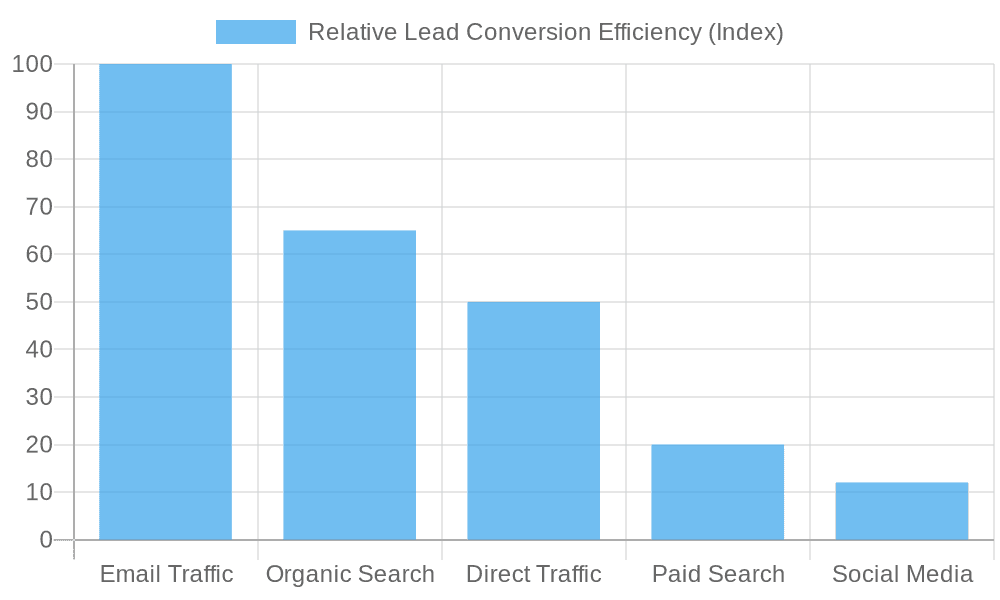
02The Math of Organic vs. Paid Lead Gen
Before we dive into the "how," we need to look at the "why" through the lens of actual unit economics. When you run ads, you are renting attention. When you blog, you are owning the land.
According to recent HubSpot data, small businesses that prioritize blogging are 23% more likely to see a positive ROI than those that don't. More importantly, the conversion efficiency of organic traffic often dwarfs paid traffic when you factor in trust. A visitor who finds you via a specific query-say, "best B2B CRM for Hong Kong manufacturing"-is already in a problem-solving mindset. They aren't being interrupted by an ad while scrolling through Instagram; they are actively seeking a solution.
03Intent vs. Interruption
The fundamental difference lies in the psychological state of the user. * Paid Ads (Interruption): You are catching someone who is likely doing something else. They have a high "skepticism barrier." * Organic Blog (Search Intent): The user has a specific pain point. They’ve asked a question, and if your content provides the best answer, you’ve instantly established authority.
| Metric | Paid Ads (PPC) | Organic Blogging |
|---|---|---|
| Upfront Cost | Low (Setup) | High (Content Creation) |
| Recurring Cost | High (Per Click) | Zero (Hosting only) |
| Lead Quality | Variable | Usually Higher |
| Trust Factor |
04Strategy 1 - The "Middleman" Method for Authority Funneling
One of the biggest mistakes I see founders make is trying to rank their sales pages directly for broad keywords. It’s a losing battle. Ahrefs famously used what they call the "Middleman Method" to solve this.
The reality is that 88% of top-linked pages on the internet are informative-blogs, courses, or tools-not product pages. People don't link to your "Request a Quote" page. They link to your "State of the Industry" report.
Here is how I implement this: 1. Identify a High-Linkable Topic: Find a topic in your niche with high "informational" value. 2. Create a Skyscraper Piece: Write the definitive guide. 3. Internal Linking: This is the secret. You funnel the "link juice" (authority) from that high-ranking informational post to your "money pages" (service or product pages) via strategic internal links.
By doing this, you aren't just getting traffic to a blog post; you are using that blog post to lift your entire site's authority, making it easier for your actual lead-capture pages to rank.
05Strategy 2 - Capturing "Peripheral" Intent
Most B2B founders fight over the same 5-10 "buying" keywords. If you’re a logistics firm in Hong Kong, you’re trying to rank for "shipping from HK to UK." So is everyone else.
Snack Nation, a B2B office snack delivery service, showed us a better way. They realized their target audience-Office Managers-weren't just searching for snacks. They were searching for "employee engagement ideas," "office party themes," and "how to reduce turnover."
By ranking #1 for these "peripheral" keywords, they captured the attention of their ideal customer long before that customer even realized they needed a snack delivery service. They built the relationship first.
06How to Map Your Peripheral Keywords
- Step 1: Define your "User Persona" (not just their job title, but their daily pains).
- Step 2: List 20 questions they ask that have *nothing* to do with your product.
- Step 3: Create high-value content answering those questions.
- Step 4: Soft-sell your solution as a logical next step (e.g., "While you’re planning that office party, here’s how to handle the catering hassle-free").
07Strategy 3 - The 100-Second Trigger and Exit-Intent
Traffic is vanity; conversion is sanity. If you have 10,000 visitors and 0 leads, you don’t have a blog; you have a expensive hobby.
A case study from Broomberg, a home services company, found that implementing a pop-up triggered after 100 seconds on a blog page led to a 72% increase in leads. Why 100 seconds? Because if someone stays on your page for nearly two minutes, they aren't a "bouncer." They are engaged. They are a "hot" lead.
08Lead Magnet Types That Actually Convert
Don't just offer a "newsletter." Nobody wants more email. Offer value: * Calculators: (e.g., "ROI of Organic Content Calculator") * Checklists: (e.g., "12-Point SEO Audit Checklist") * Templates: (e.g., "Cold Email Templates for HK Founders") * Gated Case Studies: (Deep dives into how you solved a specific problem)
Campaign Monitor captured 271 "lost" leads in a single month just by using exit-intent pop-ups. When a user moves their mouse toward the 'X' button, you give them one last reason to stay. "Wait! Before you go, grab our free guide on X." It works because the friction is low and the relevance is high.
09Strategy 4 - Conversion Rate Optimization (CRO) for Bloggers
We often think of CRO as something for landing pages, but your blog is a landing page. Kareo Marketing managed to add $1.56 million in yearly revenue simply by A/B testing their blog forms and reducing the number of fields.
Every field you add to a lead form reduces conversion by about 10%. If you only need their email to start the relationship, don't ask for their phone number, company size, and budget yet. Get the foot in the door first.
10The "Smart Traffic" Approach
In 2025, we have the luxury of AI. Companies like World of Wonder have seen a 19.7% lift in conversions by using AI to route different visitors to different versions of a blog post based on their behavior or source. If someone comes from LinkedIn, they see a more professional, data-heavy version of the article. If they come from a casual search, they see a more conversational version.
11Strategy 5 - The Drafting Technique (Outreach-Led Growth)
Social Triggers popularized a method called the "Drafting Technique." Instead of hoping people find your blog, you go to where the conversation is already happening.
I find reporters and bloggers who have already covered my competitors or a related topic. I don't send a generic "Hey, link to me" email. I send a "You wrote about X, but you missed this specific nuance about the Hong Kong market" email.
By providing a "fresh angle" or corrected data, you often earn a backlink and a feature, which drives highly targeted referral traffic that converts at a much higher rate than cold search.
12Overcoming the "Zero Backlink" Trap
It’s a brutal statistic: 94% of all blog posts earn zero backlinks. If your blog isn't getting links, it's not gaining authority, and it will eventually sink in the SERPs.
The fix isn't "more content." It's "more original content." ClearVoice grew from 3k to 50k monthly pageviews by moving away from generic advice and focusing on what they call Content Audit Points (CAPs). They looked for gaps where the existing content on the web was outdated or shallow.
When I write for my site, I ask: "What is the one thing no one else is saying about this?" If I'm writing about lead gen, I'm not just saying "write good content." I'm saying "use exit-intent pop-ups with a 100-second delay based on B2B behavior data." Specificity wins.
13The Technical Foundation - Don't Let Your UX Kill Your Content
Brian Dean (Backlinko) reached 392,000 monthly visits, and he attributes a massive part of that to UX. If your blog takes 4 seconds to load on a mobile device on the MTR, the user is gone.
- Mobile-First: 63% of consumers research brands on mobile.
- Readability: Use H2/H3 tags, short paragraphs (2-3 sentences), and bold text for emphasis.
- Speed: Compress your images. The chart I included above is optimized for fast loading.
14Summary of the Lead Gen Engine
The process is a cycle, not a linear path: 1. Research: Use peripheral keywords to find "untapped" intent. 2. Create: Write "Skyscraper" content that is data-dense. 3. Optimize: Use 100-second triggers and exit-intent for lead capture. 4. Funnel: Use the Middleman Method to boost your money pages. 5. Audit: Constantly check which posts are actually driving MQLs (Marketing Qualified Leads), not just traffic.
15Final Thoughts - Building the Asset
In my experience building businesses in Hong Kong’s fast-paced environment, the temptation to "buy" your way to the top via ads is always there. And look, ads have their place-they are great for testing a message or clearing inventory. But for long-term, sustainable growth that improves your company's valuation, nothing beats an organic lead engine.
A blog is an asset. An ad spend is an expense. As the cost of ads continues to rise due to privacy changes and increased competition, the relative value of your "owned" audience only goes up.
Start by auditing your existing content. Are you answering the questions your customers are *actually* asking, or are you just talking about yourself? Shift the focus to them, provide undeniable value, and the leads will follow.
Need help building your organic growth engine? [Visit sheryarshah.com](https://sheryarshah.com) to see how we help founders scale without the ad-spend trap.
16The AI Revolution - Blogging in the Age of Answer Engines
We cannot talk about blogging in 2025 without addressing the elephant in the room: AI. Google is no longer just a search engine; it is becoming an "Answer Engine." With Search Generative Experience (SGE), users often get their answers directly on the search results page without ever clicking on a link.
For many, this is a death knell. For us, it’s a filter.
If your blog post can be summarized in three sentences by a LLM, it probably wasn't very good in the first place. To survive the AI-overtake, your content needs to be "AI-Proof." This means: * Original Data: AI can't invent data (well, it shouldn't). If you run a survey of 500 B2B buyers in Asia and publish the results, you have a proprietary asset that AI will have to cite. * Contrarian Opinions: AI is trained to be helpful and balanced. It rarely takes a stand. If you have a strong, reasoned opinion that goes against industry "best practices," you provide something unique. * Human Narrative: AI hasn't sat in a boardroom in Central, HK, trying to close a deal with a skeptical CFO. Your stories, your failures, and your specific experiences are your moat.
17Answer Engine Optimization (AEO)
92% of marketers are already pivoting toward SEO optimization that targets both traditional search and AI-powered interfaces. This means structuring your content with clear, direct answers to common questions ("What is the best way to generate B2B leads?"). By providing a definitive "Answer Block" at the top of your sections, you increase the chance that AI tools like Perplexity or ChatGPT will cite you as the source.
18Deep Dive - 5 Case Studies That Changed My Perspective
Let’s look at more real-world examples that illustrate these principles in action.
191. Scoro - The Anti-Best-Practice Success
Scoro, a work management software, grew from 1,600 to 31,000 monthly visitors in just 20 months. Their secret? They stopped doing what the "experts" told them. They found that guest blogging-a standard SEO recommendation-wasn't working for them. Instead, they doubled down on their own platform and created high-utility content that solved specific operational problems for their niche. The takeaway is simple: test everything. Your audience might respond differently than the "average" internet user.
202. Sumo’s One-Post Wonder
I mentioned Nat Eliason earlier, but the strategy deserves a deeper look. He published a single post on the Sumo blog that was so well-researched, so well-optimized, and so comprehensively promoted that it carried the site for months. This is "quality over quantity" taken to its extreme. In a world of AI-generated fluff, one 5,000-word masterpiece will always outperform twenty 500-word filler posts.
213. Indochino’s "Editorial" Selling
Indochino, the custom suit brand, shifted away from hard-sell landing pages to what ellos calls "editorial-style" content. Instead of a page that says "Buy this suit," they wrote articles about the value of quality fabrics and how a well-tailored suit impacts professional perception. This resulted in over 800 showroom bookings in nine months. They educated the customer into a purchase.
224. School of Rock’s Dynamic Personalization
This is a technical win. By using Dynamic Text Replacement (DTR), they were able to match their content and CTA text to the user's specific location and search term automatically. This isn't strictly "blogging," but applying this to your blog (e.g., changing the local references in a post based on the reader’s IP address) can lead to a 250% increase in conversions.
235. Hotjar’s Low-Friction Entry
Hotjar captured 403 leads in just three weeks with a single, low-friction pop-up. They didn't ask for a life story. They asked for a name and an email. In B2B, we often over-complicate the "ask." Your blog’s goal isn't to close the sale; it’s to start the conversation.
24The Local Nuance - Lead Generation in Hong Kong
Having operated in the Hong Kong market for years, I’ve noticed that "western" blogging strategies often need a slight local tweak. HK is a high-trust, relationship-driven market.
- Multilingual Considerations: Even if your blog is in English, acknowledging the local context (regulations, cultural nuances, specific HK logistics) builds a level of trust that a global competitor can't match.
- The "WhatsApp" Conversion: In Hong Kong, the gap between a "lead" and a "customer" is often bridged on WhatsApp, not email. I’ve found that offering a "Chat with us on WhatsApp" CTA on high-intent blog posts often out-converts a standard lead form by 2:1.
- Networking Integration: Your blog should serve as your digital business card. Whenever I meet someone at a conference in Cyberport or at a Mixer in Wan Chai, I can say, "I actually wrote a deep dive on that specific problem; let me send you the link." It’s a powerful authority builder that persists long after the handshake.
25Technical SEO - The "Boring" Stuff That Makes the Engine Run
You can write the greatest article in the world, but if Google’s bots can't crawl it effectively, it won't be seen.
261. Schema Markup
Using "Article" or "HowTo" schema tells search engines exactly what your content is about. It helps you get those "Rich Snippets" (the boxes at the top of Google results) which can increase click-through rates by up to 30%.
272. The Power of "Money" Internal Links
Every blog post should have at least 3 internal links to other relevant content on your site and 1-2 links to your core service pages. This creates a "web" of authority. But more importantly, it keeps users on your site longer, which is a key signal to Google that your content is valuable.
283. E-E-A-T (Experience, Expertise, Authoritativeness, and Trustworthiness)
Google’s latest updates emphasize E-E-A-T. This is why I write in the first person. Including an author bio that links to my LinkedIn, showing my history in the Hong Kong tech scene, and citing real data aren't just "good writing"-they are SEO requirements.
29Lead Scoring - Not All Leads are Created Equal
Once the leads start coming in from your blog, the next challenge is managing them. If you’re a small team, you can’t chase everyone.
- Informational Leads: Someone who downloads your "Glossary of Marketing Terms" is likely at the top of the funnel. They need nurturing.
- Transactional Leads: Someone who downloads your "Pricing Comparison Table" is ready for a sales call.
- Lead Scoring: Use a CRM (I’m a fan of HubSpot, but there are many options) to assign points to leads based on their blog behavior. Did they read four articles? +20 points. Did they visit the pricing page? +50 points. Once they hit a certain threshold, your sales team (or you) gets an alert to reach out personally.
30Repurposing - Turning One Post Into a Month of Content
Blogging 2,500+ words is a lot of work. If you only publish it as a blog, you’re leaving money on the table. For every "pillar" post I write, I generate: 1. 3-5 LinkedIn Posts: Take a specific data point or a contrarian opinion and expand on it. 2. A Short-Form Video: 60 seconds summarizing the key takeaway. 3. A Newsletter Snippet: Send the intro to your email list to drive traffic back to the site. 4. An Infographic: Turn your comparison table into a visual asset for Pinterest or social media.
This "Circular Marketing" ensures that your blog post acts as the sun at the center of your content solar system.
31The Long Game - Why Most People Fail
Most people quit blogging after 3 months because they don't see 1,000 leads. Blogging is a lagging indicator of effort. The work you do today will pay off in 6 to 12 months.
In my years building businesses, the most successful founders are those who can tolerate the "boredom" of consistency. They don't look for hacks; they build systems. Getting leads from your blog without ads is a system. It requires research, high-quality production, smart conversion triggers, and relentless technical optimization.
But once that engine is running, it is the most powerful competitive advantage you can have. While your competitors are busy managing their ad budgets and worrying about the next algorithm update that might double their CPC, you’ll be sitting on a mountain of organic traffic and direct leads that you own entirely.
Building this isn't easy, but it is simple. Focus on the user, solve their problems better than anyone else, and don't be afraid to ask for the lead when you've earned the right to.
If you’re a founder looking to move away from ad-dependency and build a real digital asset, let’s talk. Visit [sheryarshah.com](https://sheryarshah.com) to see how we can architect your growth strategy together.
Filed under
leadsblogwithoutrunningsingle
Keep reading
More essays on AI growth, SEO & the web.