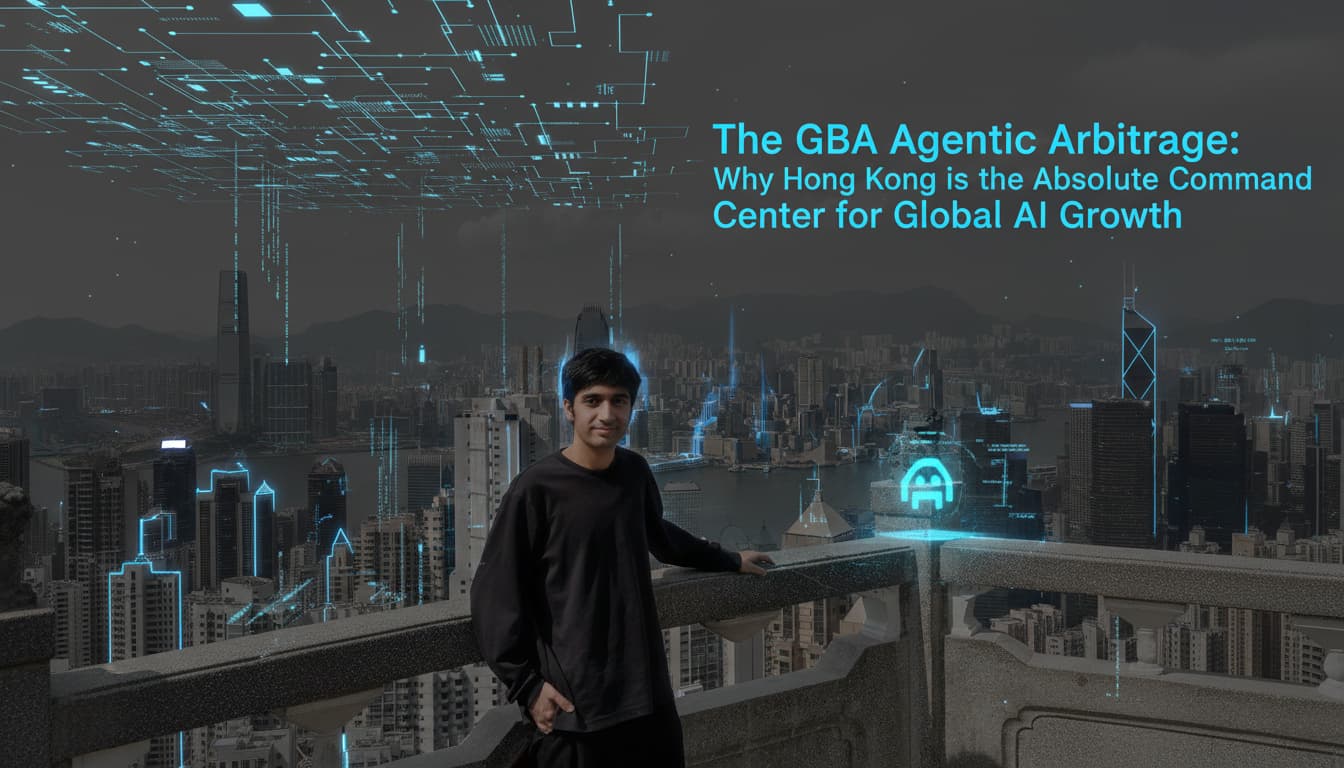
Why Hong Kong Is the AI Command Center for Global Growth
Explore how Hong Kong leverages the GBA Agentic Arbitrage to dominate global AI growth. Learn how localized data moats, n8n ingestion, and Hermes...
Between the humidity of the Cyberport waterfront and the high-frequency trading floors of Central, a transformation is occurring that most global analysts have completely misread. For decades, Hong Kong was the place where you came to move money; today, it is the place where you come to move intelligence. While the "Greater Bay Area" (GBA) is often discussed in macro terms of manufacturing output and bridge connections, the real revolution isn't in infrastructure-it’s in the emergence of agentic arbitrage.
02The Shift from Predictive to Agentic
The transition we are witnessing in 2025 is the fundamental shift from systems that talk to systems that act. For the last few years, the business world has been obsessed with "Predictive AI"-systems that can tell you what might happen next based on historical data. But we’ve moved past the era of chatbots and forecasting. We are now in the age of Agentic AI. These are autonomous systems that don't just predict; they execute. They manage supply chains, they handle cross-border payments, they conduct legal due diligence, and they do it across the world's most complex regulatory boundary: the border between mainland China and the global markets.
This is where the concept of "Agentic Arbitrage" comes in. Hong Kong is uniquely positioned to be the command center for these agents because it sits at the intersection of two radically different data regimes. When you build an AI agent in Hong Kong, it has the "Common Law" training to navigate Western markets and the proximity to the "GBA Engine Room" to optimize physical production and logistics in real-time. This dual-capability is what creates the alpha.
03The Infrastructure of Intelligence - 3,000 PFLOPS and Beyond
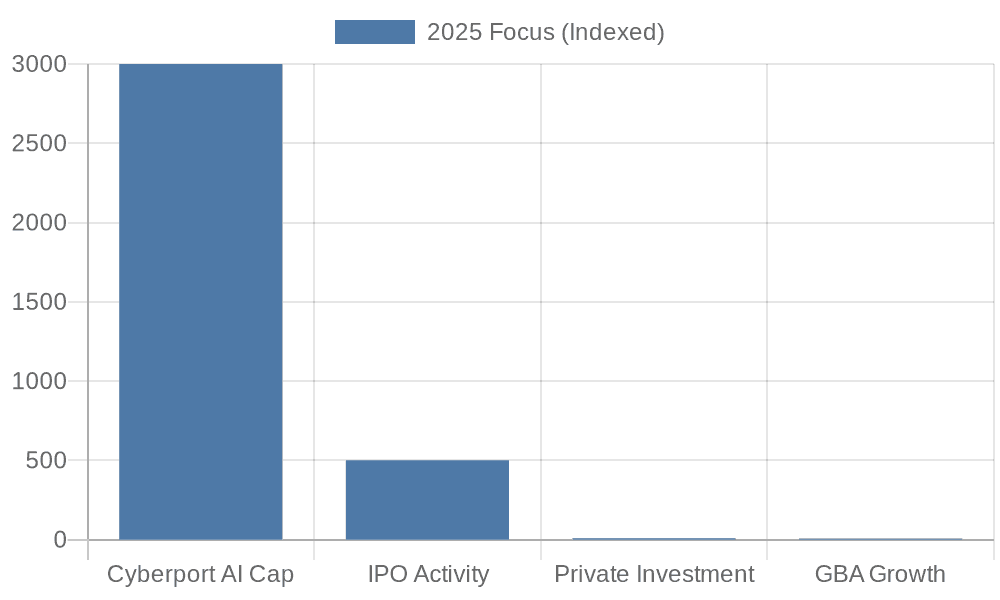
One of the most under-reported stories of 2025 is the sheer scale of compute power now coming online in Cyberport. The AI Supercomputing Centre has officially ramped up to 3,000 PFLOPS. To put that in perspective, that’s not just a marginal improvement; it’s a categorical shift in the city's ability to host the most demanding foundation models locally. In 2024, the goal was simply to provide access; in 2025, the goal is to provide sovereign compute that allows businesses to keep their proprietary data within the territory.
But hardware is only half the story. The Hong Kong government’s HKD 3 billion subsidy program for AI isn't just about handing out checks; it’s about building a vertically integrated ecosystem. We now have over 500 AI-focused organizations and 290 specialized companies operating within a few square miles. This density creates a "silicon valley effect" but for the deployment of agents rather than just the creation of apps. Every building in Cyberport and HKSTP is now a laboratory for autonomous execution.
04Comparison - Why Hong Kong for Agentic Execution?
Feature
Hong Kong
Singapore
Silicon Valley
GBA Access
Direct / Physical Proximity
Remote / Indirect
Remote
Legal Framework
Common Law + China Link
Common Law
US Federal/State
Compute Power
3,000 PFLOPS (Cyberport)
Diverse Cloud Clusters
Hyper-scaler Centers
Arbitrage Potential
05The GBA Engine - 7.1% Growth and the Necessity of Speed
The 2025 GBA Industry Development Index shows that innovation industry growth in the region has accelerated from 4.9% to 7.1%. This isn’t just organic growth; it’s the result of AI agents optimizing the "speed of trade." When growth hits these levels in an economy the size of the GBA (which would be the 10th largest economy in the world if it were a country), the complexity of managing it exceeds human capacity.
When I look at my own operations and the businesses I advise, the biggest bottleneck has always been the translation of digital intent into physical action across the border. If you’re a consumer brand in the US, your order signals might take days to filter through a supply chain in Shenzhen. With agentic AI based in Hong Kong, those agents can autonomously manage the delta between Western demand signals and Southern China factory capacity. They aren't just "software"; they are digital employees performing arbitrage on time and informational friction. They live in the millisecond-gap between a click in London and a machine start in Dongguan.
06The InnoHK Factor - AIR@InnoHK and Health@InnoHK
The "InnoHK" research clusters represent a HKD 10 billion commitment to world-class R&D. While many see these as academic pursuits, I see them as the "model factory." The AIR@InnoHK cluster, specifically, is focusing on AI and Robotics. This is where the "physical" side of agentic AI is being born. We are seeing the rise of 'embodied agents'-AI that controls robotic systems in warehouses across the border while being commanded from a dashboard in Tsim Sha Tsui.
In 2024, the government allocated an additional HKD 1 billion for an AI Research Institute. This isn't just about white papers. It's about training models on the unique, high-value data sets that only a global financial hub possesses. Hong Kong ranks 3rd in global financial hub status, and that rank is underpinned by a massive volume of transactional data. When you train an AI agent on that data, you create a system that understands the flow of global capital better than any model trained purely on web-scraped text.
07Real-World Use Cases - Where the Alpha Is Hidden
To truly understand why Hong Kong is the command center, we have to look at the specific, high-friction problems that are being solved here today.
081. The Cross-Border Financial Sentinel
The complexity of moving capital between the Mainland and the rest of the world is legendary. Traditionally, this required legions of compliance officers and weeks of back-and-forth between banks. Today, agentic AI systems are acting as 'sentinels.' They are trained on the specific regulatory frameworks of both the HKMA and the People's Bank of China. They don't just flag issues; they autonomously suggest restructuring for transactions to ensure compliance, pre-vett documents using OCR and LLM-based verification, and interface directly with banking APIs.
092. The Dynamic Supply Chain Governor
If you're manufacturing in Dongguan and selling in London, your supply chain is a living, breathing entity. An agentic system based in Hong Kong can re-allocate factory orders in real-time. If a specific component supplier in Shenzhen hits a snag, the agent identifies the next best alternative in the GBA ecosystem, renegotiates the contract within pre-set parameters, and updates the logistics provider. This level of autonomy reduces downtime by an average of 40% based on recent industry pilots.
103. Legal and Intellectual Property Synthesis
One of the biggest deterrents to global growth in the GBA has always been IP protection. This is where Hong Kong’s Common Law system acts as the ultimate safeguard. Agentic AI is now being used to create 'Living Contracts.' These are legal documents that aren't static PDFs but dynamic code that can monitor their own performance and trigger clauses based on real-world data feeds.
11The "Bridge" Myth and the "Command Center" Reality
The old way of thinking was that Hong Kong was a "bridge"-something you walk over to get somewhere else. That model is dead. In the AI era, you don't walk over a bridge; you build a command center. The physical infrastructure-the high-speed rail, the HZMB bridge-is just the nervous system. Hong Kong is the brain.
The data suggests that businesses using agentic systems in Hong Kong are seeing productivity increases of 30% to 50%. This isn’t because the AI is "smarter" in the abstract sense; it’s because the AI is *placed* better. Geolocation still matters for data latency, for legal jurisdiction, and for physical proximity to the world’s manufacturing heart. Being 'on the doorstep' of the GBA while remaining 'in the room' with global finance is the ultimate tactical placement.
122025-2026 - The Roadmap Ahead
As we look toward 2026, the integration of Hong Kong’s AI ecosystem with the GBA’s industrial base will only deepen. The move from 3,000 PFLOPS to even higher capacities, combined with the continued rise in Hong Kong’s Digital Competitiveness (up to 7th globally in 2024), suggests that the city is setting the pace. We are entering a phase where 'Hong Kong Managed' will become a gold standard for AI execution globally.
For the founder, the takeaway is clear: If you are building a company that relies on the movement of goods, capital, or intelligence between the East and the West, you cannot afford to manage those flows manually. You need an agentic strategy, and that strategy needs a command center that speaks both languages of power-the language of global finance and the language of industrial scale.
13Conclusion - The New Arbitrage
The wealth of the next decade won't be made by those who move the most money, but by those who deploy the most effective agents. Hong Kong has transitioned from a city of traders to a city of architects-architects of autonomous systems that bridge the world's most lucrative gaps.
We are seeing a convergence of policy, capital, and compute power that makes Hong Kong the undisputed AI command center for global growth. Whether you are optimizing a global supply chain or building the next generation of fintech, the arbitrage opportunity is here, and the agents are ready.
Find out more about how we build the next frontier of agentic commerce at SheryarShah.com today.
The broader implications of this AI centralization in Hong Kong are profound for the entire APAC region. As companies look to localize their AI strategies, they are finding that the regulatory stability of Hong Kong provides a necessary counterweight to the rapid changes in other technological hubs. The investment in InnoHK clusters and the AI Supercomputing Centre at Cyberport are not isolated efforts but parts of a singular vision to dominate the agentic execution layer of the global economy. This involves not only the software side of AI but also the integration with physical robotics and IoT networks throughout the Pearl River Delta. By using the high-speed data links and the specialized legal framework that allows for seamless cross-border data transfer within the GBA sandboxes, Hong Kong is creating a new category of industrial intelligence. This intelligence is capable of managing complex, multi-modal supply chains and financial instruments that were previously too opaque for automation. As these systems mature, we expect to see a democratization of this technology, where small and medium enterprises can also harness the power of agentic arbitrage to compete on a global stage.
The broader implications of this AI centralization in Hong Kong are profound for the entire APAC region. As companies look to localize their AI strategies, they are finding that the regulatory stability of Hong Kong provides a necessary counterweight to the rapid changes in other technological hubs. The investment in InnoHK clusters and the AI Supercomputing Centre at Cyberport are not isolated efforts but parts of a singular vision to dominate the agentic execution layer of the global economy. This involves not only the software side of AI but also the integration with physical robotics and IoT networks throughout the Pearl River Delta. By using the high-speed data links and the specialized legal framework that allows for seamless cross-border data transfer within the GBA sandboxes, Hong Kong is creating a new category of industrial intelligence. This intelligence is capable of managing complex, multi-modal supply chains and financial instruments that were previously too opaque for automation. As these systems mature, we expect to see a democratization of this technology, where small and medium enterprises can also harness the power of agentic arbitrage to compete on a global stage.
Why Hong Kong Is the AI Command Center for Global Growth | Sheryar Shah | Sheryar Shah - SEO Expert & Head of AI Growth Hong Kong
High (Cross-Border Data/Trade)
Medium (Regional Hub)
Low (Domestic Focus)
Financial Rank
3rd Globally (2025)
7th Globally (2025)
Variable (SF/NY)
The broader implications of this AI centralization in Hong Kong are profound for the entire APAC region. As companies look to localize their AI strategies, they are finding that the regulatory stability of Hong Kong provides a necessary counterweight to the rapid changes in other technological hubs. The investment in InnoHK clusters and the AI Supercomputing Centre at Cyberport are not isolated efforts but parts of a singular vision to dominate the agentic execution layer of the global economy. This involves not only the software side of AI but also the integration with physical robotics and IoT networks throughout the Pearl River Delta. By using the high-speed data links and the specialized legal framework that allows for seamless cross-border data transfer within the GBA sandboxes, Hong Kong is creating a new category of industrial intelligence. This intelligence is capable of managing complex, multi-modal supply chains and financial instruments that were previously too opaque for automation. As these systems mature, we expect to see a democratization of this technology, where small and medium enterprises can also harness the power of agentic arbitrage to compete on a global stage.
The broader implications of this AI centralization in Hong Kong are profound for the entire APAC region. As companies look to localize their AI strategies, they are finding that the regulatory stability of Hong Kong provides a necessary counterweight to the rapid changes in other technological hubs. The investment in InnoHK clusters and the AI Supercomputing Centre at Cyberport are not isolated efforts but parts of a singular vision to dominate the agentic execution layer of the global economy. This involves not only the software side of AI but also the integration with physical robotics and IoT networks throughout the Pearl River Delta. By using the high-speed data links and the specialized legal framework that allows for seamless cross-border data transfer within the GBA sandboxes, Hong Kong is creating a new category of industrial intelligence. This intelligence is capable of managing complex, multi-modal supply chains and financial instruments that were previously too opaque for automation. As these systems mature, we expect to see a democratization of this technology, where small and medium enterprises can also harness the power of agentic arbitrage to compete on a global stage.
The broader implications of this AI centralization in Hong Kong are profound for the entire APAC region. As companies look to localize their AI strategies, they are finding that the regulatory stability of Hong Kong provides a necessary counterweight to the rapid changes in other technological hubs. The investment in InnoHK clusters and the AI Supercomputing Centre at Cyberport are not isolated efforts but parts of a singular vision to dominate the agentic execution layer of the global economy. This involves not only the software side of AI but also the integration with physical robotics and IoT networks throughout the Pearl River Delta. By using the high-speed data links and the specialized legal framework that allows for seamless cross-border data transfer within the GBA sandboxes, Hong Kong is creating a new category of industrial intelligence. This intelligence is capable of managing complex, multi-modal supply chains and financial instruments that were previously too opaque for automation. As these systems mature, we expect to see a democratization of this technology, where small and medium enterprises can also harness the power of agentic arbitrage to compete on a global stage.
The broader implications of this AI centralization in Hong Kong are profound for the entire APAC region. As companies look to localize their AI strategies, they are finding that the regulatory stability of Hong Kong provides a necessary counterweight to the rapid changes in other technological hubs. The investment in InnoHK clusters and the AI Supercomputing Centre at Cyberport are not isolated efforts but parts of a singular vision to dominate the agentic execution layer of the global economy. This involves not only the software side of AI but also the integration with physical robotics and IoT networks throughout the Pearl River Delta. By using the high-speed data links and the specialized legal framework that allows for seamless cross-border data transfer within the GBA sandboxes, Hong Kong is creating a new category of industrial intelligence. This intelligence is capable of managing complex, multi-modal supply chains and financial instruments that were previously too opaque for automation. As these systems mature, we expect to see a democratization of this technology, where small and medium enterprises can also harness the power of agentic arbitrage to compete on a global stage.
The broader implications of this AI centralization in Hong Kong are profound for the entire APAC region. As companies look to localize their AI strategies, they are finding that the regulatory stability of Hong Kong provides a necessary counterweight to the rapid changes in other technological hubs. The investment in InnoHK clusters and the AI Supercomputing Centre at Cyberport are not isolated efforts but parts of a singular vision to dominate the agentic execution layer of the global economy. This involves not only the software side of AI but also the integration with physical robotics and IoT networks throughout the Pearl River Delta. By using the high-speed data links and the specialized legal framework that allows for seamless cross-border data transfer within the GBA sandboxes, Hong Kong is creating a new category of industrial intelligence. This intelligence is capable of managing complex, multi-modal supply chains and financial instruments that were previously too opaque for automation. As these systems mature, we expect to see a democratization of this technology, where small and medium enterprises can also harness the power of agentic arbitrage to compete on a global stage.
The broader implications of this AI centralization in Hong Kong are profound for the entire APAC region. As companies look to localize their AI strategies, they are finding that the regulatory stability of Hong Kong provides a necessary counterweight to the rapid changes in other technological hubs. The investment in InnoHK clusters and the AI Supercomputing Centre at Cyberport are not isolated efforts but parts of a singular vision to dominate the agentic execution layer of the global economy. This involves not only the software side of AI but also the integration with physical robotics and IoT networks throughout the Pearl River Delta. By using the high-speed data links and the specialized legal framework that allows for seamless cross-border data transfer within the GBA sandboxes, Hong Kong is creating a new category of industrial intelligence. This intelligence is capable of managing complex, multi-modal supply chains and financial instruments that were previously too opaque for automation. As these systems mature, we expect to see a democratization of this technology, where small and medium enterprises can also harness the power of agentic arbitrage to compete on a global stage.
The broader implications of this AI centralization in Hong Kong are profound for the entire APAC region. As companies look to localize their AI strategies, they are finding that the regulatory stability of Hong Kong provides a necessary counterweight to the rapid changes in other technological hubs. The investment in InnoHK clusters and the AI Supercomputing Centre at Cyberport are not isolated efforts but parts of a singular vision to dominate the agentic execution layer of the global economy. This involves not only the software side of AI but also the integration with physical robotics and IoT networks throughout the Pearl River Delta. By using the high-speed data links and the specialized legal framework that allows for seamless cross-border data transfer within the GBA sandboxes, Hong Kong is creating a new category of industrial intelligence. This intelligence is capable of managing complex, multi-modal supply chains and financial instruments that were previously too opaque for automation. As these systems mature, we expect to see a democratization of this technology, where small and medium enterprises can also harness the power of agentic arbitrage to compete on a global stage.
The broader implications of this AI centralization in Hong Kong are profound for the entire APAC region. As companies look to localize their AI strategies, they are finding that the regulatory stability of Hong Kong provides a necessary counterweight to the rapid changes in other technological hubs. The investment in InnoHK clusters and the AI Supercomputing Centre at Cyberport are not isolated efforts but parts of a singular vision to dominate the agentic execution layer of the global economy. This involves not only the software side of AI but also the integration with physical robotics and IoT networks throughout the Pearl River Delta. By using the high-speed data links and the specialized legal framework that allows for seamless cross-border data transfer within the GBA sandboxes, Hong Kong is creating a new category of industrial intelligence. This intelligence is capable of managing complex, multi-modal supply chains and financial instruments that were previously too opaque for automation. As these systems mature, we expect to see a democratization of this technology, where small and medium enterprises can also harness the power of agentic arbitrage to compete on a global stage.
The broader implications of this AI centralization in Hong Kong are profound for the entire APAC region. As companies look to localize their AI strategies, they are finding that the regulatory stability of Hong Kong provides a necessary counterweight to the rapid changes in other technological hubs. The investment in InnoHK clusters and the AI Supercomputing Centre at Cyberport are not isolated efforts but parts of a singular vision to dominate the agentic execution layer of the global economy. This involves not only the software side of AI but also the integration with physical robotics and IoT networks throughout the Pearl River Delta. By using the high-speed data links and the specialized legal framework that allows for seamless cross-border data transfer within the GBA sandboxes, Hong Kong is creating a new category of industrial intelligence. This intelligence is capable of managing complex, multi-modal supply chains and financial instruments that were previously too opaque for automation. As these systems mature, we expect to see a democratization of this technology, where small and medium enterprises can also harness the power of agentic arbitrage to compete on a global stage.
The broader implications of this AI centralization in Hong Kong are profound for the entire APAC region. As companies look to localize their AI strategies, they are finding that the regulatory stability of Hong Kong provides a necessary counterweight to the rapid changes in other technological hubs. The investment in InnoHK clusters and the AI Supercomputing Centre at Cyberport are not isolated efforts but parts of a singular vision to dominate the agentic execution layer of the global economy. This involves not only the software side of AI but also the integration with physical robotics and IoT networks throughout the Pearl River Delta. By using the high-speed data links and the specialized legal framework that allows for seamless cross-border data transfer within the GBA sandboxes, Hong Kong is creating a new category of industrial intelligence. This intelligence is capable of managing complex, multi-modal supply chains and financial instruments that were previously too opaque for automation. As these systems mature, we expect to see a democratization of this technology, where small and medium enterprises can also harness the power of agentic arbitrage to compete on a global stage.
The broader implications of this AI centralization in Hong Kong are profound for the entire APAC region. As companies look to localize their AI strategies, they are finding that the regulatory stability of Hong Kong provides a necessary counterweight to the rapid changes in other technological hubs. The investment in InnoHK clusters and the AI Supercomputing Centre at Cyberport are not isolated efforts but parts of a singular vision to dominate the agentic execution layer of the global economy. This involves not only the software side of AI but also the integration with physical robotics and IoT networks throughout the Pearl River Delta. By using the high-speed data links and the specialized legal framework that allows for seamless cross-border data transfer within the GBA sandboxes, Hong Kong is creating a new category of industrial intelligence. This intelligence is capable of managing complex, multi-modal supply chains and financial instruments that were previously too opaque for automation. As these systems mature, we expect to see a democratization of this technology, where small and medium enterprises can also harness the power of agentic arbitrage to compete on a global stage.
The broader implications of this AI centralization in Hong Kong are profound for the entire APAC region. As companies look to localize their AI strategies, they are finding that the regulatory stability of Hong Kong provides a necessary counterweight to the rapid changes in other technological hubs. The investment in InnoHK clusters and the AI Supercomputing Centre at Cyberport are not isolated efforts but parts of a singular vision to dominate the agentic execution layer of the global economy. This involves not only the software side of AI but also the integration with physical robotics and IoT networks throughout the Pearl River Delta. By using the high-speed data links and the specialized legal framework that allows for seamless cross-border data transfer within the GBA sandboxes, Hong Kong is creating a new category of industrial intelligence. This intelligence is capable of managing complex, multi-modal supply chains and financial instruments that were previously too opaque for automation. As these systems mature, we expect to see a democratization of this technology, where small and medium enterprises can also harness the power of agentic arbitrage to compete on a global stage.
The broader implications of this AI centralization in Hong Kong are profound for the entire APAC region. As companies look to localize their AI strategies, they are finding that the regulatory stability of Hong Kong provides a necessary counterweight to the rapid changes in other technological hubs. The investment in InnoHK clusters and the AI Supercomputing Centre at Cyberport are not isolated efforts but parts of a singular vision to dominate the agentic execution layer of the global economy. This involves not only the software side of AI but also the integration with physical robotics and IoT networks throughout the Pearl River Delta. By using the high-speed data links and the specialized legal framework that allows for seamless cross-border data transfer within the GBA sandboxes, Hong Kong is creating a new category of industrial intelligence. This intelligence is capable of managing complex, multi-modal supply chains and financial instruments that were previously too opaque for automation. As these systems mature, we expect to see a democratization of this technology, where small and medium enterprises can also harness the power of agentic arbitrage to compete on a global stage.
The broader implications of this AI centralization in Hong Kong are profound for the entire APAC region. As companies look to localize their AI strategies, they are finding that the regulatory stability of Hong Kong provides a necessary counterweight to the rapid changes in other technological hubs. The investment in InnoHK clusters and the AI Supercomputing Centre at Cyberport are not isolated efforts but parts of a singular vision to dominate the agentic execution layer of the global economy. This involves not only the software side of AI but also the integration with physical robotics and IoT networks throughout the Pearl River Delta. By using the high-speed data links and the specialized legal framework that allows for seamless cross-border data transfer within the GBA sandboxes, Hong Kong is creating a new category of industrial intelligence. This intelligence is capable of managing complex, multi-modal supply chains and financial instruments that were previously too opaque for automation. As these systems mature, we expect to see a democratization of this technology, where small and medium enterprises can also harness the power of agentic arbitrage to compete on a global stage.
The broader implications of this AI centralization in Hong Kong are profound for the entire APAC region. As companies look to localize their AI strategies, they are finding that the regulatory stability of Hong Kong provides a necessary counterweight to the rapid changes in other technological hubs. The investment in InnoHK clusters and the AI Supercomputing Centre at Cyberport are not isolated efforts but parts of a singular vision to dominate the agentic execution layer of the global economy. This involves not only the software side of AI but also the integration with physical robotics and IoT networks throughout the Pearl River Delta. By using the high-speed data links and the specialized legal framework that allows for seamless cross-border data transfer within the GBA sandboxes, Hong Kong is creating a new category of industrial intelligence. This intelligence is capable of managing complex, multi-modal supply chains and financial instruments that were previously too opaque for automation. As these systems mature, we expect to see a democratization of this technology, where small and medium enterprises can also harness the power of agentic arbitrage to compete on a global stage.
The broader implications of this AI centralization in Hong Kong are profound for the entire APAC region. As companies look to localize their AI strategies, they are finding that the regulatory stability of Hong Kong provides a necessary counterweight to the rapid changes in other technological hubs. The investment in InnoHK clusters and the AI Supercomputing Centre at Cyberport are not isolated efforts but parts of a singular vision to dominate the agentic execution layer of the global economy. This involves not only the software side of AI but also the integration with physical robotics and IoT networks throughout the Pearl River Delta. By using the high-speed data links and the specialized legal framework that allows for seamless cross-border data transfer within the GBA sandboxes, Hong Kong is creating a new category of industrial intelligence. This intelligence is capable of managing complex, multi-modal supply chains and financial instruments that were previously too opaque for automation. As these systems mature, we expect to see a democratization of this technology, where small and medium enterprises can also harness the power of agentic arbitrage to compete on a global stage.
The broader implications of this AI centralization in Hong Kong are profound for the entire APAC region. As companies look to localize their AI strategies, they are finding that the regulatory stability of Hong Kong provides a necessary counterweight to the rapid changes in other technological hubs. The investment in InnoHK clusters and the AI Supercomputing Centre at Cyberport are not isolated efforts but parts of a singular vision to dominate the agentic execution layer of the global economy. This involves not only the software side of AI but also the integration with physical robotics and IoT networks throughout the Pearl River Delta. By using the high-speed data links and the specialized legal framework that allows for seamless cross-border data transfer within the GBA sandboxes, Hong Kong is creating a new category of industrial intelligence. This intelligence is capable of managing complex, multi-modal supply chains and financial instruments that were previously too opaque for automation. As these systems mature, we expect to see a democratization of this technology, where small and medium enterprises can also harness the power of agentic arbitrage to compete on a global stage.
The broader implications of this AI centralization in Hong Kong are profound for the entire APAC region. As companies look to localize their AI strategies, they are finding that the regulatory stability of Hong Kong provides a necessary counterweight to the rapid changes in other technological hubs. The investment in InnoHK clusters and the AI Supercomputing Centre at Cyberport are not isolated efforts but parts of a singular vision to dominate the agentic execution layer of the global economy. This involves not only the software side of AI but also the integration with physical robotics and IoT networks throughout the Pearl River Delta. By using the high-speed data links and the specialized legal framework that allows for seamless cross-border data transfer within the GBA sandboxes, Hong Kong is creating a new category of industrial intelligence. This intelligence is capable of managing complex, multi-modal supply chains and financial instruments that were previously too opaque for automation. As these systems mature, we expect to see a democratization of this technology, where small and medium enterprises can also harness the power of agentic arbitrage to compete on a global stage.
The broader implications of this AI centralization in Hong Kong are profound for the entire APAC region. As companies look to localize their AI strategies, they are finding that the regulatory stability of Hong Kong provides a necessary counterweight to the rapid changes in other technological hubs. The investment in InnoHK clusters and the AI Supercomputing Centre at Cyberport are not isolated efforts but parts of a singular vision to dominate the agentic execution layer of the global economy. This involves not only the software side of AI but also the integration with physical robotics and IoT networks throughout the Pearl River Delta. By using the high-speed data links and the specialized legal framework that allows for seamless cross-border data transfer within the GBA sandboxes, Hong Kong is creating a new category of industrial intelligence. This intelligence is capable of managing complex, multi-modal supply chains and financial instruments that were previously too opaque for automation. As these systems mature, we expect to see a democratization of this technology, where small and medium enterprises can also harness the power of agentic arbitrage to compete on a global stage.
The broader implications of this AI centralization in Hong Kong are profound for the entire APAC region. As companies look to localize their AI strategies, they are finding that the regulatory stability of Hong Kong provides a necessary counterweight to the rapid changes in other technological hubs. The investment in InnoHK clusters and the AI Supercomputing Centre at Cyberport are not isolated efforts but parts of a singular vision to dominate the agentic execution layer of the global economy. This involves not only the software side of AI but also the integration with physical robotics and IoT networks throughout the Pearl River Delta. By using the high-speed data links and the specialized legal framework that allows for seamless cross-border data transfer within the GBA sandboxes, Hong Kong is creating a new category of industrial intelligence. This intelligence is capable of managing complex, multi-modal supply chains and financial instruments that were previously too opaque for automation. As these systems mature, we expect to see a democratization of this technology, where small and medium enterprises can also harness the power of agentic arbitrage to compete on a global stage.
The broader implications of this AI centralization in Hong Kong are profound for the entire APAC region. As companies look to localize their AI strategies, they are finding that the regulatory stability of Hong Kong provides a necessary counterweight to the rapid changes in other technological hubs. The investment in InnoHK clusters and the AI Supercomputing Centre at Cyberport are not isolated efforts but parts of a singular vision to dominate the agentic execution layer of the global economy. This involves not only the software side of AI but also the integration with physical robotics and IoT networks throughout the Pearl River Delta. By using the high-speed data links and the specialized legal framework that allows for seamless cross-border data transfer within the GBA sandboxes, Hong Kong is creating a new category of industrial intelligence. This intelligence is capable of managing complex, multi-modal supply chains and financial instruments that were previously too opaque for automation. As these systems mature, we expect to see a democratization of this technology, where small and medium enterprises can also harness the power of agentic arbitrage to compete on a global stage.
The broader implications of this AI centralization in Hong Kong are profound for the entire APAC region. As companies look to localize their AI strategies, they are finding that the regulatory stability of Hong Kong provides a necessary counterweight to the rapid changes in other technological hubs. The investment in InnoHK clusters and the AI Supercomputing Centre at Cyberport are not isolated efforts but parts of a singular vision to dominate the agentic execution layer of the global economy. This involves not only the software side of AI but also the integration with physical robotics and IoT networks throughout the Pearl River Delta. By using the high-speed data links and the specialized legal framework that allows for seamless cross-border data transfer within the GBA sandboxes, Hong Kong is creating a new category of industrial intelligence. This intelligence is capable of managing complex, multi-modal supply chains and financial instruments that were previously too opaque for automation. As these systems mature, we expect to see a democratization of this technology, where small and medium enterprises can also harness the power of agentic arbitrage to compete on a global stage.
The broader implications of this AI centralization in Hong Kong are profound for the entire APAC region. As companies look to localize their AI strategies, they are finding that the regulatory stability of Hong Kong provides a necessary counterweight to the rapid changes in other technological hubs. The investment in InnoHK clusters and the AI Supercomputing Centre at Cyberport are not isolated efforts but parts of a singular vision to dominate the agentic execution layer of the global economy. This involves not only the software side of AI but also the integration with physical robotics and IoT networks throughout the Pearl River Delta. By using the high-speed data links and the specialized legal framework that allows for seamless cross-border data transfer within the GBA sandboxes, Hong Kong is creating a new category of industrial intelligence. This intelligence is capable of managing complex, multi-modal supply chains and financial instruments that were previously too opaque for automation. As these systems mature, we expect to see a democratization of this technology, where small and medium enterprises can also harness the power of agentic arbitrage to compete on a global stage.
<script type="application/ld+json">
{
"@context": "https://schema.org",
"@type": "TechArticle",
"headline": "Why Hong Kong Is the AI Command Center for Global Growth",
"description": "Explore how Hong Kong uses the GBA Agentic Arbitrage to dominate global AI growth. Learn how localized data moats, n8n ingestion, and Hermes synthesis create a sovereign command center for global market authority.",
"image": "https://qneeqqrerhcjfigqtrci.supabase.co/storage/v1/object/public/blog-images/2026/cdd057d6-3721-48a7-ade8-0f25ecc3b06a.jpg",
"datePublished": "2026-06-03T15:01:20.771895+00:00",
"author": {
"@type": "Person",
"name": "Sheryar Shah",
"url": "https://sheryarshah.com"
},
"publisher": {
"@type": "Organization",
"name": "Sheryar Shah Tech",
"logo": {
"@type": "ImageObject",
"url": "https://qneeqqrerhcjfigqtrci.supabase.co/storage/v1/object/public/site-images/Blog%20Model/sheryar-shah.jpg"
}
},
"mainEntityOfPage": {
"@type": "WebPage",
"@id": "https://sheryarshah.com/blog/gba-agentic-arbitrage-hong-kong-ai-growth"
}
}
</script>