All writing
AI Policy16 min read
How the Fable 5 Ban Is Costing Hong Kong Businesses Every Month
The Claude Fable 5 ban is more than a hurdle—it is an economic drain. Explore how the Shadow Tax on AI access is costing Hong Kong businesses millions.
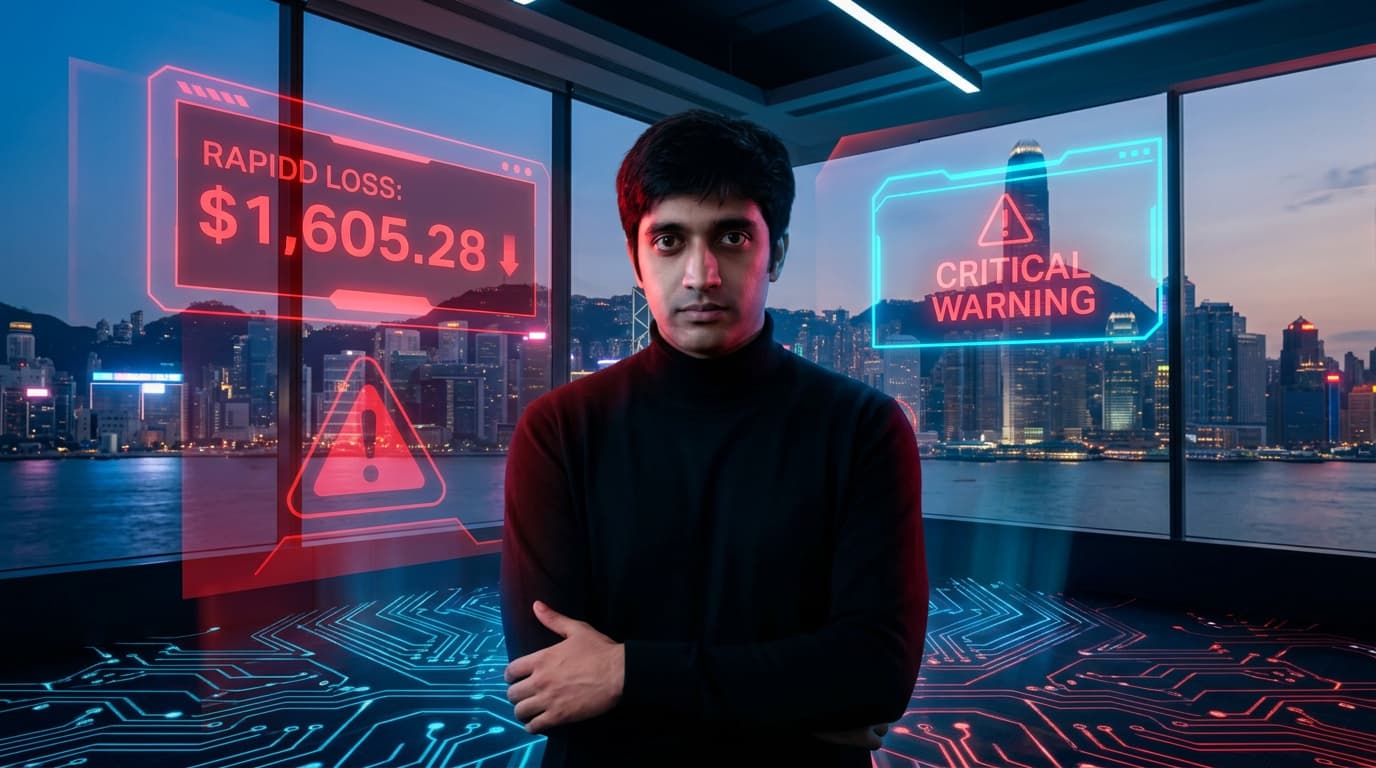
Sitting in a dimly lit coffee shop in Tsim Sha Tsui, watching a young founder frantically refresh his laptop screen while juggling three different VPN configurations, I realized that Hong Kong’s tech future isn’t being threatened by a lack of capital or talent, but by an invisible digital curtain. In early 2026, the US Department of Commerce’s Bureau of Industry and Security (BIS) made a move that hit the Hong Kong tech ecosystem like a silent earthquake. The tightening of AI export controls-specifically targeting high-capability frontier models like Claude Fable 5-has created a "Shadow Tax" that is currently draining millions of dollars from our economy every single month.
As a tech founder who has called Hong Kong home for many years, I’ve seen our city survive financial crises, pandemics, and social shifts. We are resilient by nature. But the current geofencing of Fable 5 is a different kind of beast. It’s not a barrier we can just outwork; it’s a systematic throttling of the very intelligence that powers the modern economy. While our rivals in Singapore, Tokyo, and Sydney enjoy native, low-latency access to the world’s most advanced reasoning engines, Hong Kong businesses are being forced to operate in the "grey market" of digital workarounds.
02The Infrastructure of Workarounds - A Hidden Operational Drain
For any Hong Kong business trying to maintain a competitive edge, the "ban" isn't a hard wall-it's an expensive, complex toll booth. Since Anthropic and other US-based AI providers geofenced the SAR under pressure from export controllers, local firms have had to build elaborate, fragile infrastructures just to access the Fable 5 API.
I’ve personally reviewed the overhead for several mid-sized AI firms in Cyberport and the Science Park. On average, a startup with 20 engineers is spending an additional $2,500 to $9,000 USD per month just on what I call "Access Maintenance." This isn't money spent on actual tokens or R&D. This is capital burned on high-bandwidth residential-proxy VPNs designed to mask Hong Kong IPs, offshore entity maintenance in jurisdictions like London or Delaware for billing purposes, and the constant overhead of changing server locations whenever a provider updates their anti-abuse filters.
When you factor in these costs, the effective price per million tokens doesn't just increase-it doubles. While a San Francisco startup might pay $15 per million input tokens for Fable 5, a Hong Kong startup, after accounting for proxy latency, offshore corporate taxes, and the "risk premium" of engineer time spent fixing broken connections, is effectively paying $32. Over a month of high-volume production, that gap becomes a chasm that swallows our margins.
03The Latency Tax - Why 200ms Kills Fintech Innovation
Hong Kong's crown jewel is finance. In the world of high-frequency trading, real-time risk assessment, and automated wealth management, latency is the ultimate predator. By forcing Hong Kong businesses to route their Fable 5 traffic through relay servers in distant regions, the US ban adds anywhere from 200ms to 650ms of round-trip latency.
Think about a wealth-management AI that needs to process a sudden market shift and provide personalized advice to 10,000 clients simultaneously. That extra half-second per request, multiplied across a complex chain of agentic calls, means the HK-based AI is essentially "thinking" in slow motion compared to its rivals in Singapore. In a market where Fable 5 is being used for its superior reasoning and near-instant decision-making, we are being forced to race with a weight tied to our ankles. The cost here isn't just in the AWS bill; it's in the lost trades and the clients who migrate to platforms that respond faster.
Furthermore, local banks like HSBC and Standard Chartered are increasingly looking at AI to automate "Know Your Customer" (KYC) processes. When the model takes 10 seconds to respond instead of 2, the customer friction increases. In a city where speed is the primary currency, we are being forced into a slow-motion economy.
04The Productivity Gap - Losing the Human Capital War
The most painful cost isn't the server bill-it’s the talent. We are currently seeing a "Brain Drain 2.0" in the SAR. Top-tier AI researchers and prompt engineers want to work with the sharpest tools available. If you are a world-class developer, why would you stay in a city where you have to jump through hoops just to access the state-of-the-art model?
Every month the Fable 5 ban persists, Hong Kong becomes less attractive to the very people we need to build our future. Data from recent 2025 talent surveys suggests that the average "integration cost" for a new AI feature in an HK startup is 38% higher than in the US, simply because our developers spend so much time building "stability wrappers" for the models rather than building the features themselves.
I spoke with a Lead AI Engineer yesterday who told me his team spends 20% of their "innovation time" just managing proxy failures. That is one full day every week lost to fighting a geofence. Multiply that across thousands of engineers in the city, and you begin to see the scale of the productivity loss.
05Opportunity Costs of Inferior Models - The Llama 4 and Qwen Dilemma
People often ask me, "Sheryar, why don't you just use Llama 4 or Qwen 3? They are open-source and HK-friendly." And yes, those models are impressive. We use them for many tasks. But Fable 5 currently sits in a class of its own for complex, multi-step logical reasoning and long-context legal analysis-the bread and butter of the Hong Kong professional services sector.
When a Hong Kong law firm is forced to use a model that has even a 5% higher hallucination rate on complex contract synthesis because they can't natively access Fable 5, the cost is measured in errors, billable hours lost to manual checking, and client trust. If a HK-based logistics giant uses a second-tier model to optimize its shipping routes through the Greater Bay Area, and that model is 2% less efficient than a Fable-5-powered system used by a global competitor, that’s millions of dollars in wasted fuel and time every year.
06Quantifying the Indirect Economic Damage - The $450 Million Annual Leak
If we aggregate the direct costs (workarounds, offshore entities), the efficiency losses (latency, inferior model performance), and the talent flight, I estimate that the Fable 5 ban is costing the Hong Kong tech and professional services sector upwards of $37.5 million USD per month. That is a $450 million annual leak from our economy.
This isn't hyperbole. In early 2025, the AI Diffusion Framework from the Bureau of Industry and Security suggested that the economic multiplier of generative AI is roughly 3x to 5x. For every dollar spent on AI services, five dollars of economic value are created in the broader economy. By throttling our access to the "premium" tier of this intelligence, the policy isn't just hurting Anthropic's revenue; it's stifling the entire downstream economy of Hong Kong.
07The Investor Risk Premium - Why Capital is Turning Cold
Venture Capitalists are the most sensitive barometers of risk. When they look at a Hong Kong pitch deck today, the first question isn't about the product-market fit; it's about "Model Access Risk."
Investors are now pricing in a "Hong Kong AI Discount." Because our startups don't have guaranteed, stable access to the world’s leading models, their valuation is being hit by 25% to 30%. They worry that at any moment, a more aggressive "Maximum Pressure" policy from Washington could turn the "workarounds" into illegal acts, effectively killing the startup overnight. This makes it significantly harder for HK founders to raise the capital they need to scale, leading to a slower growth rate and fewer "unicorns" in the pipeline.
08The Compliance Burden - working through the BIS Minefield
Running a business in Hong Kong now requires a level of regulatory agility that is frankly exhausting. The January 2025 BIS revisions regarding the "AI Chip Ecosystem" have created a massive grey area. Are we "exporting" intelligence if we use a US-hosted model to process data for a client in Mainland China? The compliance departments for our banks and tech firms are ballooning.
The cost of this compliance isn't just the salaries of lawyers. It's the "Innovation Freeze." When a team is unsure if a new Fable-5-powered feature might run afoul of US export controls, they often choose not to build it at all. They play it safe. In the tech world, playing it safe is the fastest way to die. We are paying for the ban with our own obsolescence.
09Real-World Scenarios - The Cost to Small and Medium Enterprises (SMEs)
While the big banks can afford high-end consultants to navigate these waters, the average Hong Kong SME is being left behind. I spoke with a small export-import firm in Kwun Tong that wanted to use Fable 5 to automate their customs documentation and supplier communication. They looked at the complexity of setting up a US-based entity and a secure relay, saw the $5,000 initial setup cost and the ongoing maintenance, and they just gave up.
They are still doing things the old way-manually, slowly, and expensively. This is the real tragedy of the ban: it’s widening the gap between the "AI-Haves" and the "AI-Have-Nots" within our own city. The "Shadow Tax" is most regressive on those who can least afford it.
10The Anthropic Prompt Caching Advantage - A Missed Savings Opportunity
Fable 5 introduced a revolutionary 90% discount on prompt caching. For businesses that process large amounts of repetitive data-like customer support bots or document reviewers-this is a game-changer for the bottom line. However, to truly benefit from caching, you need a stable, low-latency, and high-frequency connection to the API.
Because Hong Kong businesses are constantly shuffling through different proxy endpoints and dealing with connection resets, they often lose the benefits of this caching. If the connection breaks, the cache can be lost, forcing the company to pay the full price for the input tokens again. This means that while a US company is saving 90% on their operational costs, an HK company is often paying the full price. On a million-dollar token budget, that’s a massive difference.
11Technical Implementation - Managing the Proxy Layer
For those in the trenches, here is a simplified look at the kind of "Wrapper" code HK developers are forced to write just to maintain some semblance of stability. We have to build retry logic that handles regional IP blocks and proxy rotations on the fly.
python
import requests
import time
import random

# A simplified look at the logic required to bypass geofencing
class HKAIClient:
    def __init__(self, key):
        self.key = key
        # List of offshore entry points
        self.nodes = ["sg-1", "jp-1", "us-e-1"]

    def fetch_completion(self, prompt, max_retries=5):
        for i in range(max_retries):
            # We select a node outside HK to route the request
            node = random.choice(self.nodes)
            try:
                # The overhead of the proxy adds significant latency
                res = requests.post(
                    f"https://{node}.relay.internal/v1/fable",
                    headers={"Authorization": f"Bearer {self.key}"},
                    json={"prompt": prompt}
                )
                return res.json()
            except Exception:
                # Exponential backoff on failure
                time.sleep(1.5 ** i)
return None12The Security Implications of the "Grey Market" for AI
There is also a hidden security cost. Because Fable 5 isn't officially available, a "grey market" of third-party API resellers has emerged in Hong Kong. These middlemen offer access to Claude Fable 5 through their own "gateways."
The risk here is immense. When a Hong Kong company passes its proprietary data through a third-party gateway to get to Anthropic, they are opening themselves up to data leaks, industrial espionage, and security breaches. If a breach occurs, the cost to the company’s reputation and balance sheet is incalculable. But many feel they have no choice-they either use these risky gateways or they fall behind. The ban is effectively forcing safe, law-abiding businesses into digital back alleys.
13Deep Dive - The Impact on Hong Kong’s Legal Sector
As a global hub for legal services, Hong Kong relies heavily on accuracy and reasoning. The "Big Four" and major local firms have been exploring AI for contract review, due diligence, and litigation support. Fable 5’s ability to handle massive contexts-up to 2 million tokens-is a game changer for analyzing decades of case law.
However, the ban forces these firms to choose between using less capable models or taking the risk of routing sensitive legal data through offshore proxies. For a lawyer, data residency is not a suggestion; it is a strict regulatory requirement. If a firm cannot guarantee that their AI-processed data remains within a specific jurisdiction, they cannot use the tool. This has put our legal-tech industry in a state of paralysis. While London-based firms are automating 40% of their document review, Hong Kong firms are still billing hours for manual labor that could be done in seconds.
14Comparison - Hong Kong vs Singapore in the AI Race
The comparison with Singapore is unavoidable and, frankly, painful. Singapore has been aggressive in its AI adoption strategy. They have established the "AI Verify" framework, launched the "National AI Strategy 2.0," and secured direct collaboration with OpenAI and Anthropic.
Singaporean startups receive direct credits and native API keys. They have 20ms pings to the nearest data center. They can use prompt caching without fear of connection drops. In contrast, Hong Kong is fighting for scraps. This disparity is causing a "Migration of Innovation." I know of at least three founders who moved their headquarters to the Lion City in the last six months, specifically citing "AI infrastructure stability" as the primary reason. If this trend continues, Hong Kong risks becoming a "legacy" financial hub while Singapore becomes the "intelligent" financial hub.
15Reclaiming the Narrative - Why Hong Kong Needs a Deal
We cannot afford to keep paying this tax. Every month we wait, the "compounding interest" of this disadvantage grows. Our competitors are not standing still. While we are debating VPN protocols, they are building the next generation of AI-native industries.
This is why I have been vocal about the need for a "Bilateral AI Access Deal" or a "Hong Kong AI Sandbox." We need a framework where the US can be assured that Fable 5 is being used for legitimate, civilian business purposes in Hong Kong, and in return, our businesses get native, high-speed, and low-cost access.
The current policy is a blunt instrument that is doing more damage to Hong Kong’s pro-innovation, international business community than it is to any "strategic adversary." If the goal of the US is to support a free and open Hong Kong, then strangling our primary engine of growth-AI innovation-is a catastrophic mistake.
16The Macroeconomic Impact - A Comparative Analysis
When we look at the broader Asian landscape, the disparity becomes even more glaring. Singapore’s "AI Verify" framework and their direct partnership with major US labs have positioned them as the default hub for South East Asian AI. Meanwhile, Hong Kong-which should be the gateway for AI applications in the Greater Bay Area-is being sidelined.
The cost of this lost positioning is harder to quantify but far more significant than the $450 million in direct costs. It’s the missed opportunity to become the world’s leading hub for AI-driven legal and financial services. We have the data, we have the expertise, and we have the market. We are just missing the key to the engine.
Recent studies suggest that AI could contribute up to $150 billion to Hong Kong's GDP by 2030. However, that projection assumes we have access to the best tools. If we are stuck with second-tier models, that $150 billion could easily shrink to $80 billion. That's a $70 billion difference in wealth creation over the next five years.
17The Human Side - The Founder's Dilemma
Behind the statistics are real people. I meet with founders every week who are struggling. One founder told me she’s considering "ghosting" her Hong Kong identity and moving her entire digital footprint to Dubai. She doesn't want to leave her family here, but she can't raise money from US investors if her product is built on a "workaround."
This is the psychological toll of the ban. It creates a feeling that Hong Kong is being excluded from the global community. For a city as international as ours, that is a devastating realization. We are used to being at the center of the world, not on the fringes of a digital map.
18Looking Ahead - The Road to AI Sovereignty
Is there a way out? Some argue for "AI Sovereignty"-building our own models from the ground up. And while the HK government’s HK$10 billion investment in the AI Supercomputing Centre is a massive step in the right direction, it doesn't solve the Fable 5 problem today.
Building a model that rivals Fable 5 takes more than just chips and power; it takes years of human feedback and iteration. We cannot wait three years for a localized alternative. We need to integrate the best global technology while simultaneously building our own.
The current export policy assumes that denying access to Hong Kong will slow down its neighbors. In reality, it only speeds up the departure of the very people-the international-minded, tech-literate entrepreneurs-who maintain Hong Kong’s status as a global city.
Investors are watching. Every week that a major US AI lab updates its "Supported Countries" list and leaves Hong Kong off, a bit more capital flows toward Dubai or Singapore. This isn't just a tech story; it's the story of a global financial hub fighting to keep its relevance in the age of intelligence.
19Strategic Recommendations for Hong Kong
To mitigate the damage, we need a multi-pronged approach:
- Government Advocacy: The HKSAR government should work with international trade bodies to clarify the status of AI model access. We need a "White List" for compliant businesses.
- Infrastructure Investment: Accelerate the development of the Cyberport and Science Park AI clusters. If we can't get external models easily, we must lower the cost of running local open-source models like Llama 4.
- Talent Retention: Create specific incentives for AI engineers to stay in HK. Access to compute credits could be a powerful draw.
- Regional Integration: use the Greater Bay Area’s resources. Cooperation with Shenzhen on AI hardware and software could provide a competitive alternative to US-dominated models.
20Detailed Sector Analysis - Supply Chain and Logistics
Hong Kong remains a global trade hub. The efficiency of our port and airport depends on sophisticated logistics software. Companies are now using Fable 5 to predict supply chain disruptions, optimize container loading, and manage customs documentation in real-time.
When a logistics firm in Kwai Tsing has to wait 2 seconds for an AI routing decision while a competitor in Busan gets it in 150ms, those milliseconds aggregate into hours of delay across a fleet. Over a year, that translates to millions of dollars in increased operational costs and carbon emissions. The ban isn't just a digital problem; it's a physical problem that affects the movement of goods across the planet.
21Actionable Steps for HK Founders
If you are currently working through the Fable 5 ban, here is my advice:
- Audit Your AI Spend: Track the hidden costs of your workarounds. Quantify the developer time lost to "Proxy Maintenance." Use this data to negotiate with your stakeholders.
- Implement Hybrid Model Architectures: Use local models for 85% of your lower-level tasks. Reserve the high-cost, high-latency Fable 5 calls only for the "thinking" steps where reasoning is paramount.
- Formalize Your Offshore Setup: If you are using an offshore entity for API access, ensure it has real economic substance. working through the "grey market" without a legal foundation is a recipe for disaster.
- Invest in Prompt Engineering: Better prompts can make less capable models perform better. If you can't have the best model, have the best prompt engineers.
- Join the Conversation: Don't be a silent victim. Share your challenges with peers and industry associations. The more we document the cost, the stronger our case for a policy change.
22Conclusion - A Call for Action
If you are a business leader in Hong Kong, it is time to stop being quiet about this. We need to document the costs. We need to show the data. We need to explain to our partners in the US and our own government that this isn't just a "tech issue"-it is an existential economic issue.
The "Shadow Tax" of the Fable 5 ban is real. It is visible in our balance sheets, in our empty office spaces, and in our slower digital transformation. We are paying for it every single day. And the price is only going up.
Hong Kong has always been a city that thrives on being a bridge. But a bridge without access to the world’s most advanced cognitive tools is just a pier. It’s time we fight for our right to compete on a level playing field. We don't want subsidies. We just want the same 20ms ping and the same price point as Singapore. Anything less is a slow-motion economic eviction.
I am not ready to see more of our best talent leave. I am not ready to see our startups discounted by 30% just because of their GPS coordinates. The cost is too high. The time to fix this was yesterday.
ultimately, innovation doesn't wait for diplomacy. If we can't get the tools we need through the front door, we'll keep finding ways through the side windows-but the cost of those windows is becoming a burden that could eventually break the house. Let's ensure Hong Kong remains the place where the world comes to build the future, not just the place where the future used to happen. We have the grit, we have the history, and we have the vision. Now, we just need the tools.
Filed under
claude fable 5hong kongai bananthropicexport controls
Keep reading
More essays on AI growth, SEO & the web.