All writing
Cyberport Hong Kong16 min read
Cyberport Web3 Community Has 310 Blockchain Companies in One Place
Explore how Cyberport Hong Kong became a global Web3 hub with over 310 companies, HK$50M in funding, and specialized infrastructure like the Web3 Living Lab.
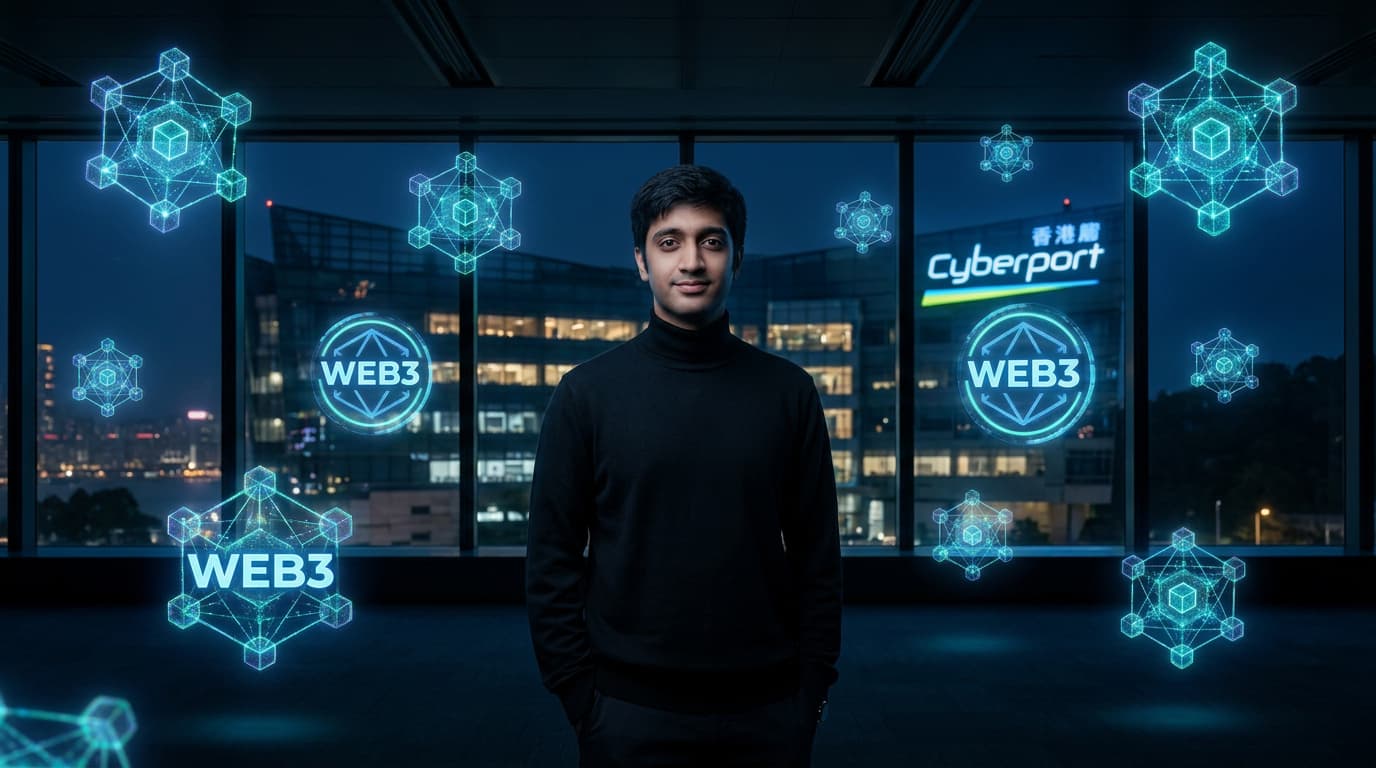
Standing on the podium at the Cyberport Web3 Living Lab earlier this morning, I looked out over a crowd of founders from Zurich, Singapore, and Shenzhen and realized that the "tech park" label is officially dead-we are now operating inside the world's most concentrated reactor for decentralized intelligence. When I first started working through the Hong Kong tech scene, Cyberport was often viewed as a quiet retreat for back-office operations, but in 2026, the silence has been replaced by the high-frequency hum of a global Web3 headquarters.
The Cyberport Web3 community has surged past the 310-company milestone, and the gravity is still shifting. We aren't just looking at a directory of names; we are looking at a living ecosystem representing over 25 countries and regions that has decided Hong Kong is the only place left on earth with the regulatory clarity and capital density to build the next iteration of the internet. For a founder like me, this isn't just a place to rent an office. It is an unfair advantage that we’ve collectively engineered over the last three years.
02The Architecture of a Global Hub - Beyond the HK$50 Million Catalyst
It is easy to point to the initial HK$50 million allocation from the 2023-24 Budget as the "start" of this movement, but the real story is what happened after the money hit the accounts. That government support acted as the seed capital for a massive social and technical infrastructure. By 2025, we saw the maturation of a three-tier strategy that prioritized institutional-grade security, cross-border talent pipelines, and the physical convergence of AI and blockchain.
We’ve moved beyond the "hype phase" where a whitepaper and a flashy logo were enough to get a meeting. Today, the 310 companies at Cyberport are held to a standard that is set by both the market and the Hong Kong Securities and Futures Commission (SFC). We are building under the most rigorous VASP (Virtual Asset Service Provider) licensing regime in the world, and that rigor is precisely why the institutional money is finally crossing the bridge from Central to Pok Fu Lam.
03Why Density is the Founder's Greatest Asset
In the startup world, serendipity is a feature, not a bug. When you have 310 companies in a single physical location, the probability of "random" productive collisions becomes a statistical certainty. I have personally witnessed more joint ventures form in the lunch queue at the Arcade than I did in a decade of attending formal networking mixers in London or San Francisco.
The current community breakdown spans the entire Web3 stack, creating a "full-stack" city within a city- * Infrastructure and Protocols - Layer 2 scaling solutions like Manta Network and modular execution layers that are solving the trilemma in real-time. * Decentralized Finance (DeFi) - Trading platforms and automated market makers that are finally getting the green light for institutional integration. * WealthTech and Digital Assets - Regulated custody services like Hex Trust and HashKey that provide the necessary safekeeping for the family offices in Central. * The Agentic Economy - A new wave of startups building AI agents that autonomously settle transactions using on-chain protocols.
04The Web3 Living Lab - Proving Utility Over Hype
One of the most significant additions to our campus has been the Web3 Living Lab. It serves as a physical showroom that strips away the abstract jargon of whitepapers and replaces it with tangible, real-world applications. When I bring an enterprise partner from a traditional logistics firm to the Lab, I don’t show them "the metaverse" - I show them how Real World Asset (RWA) tokenization is currently optimizing capital flows for Hong Kong property and shipping.
The Lab is the bridge between the "crypto natives" and the "legacy institutionalists." We are seeing more and more cases where blockchain integrates with AI and IoT. This is what I call the "Web3 Plus" era. We are moving past speculative assets and into a phase where decentralized ledgers solve actual industrial problems in logistics, healthcare, and supply chain management. Companies like GoGoX are no longer just looking at blockchain as a curiosity; they are looking at it as the underlying plumbing for an optimized Greater Bay Area (GBA) economy.
05Bridging the Talent Gap with Web3 Academy
Hong Kong has historically struggled with a shortage of specialized developers, especially in the Solidity and Rust space. The Web3 Academy at Cyberport has been our local response to this global talent war. By partnering with industry giants like Alibaba Cloud and Wanxiang Blockchain, the Academy is training a local workforce that understands the nuances of decentralized architecture.
It is no longer enough to be a "web developer." In 2026, you need to understand ZK-proofs, modular security, and the legal constraints of a regulated environment. The Academy isn't just teaching code; it’s teaching the high-end engineering principles that my peers and I are constantly competing for. As a founder, having a pipeline of vetted talent right in my backyard is the difference between scaling in months or years.
06Direct Capital - The Web3 Proof of Concept Scheme
If you are a founder, the most practical part of this ecosystem is the financial support structure. The "Web3 Proof of Concept (PoC) Scheme" remains a vital lifeline for early-stage innovation. This scheme provides up to HK$150,000 to support pilot projects between Web3 startups and corporate partners. To date, over 122 applications have been processed, reflecting a massive appetite for enterprise-grade blockchain solutions.
| Scheme Name | Maximum Funding | Primary Goal |
|---|---|---|
| Web3 PoC Scheme | HK$150,000 | Pilot projects between startups and corporates |
| Cyberport Incubation Programme | HK$500,000 | Equity-free funding and mentorship |
| Creative Micro Fund (CCMF) | HK$100,000 | Seed funding for early ideation |
| Blockchain Pilot Subsidy | HK$500,000 | Business transformation through blockchain |
07The Convergence of Web3 and AI - The 3,000 PFLOPS Milestone
The next frontier for the community is the integration of blockchain with Artificial Intelligence. With the full operation of the Cyberport AI Supercomputing Centre, which provides 3,000 PFLOPS of computing power, our Web3 community has a massive opportunity. We are no longer just talking about simple chatbots. We are talking about the decentralized training of massive LLMs and the emergence of "Agentic Web3."
I am particularly excited about Decentralized Physical Infrastructure Networks (DePIN). We are seeing startups at Cyberport building decentralized GPU clusters and AI training networks that can scale without the centralization risks of traditional cloud providers. In the Hong Kong context, where AI sovereignty and data security are paramount, this convergence is more than a trend - it is a necessity. Imagine a world where HK-based AI agents autonomously settle their compute costs using localized stablecoins without ever needing a traditional bank account.
08Implementing Secure Multi-Sig Architecture in a Regulated Environment
For the technical founders reading this, here is a simplified example of how we are thinking about modular security within the Hong Kong regulatory framework. When building a compliant tokenization platform, we often use a controller pattern to ensure we can meet SFC requirements while maintaining decentralized benefits. This is a common pattern for "Permissioned DeFi" that is gaining traction at Cyberport.
solidity
// SPDX-License-Identifier: MIT
pragma solidity ^0.8.20;

import "@openzeppelin/contracts/token/ERC20/ERC20.sol";
import "@openzeppelin/contracts/access/Ownable.sol";

/**
 * @title CompliantAssetToken
 * @dev Example of a token that allows for regulatory oversight
 * compliant with Hong Kong's VASP (Virtual Asset Service Provider) guidelines.
 */
contract CompliantAssetToken is ERC20, Ownable {
    mapping(address => bool) public isBlacklisted;
    bool public isCompliancePaused = false;

    event BlacklistUpdated(address indexed account, bool status);
    event CompliancePauseToggled(bool status);

    constructor(string memory name, string memory symbol) ERC20(name, symbol) Ownable(msg.sender) {}

    // Only authorized compliance officers can manage the blacklist
    // In a production environment, 'onlyOwner' is a 3-of-5 Multi-Sig address
    function updateBlacklist(address account, bool status) external onlyOwner {
        isBlacklisted[account] = status;
        emit BlacklistUpdated(account, status);
    }

    // Ability to pause transfers for regulatory investigations
    function setCompliancePause(bool status) external onlyOwner {
        isCompliancePaused = status;
        emit CompliancePauseToggled(status);
    }

    // Override the transfer function to include regulatory checks
    function _update(address from, address to, uint256 value) internal virtual override {
        require(!isCompliancePaused, "Compliance: All transfers currently paused for audit");
        require(!isBlacklisted[from], "Compliance: Sender is restricted/under investigation");
        require(!isBlacklisted[to], "Compliance: Recipient is restricted/under investigation");
        super._update(from, to, value);
    }
}
This pattern allows for the "pause" or "freeze" functionality that regulators like the SFC often require for licensed entities, while the core value transfer remains on-chain and verifiable. It is about building technology that can live inside a legal system, not in spite of it. At Cyberport, we don't build "outlaw" tech; we build "institutional-grade" tech.
09working through the Hong Kong Regulatory Advantage
The elephant in the room for any Web3 founder is regulation. In the United States, founders are building in a state of perpetual legal anxiety, waiting for the next "regulation by enforcement" action. In Hong Kong, we have the SFC. While their requirements are stringent, they are documented. They are clear. And they are consistent.
Cyberport works closely with these regulators to create a feedback loop. The "regulatory sandbox" environment allows startups to test innovative products under a "no-action letter" or a restricted license. This clarity is why we are seeing a "reverse brain drain" where founders who left for the West in 2020 are now returning to Hong Kong to build in a stable environment. The VASP licensing regime is becoming the global gold standard that institutional investors now demand before they write a check.
10The Global Gateway - Connecting with Mainland China
One of Cyberport’s unique strengths is its role as a portal to the Greater Bay Area (GBA). Many of the 310 companies are using Cyberport as their global headquarters while maintaining R&D teams in Shenzhen. This "Front Office Hong Kong, Back Office GBA" model is incredibly capital efficient. It allows you to tap into the world's most aggressive hardware and software assembly line while keeping your financial and legal roots in a common law jurisdiction.
By using the legal and financial framework of Hong Kong and the engineering scale of mainland China, these companies are building products that are globally competitive from day one. Cyberport facilitates this through networking events, investor circles, and direct links to GBA-centric venture capital firms. We are essentially the API layer between China’s massive industrial engine and the global financial market.
11Case Study - Manta Network and the Path to Institutional Adoption
Look at Manta Network, which recently joined Cyberport. They aren't just building another chain; they are exploring real-world use cases for traditional businesses in Hong Kong. By providing ZK-proof (Zero-Knowledge) infrastructure, they are enabling institutions to prove compliance or solvency without leaking sensitive trade data.
This is exactly the kind of "Business-to-Business-to-Consumer" (B2B2C) model that will drive the next 10x growth in the ecosystem. Institutional privacy is the last hurdle before mass adoption. If a bank can prove it has the collateral for a loan without revealing its private ledger to its competitors, the floodgates will open. This is the kind of research being commercialized right now in Pok Fu Lam.
12Looking Toward 2027 - The Road to 500 Companies
As we look toward 2027, I expect the Cyberport Web3 community to exceed 500 companies. The completion of Cyberport 5 will provide the physical floor space needed for this expansion, but the real growth will be in depth. We aren't just counting heads anymore; we are counting the value locked in the protocols built here and the number of institutional transactions settled on our local rails.
We are entering the "Tokenization of Everything" era. I predict that by the end of 2026, we will see - * Widespread Digital HKD Adoption - Providing the native settlement layer for local Web3 apps and reducing FX risk for GBA-based projects. * Standardized RWA Protocols - Making it as easy to trade a fraction of a Hong Kong office building or a piece of green debt as it is to trade a stock on the HKEX. * Autonomous Agent Economies - Where AI agents powered by Cyberport’s supercomputing center use Web3 protocols for resource procurement, micro-payments, and verifiable logging.
13Strategic Advice for Incoming Web3 Founders
If you are planning to join the hub, don't just treat Cyberport as a landlord. Treat it as a strategic partner. This isn't just about desk space. It is about the social and institutional capital that comes with the address.
First, maximize the "Web3 Innovators Season." These aren't just workshops; they are vetting grounds for investors. Second, engage with the "Web3 Investors Circle" (W3IC). These are LPs and VCs who have been specifically filtered for their understanding of blockchain technology. You don't have to explain the difference between Layer 1 and Layer 2 to them - you just have to explain why your business model generates sustainable yield.
Finally, lean into the Hong Kong market context. Don't just build a generic DeFi app. Build a DeFi app that solves for the unique liquidity needs of the Asian wealth management market. Build for the family offices in Central who want to diversify into digital assets but need institutional-grade custody and reporting. That is where the real "alpha" is in this city right now.
14Summary of Growth Metrics
The momentum at Cyberport is undeniable when you look at the raw data -
- Total Web3 Companies - >310
- International Footprint - 25+ countries and regions
- Total Community Companies - >2,300 (including 10+ unicorns)
- Available Computing Power - 3,000 PFLOPS (at the AI Supercomputing Centre)
- Government Commitment - HK$50 Million dedicated Web3 fund followed by continuous policy support.
- Pilot Funding - Up to HK$150,000 per project via PoC scheme.
Building a tech company is incredibly difficult. Building one in a vacuum is nearly impossible. Cyberport has removed the vacuum. It has provided the air, the fuel, and the spark for a generation of founders to build the future of finance and the internet right here in the Southside of Hong Kong.
I’ve been building in this city for a long time, and I can tell you - the energy has never been higher. If you are building in Web3, you don't just want to be at Cyberport - you need to be here. Not for the ocean view, which is fantastic, but for the 310 neighbors who are just as obsessed with the future as you are.
15Detailed Community Breakdown and Statistics
To understand the scale of what is happening at Cyberport, one must look at the diversity of the companies. Of the 310+ Web3 firms, roughly 60% are focused on Decentralized Applications (dApps) and infrastructure, while 20% are focused on security and auditing, and the remaining 20% on education and community growth. This balance is critical. Without security and education, infrastructure is just a playground for hackers.
The international nature of the community is its greatest strength. While the majority of companies have a strong Hong Kong or Mainland China presence, we now have a significant cluster of European and Southeast Asian teams. This allows for a 24/7 development cycle. When the team in Hong Kong signs off, the team in Zurich or Singapore picks up the slack.
16The Role of Unicorns in the Ecosystem
Cyberport isn't just a place for "two guys in a garage." It is the home of over 10 unicorns, including major players like GoGoX and HashKey. These companies provide more than just prestige; they provide a destination for talent. When a developer leaves a unicorn to start their own Web3 project, they stay within the Cyberport ecosystem, keeping the institutional knowledge local.
Furthermore, the presence of listed companies within the community shows a clear path from incubation to public markets. This "full-stack" ecosystem - from a HK$100,000 grant to an IPO - is what sets Hong Kong apart from other emerging tech hubs like Miami or Lisbon. We have the liquidity to match the innovation.
17Final Word - The Cultural Shift
The biggest change I have noticed isn't just in the numbers - it is in the culture. Two years ago, people in Hong Kong tech were cautious. Today, they are aggressive. There is a sense of mission. We are not just building apps. We are building the financial infrastructure for the 21st century.
As I look out over the South China Sea from the Cyberport terrace, I realize that the "Pearl of the Orient" is becoming the "Blockchain of the Orient." The 310 companies currently here are just the first wave. If you haven't booked your tour of the Web3 Living Lab yet, you are already behind. The future is being written in Solidity and Rust, right here in Pok Fu Lam.
I will continue to document this journey as we scale toward 500 companies and beyond. For now, the message is clear - the gravitational center of Web3 has shifted to the East, and it is anchored firmly at Cyberport.
18References and Resources
- Cyberport Official Website - cyberport.hk
- SFC Virtual Asset Guidelines - sfc.hk
- Cyberport Venture Capital Forum - Where institutional deals are signed.
- The Web3 Academy - Local certification and training programs for developers.
Stay hungry, stay decentralized. We are just getting started in Hong Kong.
19Understanding the 310-Company Expansion Strategy
When people ask how Cyberport managed to attract 310 Web3 firms in such a short window, I point to the "Soft Infrastructure" strategy. The physical buildings are great, but the regulatory clarity provided by the HK government was the real attraction. In late 2022, the Policy Statement on Development of Virtual Assets in Hong Kong sent a signal to the world that we were open for business.
By 2025, that signal had reached every major crypto hub. Founders weren't just fleeing regulation in other countries; they were actively seeking the "Blue Label" of Hong Kong compliance. Having a Cyberport address has become a shorthand for "we are serious, we are regulated, and we are here to stay."
20The Multi-Generational Impact
I see founders who are now on their second or third Web3 venture. They started with simple NFTs in 2021, moved to DeFi in 2023, and are now building RWA protocols in 2026. This cyclical maturity is what creates a lasting tech hub. We aren't just attracting tourists; we are building a permanent resident population of technologists.
The impact also extends to the traditional financial sector. We now see managing directors from the biggest names in Central spending their Fridays at Cyberport, trying to understand how to port their legacy bond offerings onto the blockchain. This "Great Convergence" is the ultimate goal of the 310-company community. We aren't trying to replace the old world; we are trying to upgrade it.
21The Next Level - Cyberport 5 and Beyond
The expansion into Cyberport 5 is not just about more desks. It is about specialized zones. We are seeing proposals for dedicated "ZK-Proof Clusters" and "DePIN Zones" where companies can share hardware resources and testing environments. This level of specialization is only possible when you have the sheer volume of companies that we have reached.
If 310 companies was the threshold for "critical mass," then the next 200 companies will be the specialized elite. I expect to see more deep-tech infrastructure players moving in, focusing on things like homomorphic encryption and cross-chain messaging protocols.
22Why You Should Visit the Living Lab Today
If you are an entrepreneur and you haven't stood in the Web3 Living Lab, you are missing the most important demo of the year. It isn't just about looking at screens. It is about understanding the "frictionless" future. You can see how a digital ID from the HK government (iAM Smart) can be used to instantly KYC for a decentralized loan. You can see how a piece of physical art is tagged with an NFC chip that links directly to its on-chain provenance.
This is where the future stops being a theory and starts being a profit-and-loss calculation. The Living Lab is the reason why the 310 companies are so successful - they have a place to prove that their tech actually works before they go and pitch it to the VCs in Central.
23Final Thoughts for the Hong Kong Ecosystem
We have a rare window of opportunity. The world is watching Hong Kong. The 310 companies at Cyberport are the pioneers, but the millions of people in the GBA are the users. If we can continue to bridge the gap between innovation and regulation, there is no limit to what we can achieve.
I am proud to be part of this community. I am proud to see the transformation of Cyberport from a quiet tech park to a global lighthouse for Web3. Whether you are a developer, an investor, or just a curious observer, I invite you to come down to Pok Fu Lam and see what the future looks like. It is fast, it is decentralized, and it is happening right here, right now.
The journey from 0 to 310 was amazing. The journey from 310 to 500 will be legendary. Stay tuned, because the Hong Kong tech story is just beginning its most exciting chapter. We are building the rails for the future of the world, one block at a time.
Filed under
CyberportWeb3BlockchainHong Kong StartupsFinTechLiving LabFunding
Keep reading
More essays on AI growth, SEO & the web.