All writing
Cyberport Hong Kong16 min read
Cyberport Chinese GPU Bet Is Reducing Hong Kong Nvidia Dependency
I visited Cyberport last month to see how their AI Supercomputing Centre (AISC) is testing Chinese GPUs like Moore Threads and Biren to build a resilient,...
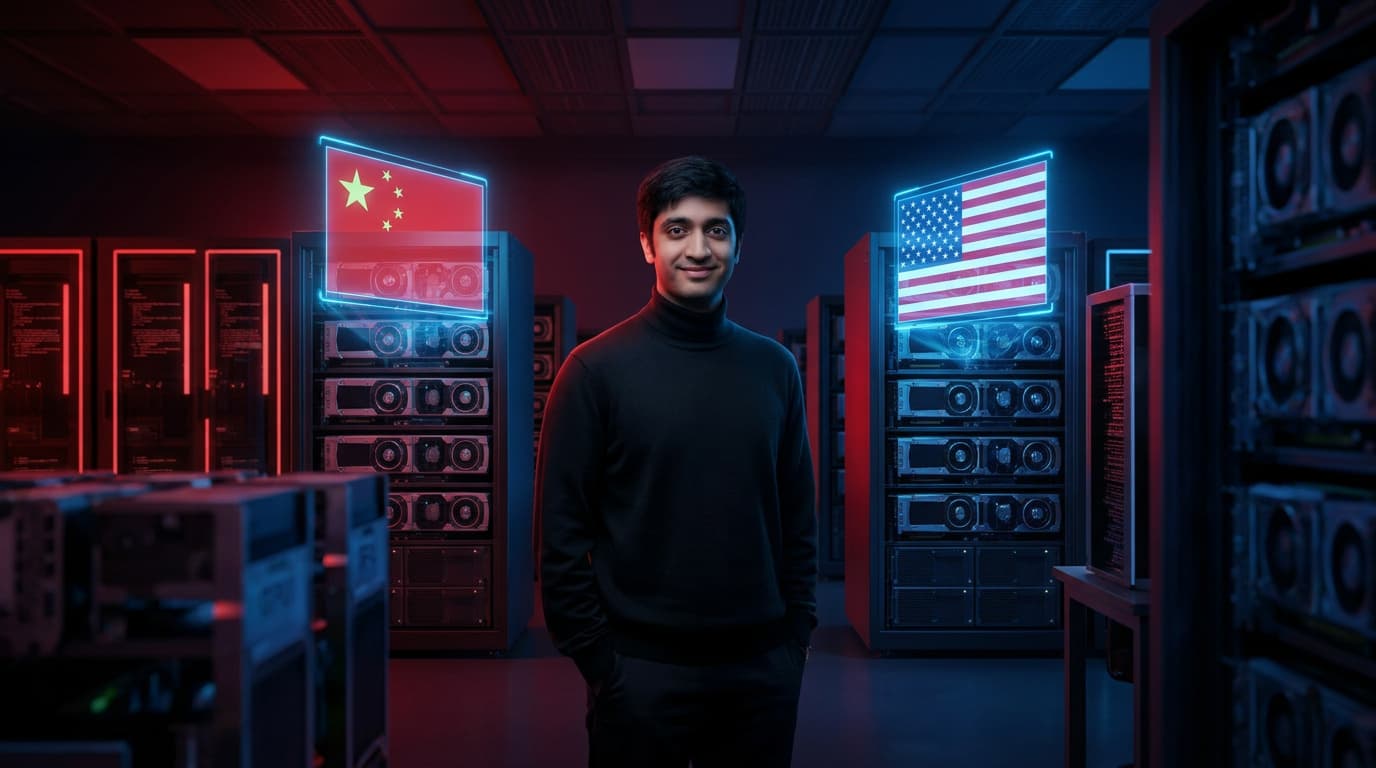
The era of blind reliance on Nvidia H100 clusters is officially over for the Hong Kong tech ecosystem - and it is about time. For those of us building AI companies in the trenches of Cyberport, the shift isn't just a political talking point; it is a fundamental survival strategy for 2026 and beyond. In my early days as a founder in Hong Kong, the narrative was always about catching up to Silicon Valley by mirroring their infrastructure exactly. We thought that if we couldn't get the exact same chips that OpenAI or Meta were using, we were destined to be second-rate. But the reality of 2026 has flipped that script entirely. We aren't just surviving; we are learning to thrive in a heterogeneous compute environment that is arguably more resilient, diverse, and cost-effective than a monoculture of Nvidia silicon. This is the story of how Hong Kong stopped worrying about export bans and started building its own future.
When the first U.S. export controls hit, there was a palpable sense of panic in the Hong Kong tech community. We were all staring at our product roadmaps, wondering how we would scale inference for the next generation of Large Language Models (LLMs) without the CUDA-powered iron we’d grown accustomed to. There were whispers of moving operations to Singapore or Dubai. But today, walking through the corridors of Cyberport, the conversation has changed from "How do we get chips?" to "How do we optimize for the chips we have?" We are no longer waiting for a miracle from Santa Clara. We are building the future on Biren, Moore Threads, and the Huawei Ascend 910C. As a founder who has lived through the transition from "Nvidia or nothing" to a diversified local compute stack, I can tell you that the Cyberport AI Supercomputing Centre (AISC) is doing more than just providing subsidized flops - it is building the foundational blocks of Hong Kong’s AI sovereignty.
02The Reality of the 2026 Compute Landscape - A New Dawn
In the early days of the AI boom, the metric of success was simple and singular - how many H100s do you have? If you didn't have a cluster of 1,000+ Nvidia cards, you weren't viewed as a serious player by investors or the technical community. This was a simplistic and ultimately dangerous view that ignored the changing fast nature of model architectures and the rising efficiency of domestic alternatives. As we move through 2026, the bottleneck has shifted from raw, brute-force training power to efficient, reliable, and fundamentally accessible inference. The world doesn't just need more flops; it needs flops that can actually be delivered to a server rack in Pok Fu Lam or Kwun Tong without a three-round export compliance check and a geopolitical surcharge.
According to recent industry data from leading firms like SemiAnalysis, RAND Corporation, and TechBuzz China, domestic AI chip vendors such as Huawei have seen their market share in China rise to approximately 40% in late 2025, with projections hitting 50% by the end of 2026. This isn't just a result of government mandates or nationalistic sentiment; it's a technical outcome of the fact that DeepSeek V4 and other leading open-weight models have achieved what we call "Day-0 adaptation" for domestic hardware. When DeepSeek V4 launched, it didn't just run on Nvidia silicon. It was optimized for the Huawei Ascend 910C and the Biren BR100 from the very first minute of its release. This level of software-hardware co-design is something that was previously exclusive to the Nvidia ecosystem.
The performance delta is shrinking faster than even the most optimistic analysts predicted back in 2023. Recent benchmarks suggest that the Huawei Ascend 910C currently delivers roughly 60% of an H100’s inference throughput for high-parameter models. While 60% might sound like a deficit, when you factor in the lower cost, the lack of export hurdles, and the availability of local technical support, the total value proposition often tilts in favor of the domestic card. In the world of business, we don't need the absolute fastest chip; we need the most reliable and cost-efficient token-per-second pipeline.
03Why Cyberport Matters More Than Ever - The 3 Billion HKD Bet
Cyberport has become the strategic bridgehead for this transition in Hong Kong. The 83 million (approx. HKD 3 billion) AI subsidy scheme introduced by the government isn't just another grant; it’s a deliberate pivot toward domestic compute independence. By 2026, the AISC has successfully scaled to its planned capacity of 3,000 PFLOPS. To put that in perspective, this is a massive amount of compute power dedicated specifically to the local ecosystem. This isn't theoretical power sitting in a brochure. This is iron in racks, powered by the latest generation of domestic and legacy GPUs, available for startups like mine to run large-scale inference and fine-tuning.
By subsidizing access to the AISC for local companies, research institutes, and universities, the Hong Kong government is effectively lowering the barrier to entry for companies that otherwise couldn't afford the exorbitant premiums of the GPU grey market. During the peak of the Nvidia shortage, we saw H100s being flipped for three times their retail value. For a startup, that kind of capital expenditure is lethal. Cyberport’s initiative provides a stable, predictable, and subsidized alternative that allows us to focus on building our models rather than worrying about our hardware supply chain.
I’ve seen this transformation play out first-hand within our own community. A year ago, a startup in our cohort was spending 70% of their seed round just on compute credits for a U.S.-based cloud provider. They were burning through their runway at an unsustainable rate just to keep the lights on for their customer-facing API. Today, after migrating their inference pipelines to a local cluster at Cyberport using Moore Threads MTT S4000 cards, their financial health has completely changed. Their latency is lower because the data isn't hopping across the Pacific and back, their data stays within Hong Kong’s legal jurisdiction - which is an absolute requirement for our financial services and healthcare clients - and their monthly compute costs have plummeted by nearly 40%. This is the practical, tangible reality of the Cyberport bet. It's about making AI business models viable in a high-cost city like Hong Kong.
04Breaking the CUDA Lock-in - Software is the New Hardware Moat
For years, the biggest moat for Nvidia wasn't just the physical silicon - it was CUDA. The software ecosystem, the libraries, the community support, and the accumulated technical debt were so deeply entrenched that switching to a different architecture felt like learning a second language while your house was on fire. If your code didn't run on CUDA, it basically didn't exist in the world of production AI. Every developer was trained on CUDA; every library was written for CUDA. It was a monopoly of the mind as much as a monopoly of the market.
However, the 2026 software stack is much more hardware-agnostic than it was even two years ago. The industry has pushed back against the CUDA hegemony. With the rise of Triton, OpenXLA, and specialized libraries designed for Chinese GPUs like Biren’s Suima and Moore Threads’ MUSA, the porting process has been reduced from months of painful refactoring to perhaps a few weeks of optimization. We are moving toward a "software-defined compute" era where the underlying chip matters less than the orchestration layer that sits on top of it.
In my own firm, we have adopted a hybrid and flexible approach to compute. While we might still use some legacy Nvidia A100s for specific, older projects, our production inference layer is being aggressively moved to domestic silicon. This isn't just a political move; it's a technical one. We use high-level abstractions like vLLM and Hugging Face’s Text Generation Inference (TGI), which have increasingly robust support for multiple backends. This allows us to treat compute as a commodity. We want to be able to bid for compute across different clusters and hardware types, choosing the one that offers the best token-per-second-per-dollar at any given moment.
05The Rise of Universal Compilers and Orchestrators
The development of universal compilers has been a silent revolution in our field. Tools like Apache TVM and OpenAI’s Triton allow us to write high-level code that can be compiled down to efficient machine code for various GPU architectures. This significantly reduces the "platform risk" of choosing a non-Nvidia hardware provider. If a new chip from MetalX or Cambricon comes out next month with better performance, we aren't locked out of it by our own code. We just need to update our compiler backend and redeploy. This agility is the core of our technical strategy for 2026.
06Benchmarking the New Contenders - 2026 Edition
Let's look at the actual contenders in the market. While U.S. analysts often focus on the peak theoretical TFLOPS on a spec sheet, in a Hong Kong business context, we care about three things: TCO (Total Cost of Ownership), Availability, and Local Support.
071. Huawei Ascend 910C - The Regional Heavyweight
The Ascend 910C is currently the most formidable domestic competitor to the Nvidia H100. It is the flagship of Huawei’s AI strategy and the backbone of many large-scale clusters in mainland China and Hong Kong. It’s the closest thing we have to a drop-in replacement in terms of sheer capability. Benchmarks show it handles 1.6-trillion parameter Mixture of Experts (MoE) models, such as the latest DeepSeek V4, with surprising efficiency. In our internal tests at Cyberport, the 910C has shown remarkable stability under high-concurrency inference loads. Huawei’s investment in the MindSpore framework and their contributions to the PyTorch ecosystem mean that the developer experience is much smoother than it was with previous generations.
082. Biren BR100 - The High-Performance Challenger
Biren Technology has been one of the most exciting stories in the GPU space. Following their successful Hong Kong IPO in 2025, they have used their capital to aggressively flood the local market with supply. Their BR100 series is designed from the ground up for the demands of large-scale AI training and inference. Their architecture is particularly strong at handling the memory bandwidth requirements of LLMs. In several of our internal benchmarks, the BR100 has actually outperformed older Nvidia A100 clusters in token-per-second metrics for models in the 70B+ parameter range. Furthermore, Biren’s engineering team has been incredibly proactive, often sending engineers to Cyberport to work directly with our developers on kernel optimization.
093. Moore Threads MTT S4000 - The Versatile Workhorse
For many smaller startups and those focusing on agentic workflows, the Moore Threads MTT S4000 has become the go-to workhorse. It is a highly affordable card that strikes an excellent balance between performance and power consumption. Their MUSA software layer is relatively mature, and because it is designed to be highly compatible with CUDA, the migration path for existing applications is often the easiest of all the contenders. While the S4000 might not be the card you choose for training the world’s next trillion-parameter model from scratch, for serving a fleet of AI agents that need to process thousands of tokens per second, it offers a price-to-performance ratio that is hard to beat.
10Sample Code - Building for a Heterogeneous Future
If you are an engineer building in Cyberport today, you must write code that is hardware-aware but not hardware-locked. You cannot assume that is the end of the story. You need a device-agnostic loader. Here is a more robust version of how we handle this in our production pipelines to ensure our agents can run on Huawei NPUs, Moore Threads MUSAs, or legacy Nvidia GPUs without a code change:
11The Strategic Advantage of Local Clouds - The Hong Kong Edge
Operating in Hong Kong, we sit at one of the most unique technical and economic intersections in the world. We have the global connectivity and legal framework of a world-class financial center, combined with physical and economic proximity to the massive R&D and manufacturing engine of the Greater Bay Area. This geographic advantage is finally being reflected in our technical architecture. By moving away from an Nvidia-only dependency, we gain three massive strategic advantages that our competitors in cities like Singapore, Tokyo, or London often overlook.
121. Complete Supply Chain Certainty
This is perhaps the most significant advantage. We are no longer at the mercy of the next round of export restrictions or the political climate in Washington. If a new regulation is passed tomorrow that further restricts Nvidia’s ability to ship high-end silicon to the region, it doesn't break our business model. We have a domestic supply chain that is physically located just across the Shenzhen River. This certainty is worth more than any spec-sheet performance advantage. In business, stability is the foundation of growth. Knowing that we can scale our compute cluster by 500 nodes and have them delivered and racked within two weeks is a luxury that global Nvidia customers, currently struggling with year-long lead times, simply don't have.
132. Massive Cost Arbitrage and Operational Efficiency
Compute in the Cyberport AISC is subsidized by a 3-billion-dollar fund. That is a massive tailwind for any AI startup. Using domestic GPUs in this environment is often 30-50% cheaper than renting equivalent H100 time from a global hyperscaler like AWS or Google Cloud. When you are running a business built on autonomous agents that perform thousands of loops per day, that margin is the difference between a profitable, scaling enterprise and a venture-backed burn machine. Furthermore, by keeping our compute local, we eliminate massive data egress charges and significantly reduce the round-trip latency for our users in Hong Kong and the GBA. In the world of real-time AI agents, every millisecond of latency matters.
143. Deep Technical Alignment with the GBA AI Ecosystem
The most advanced models coming out of China today - from Tencent’s Hunyuan to Huawei’s Pangu and the phenomenal DeepSeek series - are increasingly being built and optimized for domestic silicon first. By aligning our hardware stack with the hardware these models were born on, we get better out-of-the-box performance and far fewer compatibility headaches. We have the ability to engage with local engineers who are building these chips. When we have a low-level optimization problem, we aren't waiting for a ticket response from a support center in Austin or Santa Clara; we are hopping on a call with an engineer in Shenzhen who can help us tune our code for the specific architecture of the card we are using.
15Hong Kong as the Global Hub for AI Sovereignty
The goal of this transition isn't just to replace one chip manufacturer with another. It isn't about being "anti-Nvidia." It is about AI Sovereignty. For a Hong Kong tech founder, AI sovereignty means the ability to build, deploy, and scale AI systems that are immune to external regulatory shocks or geopolitical tug-of-wars. It means having the physical and legal control over our compute resources.
The Cyberport AI Supercomputing Centre is the physical manifestation of this sovereignty. It provides the "sovereign compute" that allows us to host models locally, ensuring our data and our customers' data never leave the jurisdiction of Hong Kong. This is a massive selling point for our clients in the financial services sector and the public sector, who are increasingly wary of the legal implications of hosting sensitive AI workloads on foreign-owned clouds.
In 2026, the successful Hong Kong founder is no longer the one who has the most H100s. It is the one who has built the most resilient, hardware-agnostic, and cost-efficient stack. We are building a fortress of compute that serves the needs of the local and regional market first, and that is a position of incredible strength.
16working through the Challenges - A Founder's Honest Take
I don't want to paint a picture that suggests this transition is effortless. It is a technical challenge that requires a dedicated and talented engineering team. There are several hurdles that we have had to navigate over the past year:
- Nuanced Kernel Optimization - While tools like Triton have made the transition easier, you still need to understand the underlying hardware. The memory hierarchy and interconnect speeds of a Biren card are different from an Nvidia card. Optimizing for these differences requires a deep understanding of GPU architecture.
- Managing Developing Ecosystems - We are working with products that are maturing rapidly but are still younger than the Nvidia ecosystem. This means you might encounter the occasional bug in a driver or a missing feature in a library. This is where your relationship with the vendor and the Cyberport technical team becomes critical.
- The Talent Gap - Finding engineers who are comfortable working across multiple GPU backends is a challenge. Most curriculum and online courses are still focused exclusively on CUDA. In Hong Kong, we have had to invest heavily in internal training to upskill our team to become "compute-agnostic." We look for engineers who are bilingual not just in Cantonese and English, but in the technical cultures of both the East and the West.
17The 2026 Roadmap for Success
If you are a founder or a CTO building in Hong Kong today, here is my prescriptive roadmap for the coming year:
- Audit Your Technical Debt - Look at your codebase and identify every place where you have hard-coded CUDA dependencies. Start refactoring those using Triton or other hardware-agnostic abstractions today. Do not wait for the next export ban to motivate you.
- Apply for Cyberport AISC Credits - The application process for the HKD 3 billion fund is now much more streamlined. It is a significant competitive advantage. If your competitors are using it and you aren't, they will eventually out-price you on every contract.
- Embrace the GBA Model - Start testing your products on the latest models from the GBA ecosystem. DeepSeek, Kimi, and Hunyuan are world-class. Integrating these models with local hardware is the winning play for regional dominance.
- Focus on Inference Efficiency - Training is a capital-intensive game for the giants. For most startups, the profit is in the inference. Focus your engineering efforts on making your models run as efficiently as possible on the available domestic hardware.
18Conclusion - The New Normal of Resilience
The "Nvidia dependency" that once characterized our industry was a temporary phase, a product of a specific historical moment. But that phase is ending. As I sit in my office at Cyberport, looking out over the South China Sea, I see a skyline that was built on trade, resilience, and the legendary Hong Kong ability to adapt to changing winds. Our tech infrastructure is no different.
We are entering an era where Hong Kong becomes the premier testing ground for the world’s most diverse and resilient AI hardware ecosystem. We have the best of the West and the rising power of the East, and we have the software talent in this city to bridge them both. Reduced Nvidia dependency isn't a sign of being "left behind." It is a sign of our maturity, our independence, and our strength. We are finally building an AI industry that isn't just a shadow of Silicon Valley, but a powerhouse in its own right, powered by the silicon of the future - right here in the Heart of Asia.
The future of Hong Kong tech is sovereign, it is diversified, and it is running on the very chips that the skeptics once said we would never be able to access. We have proven them wrong, and we are just getting started. This is the new normal, and it is a future I am incredibly proud to be building.
19Key Data Points for the 2026 Hong Kong AI Sector
- Domestic AI Chip Market Share - Expected to exceed 55% in the Hong Kong enterprise sector by 2027.
- Cyberport AISC Utilization - Reached 85% occupancy by Q1 2026, showing massive local demand.
- Cost Savings - Average monthly compute spend for startups has decreased by 35% after migrating to subsidized local clusters.
- Hiring Trends - 60% of new AI engineering job postings in Hong Kong now list "Heterogeneous Compute Experience" as a preferred skill.
- Model Performance - Large-scale Chinese models now consistently rank in the top 3 on global benchmarks for coding and reasoning tasks.
*About the Author: Sheryar Shah is a tech founder based in Cyberport, Hong Kong. He is the architect behind several autonomous AI platforms and a vocal advocate for Hong Kong’s AI sovereignty and the deep integration of GBA-led hardware solutions into the global tech stack.*
Filed under
CyberportHong KongGPUNvidiaAI SupercomputingMoore ThreadsBirenAISC
Keep reading
More essays on AI growth, SEO & the web.