All writing
Cyberport Hong Kong14 min read
Cyberport AI Ecosystem Has 300 Companies Under One Roof
Sheryar Shah explores the booming AI ecosystem at Cyberport Hong Kong, featuring 300+ startups, 3000 PFLOPS of compute power, and a HK$3 billion subsidy scheme.
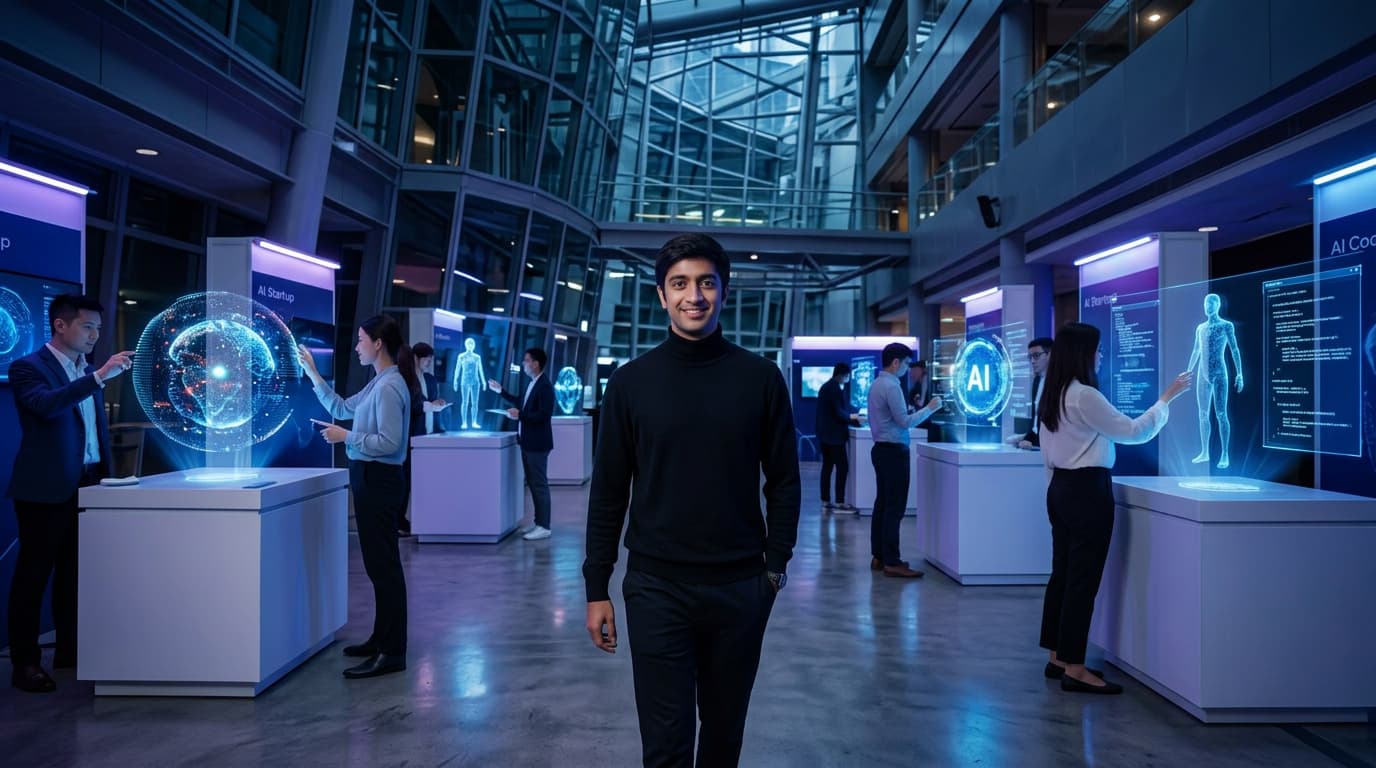
I spent the better part of last Tuesday walking through the various blocks at Cyberport, from the retail mall at the bottom to the sleek high-rise offices at the top. The energy on the campus has shifted in the last eighteen months. It has moved from a general tech park vibe to something much more focused and high-energy. It felt like walking through a high-density compute zone. As a founder who has spent the last decade building tech companies in Hong Kong, I have seen this place evolve through multiple cycles. But what is happening right now with artificial intelligence is different. It is more fundamental. Today, Cyberport stands as the undisputed heart of the Hong Kong AI ecosystem, housing over 300 companies that are entirely dedicated to AI, data science, and the infrastructure that supports them.
This evolution is not just about filling office space with monitors and standing desks. It is about a massive, coordinated effort to build what I call AI sovereignty for Hong Kong. While the rest of the world remains locked in debates about the merits of Big Tech dominance and the risks of centralized model control, I am seeing founders right here in Pok Fu Lam building their own models and their own infrastructure. They are doing this by using the Cyberport AI Supercomputing Centre (AISC), a facility that is quickly becoming the most important piece of hardware in the city.
02The Scale of the Ecosystem
When the latest reports highlight that there are over 300 AI companies at Cyberport, critics might think those are just startups with "AI" in their pitch decks. Having sat through dozens of demo days and visited countless offices here, I can tell you that is not the case. I am talking about a massive range of startups that are building deep-tech solutions. These are founders I have shared coffee with in the Cyberport mall, people working on everything from generative AI for specialized legal tech to autonomous delivery vehicles and high-frequency trading algorithms that require millisecond latency.
These 300 companies represent a significant portion of Hong Kong's total technological capability. When you look at the total numbers, Cyberport gathers over 2,300 companies in total, including 18 listed companies and 9 unicorns. The AI cohort is the fastest-growing segment. It is hitting a critical mass where the network effect is taking over every other consideration. If you are starting an AI company in Hong Kong today, you do not just move to Cyberport for the subsidized rent or the impressive ocean view. You move here because your next technical partner, your next pilot customer, or your next round of funding is likely sitting in the office next door.
| Ecosystem Metric | Status in 2025/2026 |
|---|---|
| Total Dedicated AI Companies | 300+ |
| Total Multi-disciplinary Companies | 2,300+ |
| Unicorn Count | 9 |
| Publicly Listed Companies |
03Accessing 3000 PFLOPS of Sovereign Compute Power
For any founder building in 2026, the biggest hurdle to scaling is not necessarily finding talent - although that is always a challenge - but the sheer, crushing cost of compute. I have seen many promising startups in Hong Kong struggle with their burn rates because they were paying massive premiums to US-based cloud providers for GPU access. This is where the Cyberport AI Supercomputing Centre (AISC) changes the entire financial math of building a startup here.
I visited the AISC facility recently. Seeing the rows of server racks is one thing, but understanding the capacity is another. Phase 1 is already operational, and by 2025, the total computing capacity reached 3,000 PFLOPS. To put that in perspective for non-technical founders, that is enough power to handle the most intensive generative AI training tasks without the latency of sending data across the Pacific.
Having local, sovereign compute power means we can train models on local datasets without being entirely dependent on external infrastructure that could be throttled or restricted at any moment. The HKSAR Government has been proactive here by allocating HK$3 billion to implement a multi-pronged three-year AI subsidy scheme. This is not some abstract grant. It is a massive subsidy that allows local firms and research institutions to access high-end GPUs at a fraction of the market cost. I have seen the application process, and it is designed for speed - exactly what a founder needs.
04Real Practical Insights for Founders on the Ground
What I have learned from my time building in this ecosystem is that Cyberport is designed to de-risk the startup journey at every stage. For those of us who have gone through the incubation programme, we know it is about more than just the HK$500,000 in funding. It is about the physical proximity to the AI Industry Park initiatives and the "AI Plus" strategy.
The "AI Plus" strategy is particularly interesting for B2B founders. Cyberport works to connect AI startups with traditional businesses in Hong Kong - banks, logistics firms, and retail giants - that need to adopt AI but do not know where to start. I saw this in action at the InnoEX 2026 event. Cyberport led a delegation of 35 startups to showcase their AI-driven solutions to a global audience. These were not mere research projects or academic exercises. They were real companies solving real efficiency problems.
One company I spoke with is using generative AI to automate complex financial reporting for Hong Kong's hundreds of thousands of SMEs. Another is using computer vision to optimize cargo through the Hong Kong port. This is the practical application of AI that generates revenue. For a founder, this kind of ecosystem support is the difference between a project that sits on GitHub and a business that scales globally.
05Why Every Hong Kong Tech Founder Should Care
If you are a tech founder in Hong Kong and you are ignoring what is happening at Cyberport, you are making a strategic mistake. The data is clear. More than 90% of the supercomputing capacity in the first phase was already being used or requested almost immediately upon launch. This indicates that the demand is not just theoretical. Companies are moving their workloads here because they need the speed that only local, fibre-connected GPU clusters can provide.
I have also noticed that the most successful founders in the park are the ones using the Baidu AI Cloud Innovation Centre, which officially launched in late 2024. This 20,000-square-foot facility serves as an educational base and an exhibition hub, but more importantly, it serves as a bridge. It connects the technical prowess of mainland AI giants with the innovative agility of local Hong Kong startups. This is a unique advantage we have in Hong Kong - we are the only place in the world where you can easily bridge the gap between global standards and mainland China's massive AI infrastructure.
06The Development of AI Infrastructure and Support
The infrastructure goes beyond just chips and boards. Cyberport is currently undergoing its next phase of physical expansion with Cyberport 5. This expansion is critical because the existing blocks are nearing full capacity. When I walk through the corridors, I see every square foot being used. The new expansion will bring even more specialized labs and coworking spaces specifically designed for AI heavy lifting.
The support schemes available are also becoming more specialized. We have the training programmes that focus on the next generation of Web3 and AI talent. We have the market development support schemes that help startups take their Hong Kong-built AI models to the ASEAN markets. I have seen founders use these schemes to set up offices in Singapore, Vietnam, and Indonesia, using Hong Kong as their global R&D hub.
07working through the AI Industry Park Initiatives
One thing I often tell new founders is to look closely at the AI Industry Park. This is not just a geographical designation. It is a set of incentives designed to accelerate the development of the AI industry. The HKSAR government's 2024-2025 budget made it clear that AI is the priority. With the HK$3 billion allocation, they are looking to create a thriving ecosystem where the 300 companies currently in the park can become 600 or 1,000 in the next few years.
For a founder, this means that the resources are there if you have the vision. Whether you need the 3,000 PFLOPS of computing power for massive model training or the smaller, more agile creative micro-funds for early-stage prototyping, the ladder is built. You just have to climb it.
08Personal Narrative - Building in the Heart of Innovation
I remember when I first started looking at the AI space several years ago. The tools were fragmented and the infrastructure was expensive. Building a startup in Hong Kong felt like being in a secondary market. That has completely changed. When I am at Cyberport now, I feel like I am in the centre of the action.
Last month, I sat in a meeting at the Microsoft and Cyberport AI partnership lab. We were discussing how to nurture local startups through specialized AI accelerator programmes. Seeing a global giant like Microsoft commit deeply to the local ecosystem at Cyberport tells you everything you need to know about the quality of the startups here. We are no longer just a financial hub that happens to have some tech. We are becoming a tech hub that understands finance better than anyone else.
09The Strategic Value of Hong Kong's AI Sovereignty
The concept of AI sovereignty is something I think about every day. In a world where data privacy and cross-border data transfer are becoming increasingly complex, having a localized hub like Cyberport is a huge competitive advantage. We have our own regulatory frameworks, our own compute, and our own talent pool.
The 300 AI companies currently at Cyberport are the pioneers of this new era. They are building a moat for Hong Kong. This moat is not made of traditional barriers, but of intelligence and data. By having so many companies in one place, we are creating a collective intelligence that is greater than the sum of its parts. I see founders sharing snippets of code, discussing model optimization techniques, and collaborating on joint bids for government contracts. This is how you build an industry from the ground up.
10Future Outlook for 2026 and Beyond
As we move further into 2026, I expect to see even more integration between AI and other sectors like FinTech and Web3. The Cyberport Web3 community already has over 310 companies, and the intersection between AI and blockchain is where some of the most exciting work is happening. I am seeing startups use AI to verify blockchain transactions and using blockchain to track the provenance of AI-generated content.
The goal is simple: Hong Kong wants to be a global AI development hub. With the foundations laid at Cyberport, we are well on our way. The 3,000 PFLOPS of power is the engine, the 300 startups are the drivers, and the HK$3 billion in government support is the fuel.
11Practical Steps for Aspiring AI Founders in Hong Kong
If you are looking to join this ecosystem, my advice is straightforward. First, get yourself to Cyberport and walk the halls. Attend one of the many AI meetups or demo days. Second, look into the various subsidy schemes. Do not assume you are too small or your idea is too niche. The system is designed to catch as many innovators as possible. Third, use the supercomputing centre. Do not burn your capital on expensive offshore cloud providers when you have a world-class facility in your backyard.
I have seen the growth firsthand. I have seen tiny two-person teams turn into thriving companies with international clients. The common thread among them is that they used the Cyberport ecosystem to its fullest extent. They didn't just rent an office. They became part of a movement.
12Final Thoughts from the Founder's Desk
Building a startup is the hardest thing I have ever done. It requires grit, luck, and the right environment. In Hong Kong, that environment is Cyberport. The 300 AI companies here are not just stats in a government report. They are my colleagues, my competitors, and my friends. We are building the future of Hong Kong together, one line of code and one model training run at a time.
The 3,000 PFLOPS of sovereign compute power is more than just a technical specification. it is a statement of intent. It says that Hong Kong is ready to lead the AI revolution in Asia. As a founder, I am all in on this vision. I have seen the progress we have made in the last few years, and I can only imagine where we will be in the next ten. If you are serious about tech in Hong Kong, you need to be here at Cyberport. I will see you in the halls.
13The Roadmap for AI Growth at Cyberport
Looking ahead, the roadmap for growth is clearly defined. We are seeing a shift from general-purpose AI to highly specialized, industry-specific models. The Cyberport ecosystem is uniquely positioned to lead this because of its history as a FinTech and digital entertainment hub.
- Integration of AI in FinTech: using the 430+ fintech startups to create AI-driven financial services.
- Web3 and AI convergence: Developing decentralized AI models that ensure data privacy and security.
- Smart City Solutions: Using AI to optimize Hong Kong's urban infrastructure, from traffic management to energy efficiency.
- Logistics and Trade: Enhancing the Greater Bay Area tech corridor with AI-powered supply chain management.
The numbers don't lie. With 300 AI companies and 3,000 PFLOPS of power, Cyberport is the place where the future is being built. I'm excited to see what the next wave of founders will bring to the table. Whether you're working on the next big LLM or a niche computer vision application, the infrastructure and the community are here to support you.
From my perspective as a founder, the biggest takeaway is this: the barrier to entry for building world-class AI has never been lower in Hong Kong. We have the funding, we have the hardware, and most importantly, we have the community. The 300 companies currently at Cyberport are just the vanguard. The revolution is just getting started.
14A Closer Look at the Startups Powering the Ecosystem
When I talk about the 300 AI companies, I often think about the specific breakthroughs I have seen in the last few months. There is one startup here that is using the AISC to train a Cantonese-specific large language model (LLM). For years, we have had to rely on models trained primarily on English or Mandarin datasets, which often miss the nuances of Hong Kong's unique linguistic culture. By using local compute power, this team is building a model that understands the city at a fundamental level. This is a prime example of AI sovereignty in action.
I have also seen incredible work in the medical technology space. There is a cluster of companies at Cyberport using AI for early cancer detection through medical imaging. These tasks require massive amounts of data and significant processing power. Before the AISC reached its 3,000 PFLOPS capacity, these companies were struggling with the sheer time it took to iterate on their models. Now, they are running simulations in hours that used to take weeks. This speed to market is literally a lifesaver.
15The Impact of the AI Training Programmes
We also need to talk about the human element. Software and silicon are nothing without the people who operate them. Cyberport has been aggressive about its talent development. I have seen the results of the AI training programmes firsthand. They are training the next generation of engineers, designers, and product managers who will staff these 300 companies.
I recently mentored a group of students participating in an AI ideathon at Cyberport. I was blown away by their technical proficiency and their understanding of the business landscape. They weren't just thinking about the "cool factor" of AI. They were thinking about unit economics, market fit, and scalable architecture. This suggests a maturing of the talent pool in Hong Kong that bodes very well for the future.
16Cyberport as a Gateway to the GBA
For any AI company, the local Hong Kong market is just the testing ground. The real prize is the Greater Bay Area (GBA) and beyond. Cyberport acts as a perfect launchpad for this expansion. I have seen founders use the resources here to refine their products before scaling across the border into Shenzhen or down into Southeast Asia.
The integration between Cyberport and the mainland tech giants like Baidu and Alibaba Cloud is a strategic asset. It allows startups to build on global standards while maintaining the technical hooks necessary to operate within the mainland's unique internet ecosystem. This dual-capability is something you won't find in Silicon Valley or London. It is a uniquely Hong Kong advantage.
17Addressing the AI Ethics Challenge
Finally, we cannot ignore the ethical considerations of AI. As we build this massive ecosystem, we have a responsibility to ensure that the technology is developed and deployed ethically. Cyberport has been proactive here as well, hosting forums and workshops on AI ethics and governance.
I have participated in several of these discussions, and I am heartened to see that founders are taking these issues seriously. We are talking about data privacy, bias in algorithms, and the impact of automation on the workforce. By addressing these challenges head-on within our own community, we are building a more robust and sustainable industry.
18The Foundation for the Next Decade
When I look at the 3,000 PFLOPS of power and the 300 AI companies, I don't just see a snapshot of today. I see the foundation for the next decade of Hong Kong's economic growth. We are moving away from a reliance on traditional sectors and toward a knowledge-based economy powered by intelligence.
I have lived and worked in Hong Kong for a long time. I have seen the city overcome many challenges. But I have never been as optimistic as I am today. We have the tools, we have the talent, and we have the vision. The AI revolution is here, and its home is Cyberport. I am proud to be part of this community, and I can't wait to see where we go next. If you're a founder or an innovator, there has never been a better time to be in Hong Kong. Get to Cyberport, join the 300, and let's build the future together.
Filed under
CyberportHong Kong AISupercomputingAISCGPU SubsidyHong Kong StartupsSovereign AI
Keep reading
More essays on AI growth, SEO & the web.