All writing
Cyberport Hong Kong14 min read
Cyberport 5 Is the Next Phase of Hong Kong Tech Infrastructure
Sheryar Shah explores the HK$3.7 billion Cyberport 5 expansion in Hong Kong, featuring Tier-III+ data centers, Pavegen energy floors, and AI sovereign...
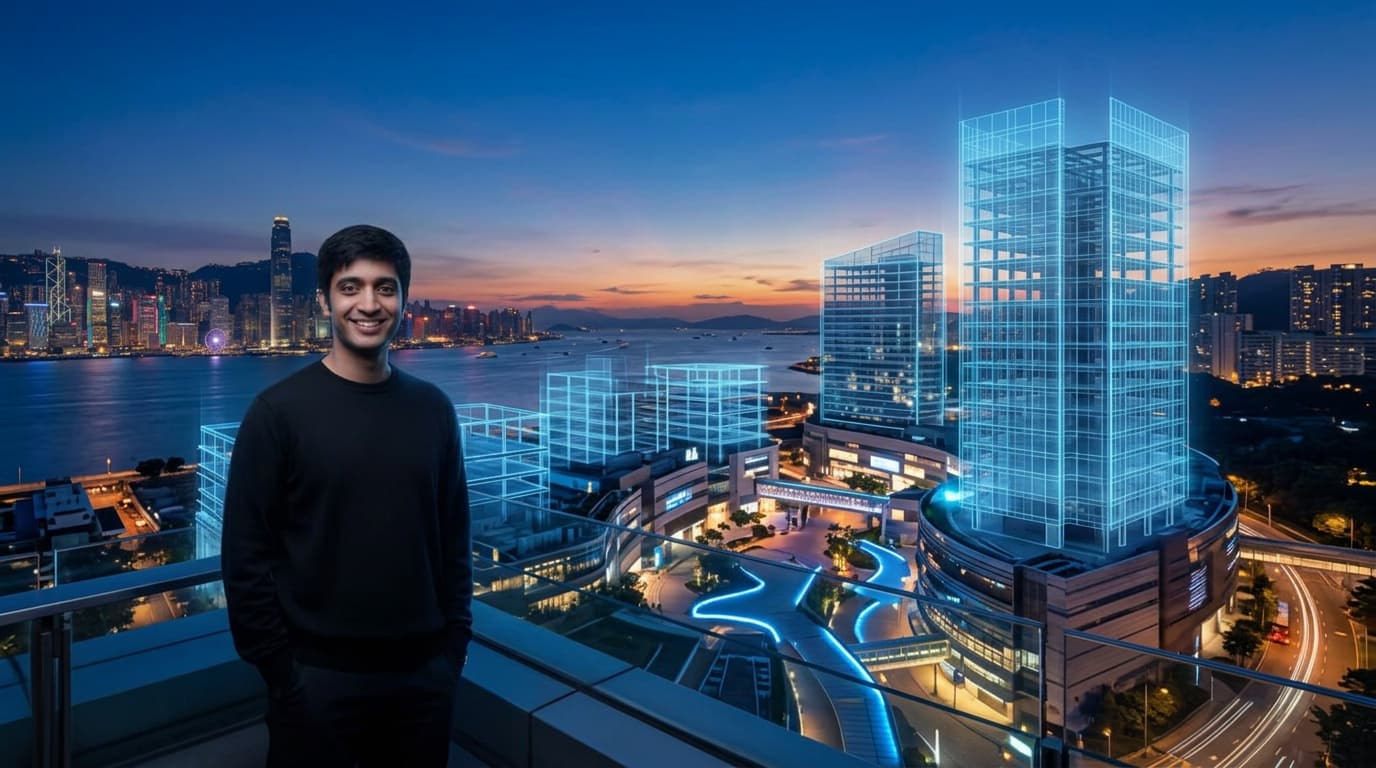
Standing on the balcony of the Cyberport 4 Smart-Space last week, looking towards the 1.6-hectare expansion site, I realized that the physical transformation of Hong Kong’s tech corridor is no longer just a blueprint - it is a massive, concrete reality rising above the Pok Fu Lam waterfront. As a founder who has seen the city’s startup landscape shift from a peripheral interest to a core economic driver, I can tell you that Cyberport 5 is the most significant development in our digital infrastructure in over two decades. This isn't just about adding more office desks; it’s about a HK.7 billion investment in the sheer computing power and specialized environment required for the era of sovereign artificial intelligence.
When I started my journey in the Hong Kong tech scene, the idea of having localized, high-performance computing on the scale of 3,000 PFLOPS felt like a pipe dream. We were often forced to rely on offshore cloud providers, dealing with the inevitable latencies and the complex legal dance of cross-border data residency. Cyberport 5 changes that fundamental math. With an additional 66,000 square meters of gross floor area - a 40% increase for the entire campus - we are finally building the capacity to house the deep-tech firms that are actually training the next generation of models here, on the ground, in Hong Kong.
The sheer scale of this project is a proof of our commitment to becoming an international innovation and technology hub. It is not merely a construction project; it is a manifestation of our technical sovereignty in an increasingly fragmented global tech landscape. For the engineers and founders among us, this represents the ultimate hardware layer for our software stacks. It provides the literal foundation upon which the next generation of Asian unicorns will be built.
02The Architecture of Sovereign Compute - Inside the Tier-III Plus Facilities
The technical specifications of Cyberport 5 are designed to solve the exact bottlenecks that have throttled local startups for years. The new 10-storey building isn't just a shell. It is a purpose-built environment featuring a Tier-III+ grade sustainable data center. For founders like me who are building agentic SEO workflows and real-time reasoning pipelines, the difference between general office power and high-density, redundant electrical grids is the difference between a product that works and one that crashes during a stress test.
In 2026, the demand for power density in data centers has skyrocketed due to the energy requirements of H100s and B200s. Most traditional Grade-A office space in Central or Quarry Bay simply wasn't built to dump the heat these clusters generate. Cyberport 5 is being engineered from the ground up to support this load, ensuring that your GPUs can run at peak performance 24/7 without thermal throttling or electrical failures. This infrastructure is the silent partner in every successful AI deployment.
03Technical Capacity Breakdown
| Feature | Detailed Specification |
|---|---|
| Total Project Investment | HK.7 Billion |
| Construction Site Area | ~1.6 Hectares |
| New Gross Floor Area (GFA) | 66,000 square meters |
| Campus Capacity Increase | 40% Growth in total area |
| Data Center Standards | Tier-III+ Sustainable Grade |
| Completion Timeline | Phased rollout starting late 2025 |
| Key Technology Partner | Siemens Insights Hub |
04Kinetic Infrastructure - Beyond the Traditional Smart Building
One of the most impressive technical aspects I saw during my recent site walkthrough was the integration of Pavegen’s kinetic energy arrays. We aren't just talking about a couple of solar panels on the roof. The project includes two 10.85 square meter arrays of smart kinetic tiles that transform footsteps from the daily commute into clean, usable electricity for the building’s ecosystem.
This power is then managed and monitored through the Siemens Insights Hub. This is a crucial distinction - the building itself is an IoT device. Every person walking through the lobby becomes part of a data stream that helps the building optimize its HVAC systems and energy consumption in real-time. For a founder, this represents a massive opportunity to test smart city software in a live, high-spec environment. The granularity of this data is unprecedented in the local market.
05The Siemens Insights Hub Integration
For the developers reading this, the integration with the Siemens Insights Hub is what truly makes this a 2026-ready facility. It provides a cloud-based analytics layer that allows for predictive maintenance and environment-specific optimization. The data gathered here isn't just for the building managers; it is a goldmine for startups building smart-city applications.
06The AI Supercomputing Centre - 3,000 PFLOPS of Raw Power
You cannot talk about Cyberport 5 without addressing the AI Supercomputing Centre (AISC) that serves as the digital backbone of the new campus. The AISC is reaching its full operational capacity of 3,000 PFLOPS just as the physical doors of Phase 5 are set to open. This isn't just a number; it’s a strategic moat for every startup based in the Southern District.
Having 3,000 petaflops available on-site means that local firms can train large-scale language models (LLMs) and run complex biological simulations without the latency of jumping through four different international firewalls. In the legal and financial sectors in Hong Kong - where data residency is not just a preference but a regulatory requirement - this is the only way to scale AI without compromising on privacy or compliance.
07Why AISC is the Real Game-Changer
The arrival of the AISC represents a democratization of compute power. Previously, only the largest tech conglomerates could afford the hardware required for massive AI training. Now, even a lean-funded startup in Cyberport can access a slice of this 3,000 PFLOPS beast. This shifts the focus from 'who has the most capital' to 'who has the best algorithms.'
- Domestic Data Processing: All data stays within the HKSAR jurisdiction, satisfying HKMA and SFC requirements for financial data handling.
- Unprecedented Speed: Using the internal fibers of the Cyberport campus to communicate with the supercomputing clusters eliminates the typical 50-100ms latency seen in foreign cloud services.
- Cost Efficiency: Substantially lower costs for compute for companies incubated within the Cyberport ecosystem compared to commercial public clouds.
08Harmonizing Modernity with the Waterfront - The Park Enhancement
We often forget that engineers and founders are human beings who need light and fresh air to function properly. A critical component of the Cyberport 5 project is the massive enhancement of the waterfront park. The 1.6-hectare site includes specialized landscaping designed to create a pet-friendly, tech-integrated public space. It is a rare example of urban development that values the mental well-being of its inhabitants as much as its technological output.
This is a stark contrast to the sterile, glass-and-steel canyons of Central. At Cyberport, you can walk out of a high-density GPU lab and be on a coastal promenade in 30 seconds. I’ve found that my most difficult technical breakthroughs often happen during those walks along the Pok Fu Lam coast, not while staring at a terminal. The sound of the waves and the open horizon provide the mental clarity needed for complex problem solving.
The park itself will feature smart benches with wireless charging, high-density public Wi-Fi 7 coverage, and digital art installations that respond to the foot traffic data captured by the Pavegen tiles. It is a playground for the senses and a testbed for the IoT products we are building. The integration of nature and technology is precisely the kind of environment that fosters sustainable innovation and keeps talented engineers from burning out.
09The GBA Tech Corridor - Positioning Hong Kong as the Master Node
Cyberport 5 isn't just serving the domestic market; it is the bridgehead for the Greater Bay Area (GBA) tech corridor. With its expansion, Cyberport is now capable of hosting larger international delegations and R&D centers for global tech giants who want a footing in the GBA. This increased density of talent and capital creates a gravitational pull that is hard for any serious global player to ignore.
As a founder, having your office in the same complex as the GBA landing zones of major tech players from Shenzhen and Guangzhou is an unfair advantage. It creates an environment of serendipity. Your next lead investor or major corporate partner might be the person you bump into at the smart-furniture charging station in the park. These random collisions are the lifeblood of any vibrant tech ecosystem.
10Strategic Advantages for GBA Expansion
- Talent Magnet: The high-spec facilities and waterfront lifestyle make it easier to recruit senior talent from Singapore, the UK, and the US who expect a world-class working environment.
- Regulatory Sandbox: Cyberport’s unique relationship with the government allows for specialized regulatory sandboxes, particularly in FinTech and HealthTech, that are hard to find elsewhere in Asia.
- Infrastructure Parity: With the 3,000 PFLOPS supercomputing center, Hong Kong finally has compute parity with the mainland’s tier-one tech hubs like Shenzhen, enabling seamless cross-border collaboration on heavy workloads.
11working through the Application for the New Space
If you are a tech founder looking to move into the new expansion, you cannot wait until the building is finished. The demand for the 66,000 square meters of new space is already intense. To get a spot in Cyberport 5, your company needs to demonstrate more than just a good ARR - you need to show how you contribute to the ICT ecosystem. It is a selective process that favors those pushing the boundaries of what is possible.
My advice for the application process is simple - focus on your AI roadmap. The selection committee is heavily prioritizing startups that can use the 3,000 PFLOPS of compute power and the Tier-III+ data infrastructure. Building the future requires more than just a slick UI; it requires a deep technical foundation that justifies the placement in this world-class facility. Show them how your company is a piece of the puzzle for a smarter Hong Kong.
12Tips for Success in the Cyberport Ecosystem
- Technical Depth: Detail how your product uses the localized high-speed compute. Be specific about your token usage or simulation parameters.
- Sustainability Alignment: Highlight how your company benefits from or contributes to the building's smart city goals. If you have a green-tech angle, make it central to your pitch.
- Community Impact: Show how you will active the community spaces in Phase 5. Mentorship and knowledge sharing are highly valued.
13The Future of the Founder Lifestyle in Pok Fu Lam
By the time Cyberport 5 is fully occupied in late 2026, the entire vibe of the Southern District will change. We are looking at a community of thousands of engineers, data scientists, and creative technologists living and working in an integrated smart ecosystem. The influx of new talent will breathe new life into the local economy, from the restaurants in Cyberport 3 to the retail outlets in the new Phase 5. It will finally feel like the high-tech village it was always meant to be.
This is the vision I’ve always had for Hong Kong - a place where high-finance capital meets deep-tech engineering in a location that actually inspires people to build. The HK.7 billion investment is already spent; the concrete is already set. Now, it’s up to us-the founders-to fill that space with the software and the innovations that will define our city for the next fifty years. This campus is our canvas.
14Scalability and Graduation - Solving the Space Crisis
In the past, one of the biggest complaints about the Cyberport ecosystem was that startups “outgrew” the facilities. You’d start in a Smart-Space cubicle, grow to 15 people, and then suddenly realize there was no larger office available, forcing you to move to an industrial building in Wong Chuk Hang. This disrupted the culture and separated teams from the very resources that helped them grow. It was a leak in the funnel that needed plugging.
Phase 5 solves this “graduation” problem definitively. The 40% increase in floor area is specifically designed to allow high-growth companies to scale their footprint without leaving the campus. You can now realistically plan to grow from a 2-person founding team to a 200-person enterprise all within the same ecosystem, maintaining continuity for your team and your infrastructure connections. This stability is worth its weight in gold for a scaling startup.
15Final Thoughts on the HK.7 Billion Bet
Building something like Cyberport 5 in the middle of a global shift toward remote work might seem counter-intuitive to some. But for those of us in deep tech, we know that remote work doesn't solve the need for high-density compute, sovereign data handling, and the collaborative friction that only happens in person. Innovation is a contact sport, and Cyberport 5 is providing the stadium. It is a necessary physical weight to balance our digital ambitions.
Hong Kong is placing a HK.7 billion bet on the future of physical tech hubs. Standing here today, looking over the rising steel frame of Phase 5, I am convinced it is a bet that will pay off. The future of Hong Kong tech isn't in a cloud server in Virginia; it’s right here on the Pok Fu Lam waterfront, powered by 3,000 PFLOPS of local muscle and a community that refuses to stop building. It is a bold statement of confidence in our local talent.
The next decade belongs to the founders who understand that infrastructure is the ultimate moat. The expansion of Cyberport represents our transition from a service economy to a builder economy. I’ll see you at the Grand Opening. We aren't just building buildings; we are building the future of Hong Kong.
16Deep Dive - The Smart Waterfront and Digital Integration
The waterfront enhancement is more than just landscaping. It is a 1.6-hectare digital park that serves as an outdoor lab. We are seeing the deployment of smart lighting systems that adjust based on ambient light and foot traffic, as well as an integrated 5G/Wi-Fi 7 mesh network that covers every inch of the grass and promenade. This makes the entire park a productive workspace for anyone with a laptop and a vision.
For startups in the telecommunications or IoT space, this provides an unprecedented opportunity. You can deploy sensors in the park and monitor them in real-time from your office in Cyberport 5. This level of vertical integration-from the supercomputing core to the outdoor sensor edge-is what makes this campus unique in Asia. It allows for a level of rapid prototyping that was previously impossible in a dense urban environment.
17The Role of Data in Smart City Evolution
The data generated by the Siemens Insights Hub and the Pavegen tiles will be accessible through specialized APIs for incubated companies. This means we are building a data-rich environment where insights into energy consumption, human mobility, and environmental impact can be used to train better predictive models. This is where the 'Smart City' concept moves from a buzzword to a set of actionable training data.
18Community and Collaboration - The New Common Areas
Phase 5 introduces significantly more 'clash space'-areas designed for spontaneous interaction. These include sky gardens, open terraces, and advanced seminar rooms. In the old phases, these spaces were often shared or a bit rigid in their design. In the new building, they are designed to be flexible, inviting, and technically enabled. They are the breeding grounds for the ideas of 2027 and beyond.
The design philosophy acknowledges that high-intensity coding sessions need to be balanced with relaxed networking. By creating these common areas, Cyberport is ensuring that the 40% more people on campus actually talk to each other. This is where the cross-pollination between a FinTech startup and a GreenTech company happens, leading to innovations that neither could have achieved in isolation. These are the spaces where the Hong Kong tech story truly comes together.
19The Financial Impact and Economic Multipliers
The HK.7 billion spent on Cyberport 5 isn't just a cost; it is a catalyst for billions more in secondary economic activity. By providing the space for 40% more companies, we are effectively increasing the throughput of the local VC ecosystem. More companies means more deal flow, which attracts more international venture capital to the Southern District. This creates a virtuous cycle of growth that benefits the entire city.
Furthermore, the construction phase itself has created thousands of jobs, and the operational phase will require a permanent workforce of technical and administrative staff. The Southern District is transforming from a quiet residential area into a bustling economic hub. This shift is vital for diversifying Hong Kong’s economy away from a heavy reliance on traditional sectors and towards a knowledge-based, high-tech future.
20Environmental Sustainability - A Green Tech Landmark
In an era of climate change, building a massive new data center must be done responsibly. Cyberport 5 is setting the standard for sustainable tech infrastructure in Asia. From the kinetic tiles to the high-efficiency cooling systems, every aspect of the design reflects a commitment to minimizing the carbon footprint of our digital lives.
The Tier-III+ data center is a prime example. By using advanced thermal management and sourcing clean energy where possible, it proves that you can have high-performance computing without environmental degradation. This is a critical factor for many modern startups whose investors and customers demand high ESG standards. Being based in Cyberport 5 gives you an immediate 'green' credential that is legally and technically verified.
21Conclusion - The Waterfront is Ready for the Builders
The 10-storey structure of Cyberport 5 is more than just a milestone in Hong Kong’s construction history. It is a signal to the world that we are ready for the next wave of the digital revolution. Whether you are building the next generation of autonomous agents, developing breakthrough biotech simulations, or engineering sovereign AI pipelines, Cyberport 5 is where you need to be.
The era of relying on legacy office spaces for tech work is over. The era of the purpose-built, supercomputing-integrated campus has arrived. As we move closer to the 2026 completion date, the excitement in the community is palpable. Let's make sure we are ready to take full advantage of this HK.7 billion gift to the ecosystem. It is a once-in-a-generation upgrade to our collective engine.
The waterfront is calling, the GPUs are warming up, and the future of Hong Kong tech has never looked brighter. We have the vision, we have the funds, and now, we have the space to grow. It is time for the builders to come home. I will see you on the waterfront, where we will build the next decade of Hong Kong excellence together. This is our moment, and Cyberport 5 is our home base.
Filed under
Cyberport 5Hong Kong TechAI InfrastructureSmart CityPavegenGBA Tech CorridorData Center
Keep reading
More essays on AI growth, SEO & the web.