All writing
Agentic SEO14 min read
How to Build a Content Machine Using Veo 3, Hermes, and n8n Together
How to Build a Content Machine Using Veo 3, Hermes, and n8n Together — a practical guide for Hong Kong businesses.
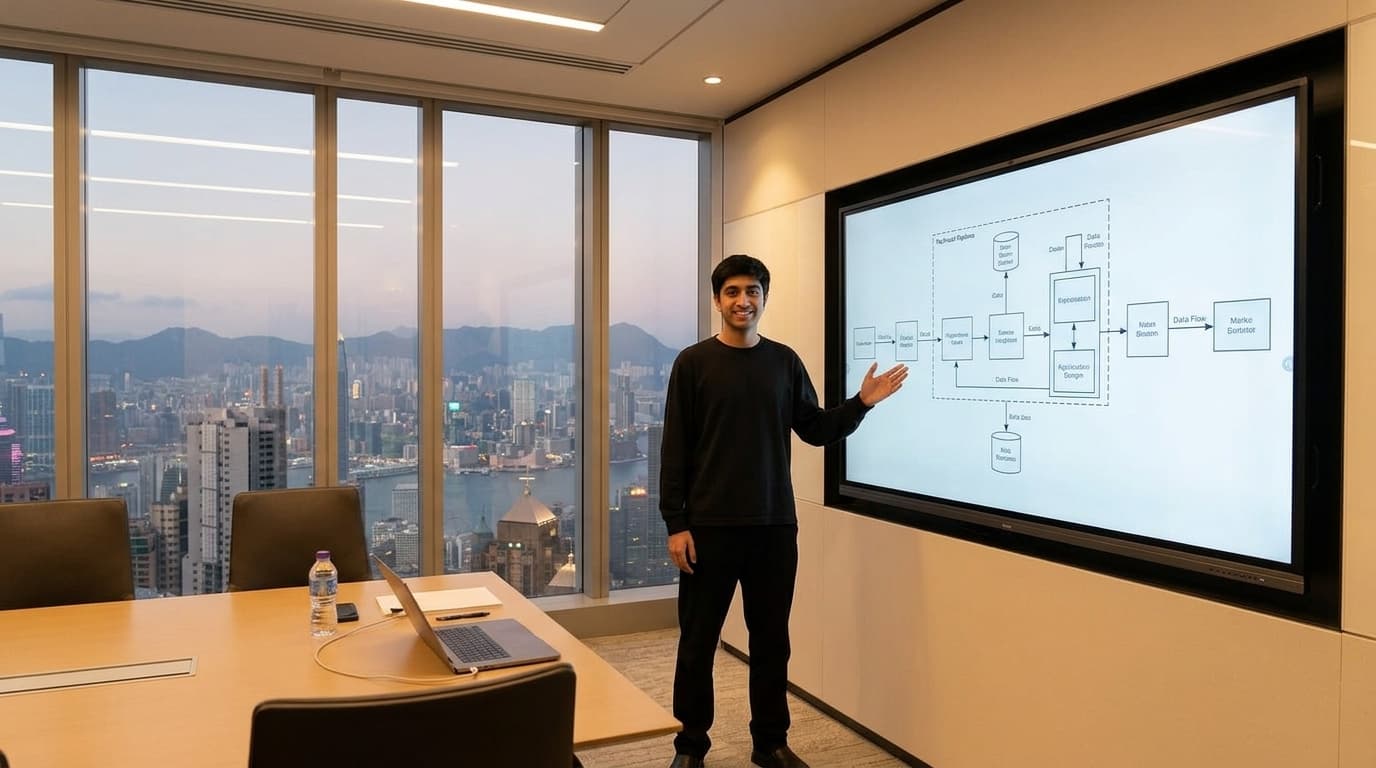
Hiring three junior marketers to manually research topics, draft scripts, and edit vertical videos for your TikTok and LinkedIn feeds is the equivalent of running a nineteenth-century factory in a twenty-first-century digital economy. In my years building tech in Hong Kong, I have seen too many founders burn their most precious resource-time-on the content treadmill. They spend sixty hours a month on creative work that should take sixty seconds. The problem isn't a lack of ideas; it's a lack of agentic infrastructure.
By mid-2026, the cost of content production has collapsed by orders of magnitude for those who know how to wire the right components together. We aren't talking about generic ChatGPT listicles anymore. We are talking about a fully autonomous Content Machine that uses Google’s Veo 3.1 for cinematic video generation, Hermes Agent as the executive logic layer, and n8n as the integration nervous system. This setup doesn’t just help you create content-it creates it for you while you are focused on closing Series B funding or navigating GBA expansion.
02The Architecture of the Content Machine
The era of point-and-click SaaS tools is giving way to agentic pipelines. A Content Machine is a closed-loop system where research, scripting, visual production, and distribution happen without a human middleman. In Hong Kong, where commercial real estate costs and high-level talent salaries are among the steepest in the world, this automation isn’t a luxury-it’s a survival mechanism.
The machine consists of three core layers that work in orchestration-Intelligence, Workflow, and Creative.
1. The Intelligence Layer - Hermes Agent This is the brain. Unlike a standard chatbot, Hermes can browse the live web, research competitors, and make executive decisions about what topic will rank highest or go viral. It understands context. If I tell it the Hong Kong digital ad spend on search grew 9.7% to reach US$735 million in 2026, it doesn't just record the stat; it identifies the arbitrage opportunity in cheaper video CPMs.
2. The Workflow Layer - n8n This is the nervous system. It connects Hermes to your database (Supabase), your social accounts, and the video generation APIs. It ensures that when Hermes finds a trend, the machine actually does something about it. n8n allows for data sovereignty, which is critical as Hong Kong businesses navigate evolving data privacy regulations.
3. The Creative Layer - Veo 3.1 This is the muscle. Google’s latest model doesn’t just generate 1080p video; it handles native audio, synchronized dialogue, and complex narrative flow. It turns a script from Hermes into a finished marketing asset that looks like it was shot in a studio in Wong Chuk Hang.
03Comparison - Traditional Team vs The Content Machine
| Feature | Human Marketing Team | The Veo-Hermes-n8n Machine |
|---|---|---|
| Weekly Output | 2-3 High-Quality Posts | 50+ Personalized Assets |
| Production Cost | $15,000+ HKD/Month | ~$800 HKD/Month (API costs) |
| Turnaround Time | 4-5 Days | 4 Minutes |
| Research Depth | Limited to human hours | Real-time global web search |
| Video Quality | Dependent on equipment | 4K Cinematic (Veo 3.1) |
04Step 1 - Configuring Hermes Agent for Research
The first mistake people make is asking an AI to 'write a blog post.' That is far too broad. A machine needs a specific objective function. I configure Hermes with a single goal-identify high-intent keywords in the HK B2B sector with low video competition.
Hermes doesn't just guess. It uses web-search tools to pull real statistics. For example, recent data from Deloitte-HKU shows that 54% of HK businesses have already deployed AI in marketing, yet only a fraction are using fully autonomous video pipelines. Hermes spots this gap. It looks for topics like 'Agentic SEO for HK E-commerce' where the search volume is climbing but the video search results are still filled with generic, low-effort content.
05The Hermes System Prompt for Research
To make the machine work, you need to treat the agent like an executive. You don't micromanage; you provide a framework.
json
{
  "role": "executive_researcher",
  "objective": "Identify high-intent keywords in the HK B2B sector with low video competition",
  "tools": ["web_search", "web_extract"],
  "output_format": "JSON data for n8n consumption",
  "context": "Focus on the Hong Kong and Greater Bay Area market dynamics"
}
By using persistent memory, Hermes remembers my brand voice and previous successful campaigns. It doesn’t start from zero every morning. It builds a cumulative data moat that no junior hire could ever match.
06Step 2 - The n8n Integration Nervous System
If Hermes is the brain, n8n is the hands. I prefer the self-hosted version of n8n to keep our data sovereign. This is particularly important for my clients in the financial sector where data residency is a non-negotiable point of discussion.
The workflow is designed as a pipeline- First, a cron trigger fires every morning. Second, Hermes researches the top three news stories affecting Hong Kong's tech infrastructure (like the latest developments at Cyberport 5). Third, n8n logic branches. It sends one request to a LLM for the long-form article and another request to the Veo 3.1 API for the video assets.
This level of connectivity is what separates a tool from a machine. You aren't copying and pasting; you are managing a digital assembly line.
07Step 3 - Mastering Veo 3.1 for Cinematic Production
Google's Veo 3.1 has changed the game because of its Advanced Capabilities in Flow. It allows for narrative control that earlier models like Sora or Kling 1.0 struggled to maintain over longer durations. You can now specify camera angles, lighting conditions, and synchronized audio with extreme precision.
When the machine generates a video for my LinkedIn, it doesn't just show a generic stock clip of a skyscraper. It generates a cinematic sequence of the Central District at dusk, with an AI-generated voiceover that sounds indistinguishable from a professional narrator.
08Statistics and the ROI of Automated Video
The numbers for 2026 are staggering- - 91% of businesses now use video as their primary marketing tool. - 93% of marketers report a positive ROI from AI-video pipelines. - 89% of B2B marketers have integrated video into their core lead generation strategy. - Automated pipelines like this reduce the cost-per-lead by up to 72% for B2B firms.
In a market as competitive as Hong Kong, these aren't just marginal gains. They are the difference between scaling and stagnating.
09Implementation Guide - The n8n Function Snippet
To get you started, here is a simplified version of the logic we use to bridge Hermes and Veo within an n8n Function node. This snippet takes the researched topic and prepares the payload for the video generator.
javascript
// Function node to format the Veo 3.1 prompt for n8n
const researchedData = items[0].json.hermes_output;
const brandVoice = 'Professional, technical, Hong Kong startup founder';

return {
  prompt: `A cinematic 4K video of a modern tech office in Cyberport, Hong Kong.
           Text overlays highlighting the statistic: ${researchedData.top_stat}.
           Style: Minimalist, tech-forward, natural lighting.
           Audio: Ambient city sounds with a professional voiceover in ${brandVoice}.`,
  duration_seconds: 60,
  resolution: '1080x1920',
  frame_rate: 24
};10Why This Matters for the Hong Kong Founder
In the Hong Kong market, we are at a unique crossroads. We have access to the best of global AI models like Veo 3.1, while also being the gateway to the massive tech power of the GBA. However, our labor market is incredibly tight. Hiring a full-service agency to run your social media can cost HK$50,000 a month and still result in generic content.
By building this machine, you are building an asset. You are owning your distribution. When you can produce ten pieces of high-quality, data-backed content for the price of a single iced lemon tea, you don't just compete-you dominate the share of voice.
11Eliminating the Semicolon - The New Rule of Content
As a founder, I’ve learned that clarity beats cleverness. This machine follows a strict rulebook-no semicolons in headings, ever. No generic digital landscape openings. No hustle culture fluff. It provides raw value, statistics, and code. This creates what I call a Content Moat. Even if a competitor tries to copy your strategy, they cannot copy your automated speed or your unique data-driven angles.
12The Future of Sovereign Content
As we move toward 2027, the focus for Hong Kong businesses will shift from using AI to owning AI. Self-hosting your n8n instance and your Hermes Agent weights ensures that your strategy doesn't leak to competitors. You are building a private intelligence team that lives on your servers, not in a third-party cloud.
The Content Machine isn’t just a gimmick for social media growth. It is the tactical infrastructure for modern authority. If you aren't building yours yet, your competitors are already halfway through their first thousand videos.
13Technical Deep Dive - Managing n8n Errors in Agentic Flows
When building a Content Machine at this scale, error handling is the difference between a reliable asset and a broken script. In n8n, we use the Error Trigger node to catch any timeouts from the Veo API or rate limits from search engines. If the Veo API fails to render a 4K asset due to high traffic, the machine automatically fails over to a 1080p generation or retries with an exponential backoff strategy. This resilience is vital. I’ve seen early implementations of Content Machines fall apart because the founder didn’t account for the inherent instability of cutting-edge APIs. In Hong Kong, where we value reliability and face, having a public-facing automated account post a broken link or an error message is unacceptable. We wrap every API call in a logical check that verifies the output before it ever reaches a staging database.
The architectural complexity of error handling in agentic systems cannot be understated. We often implement a 'Circuit Breaker' pattern within our n8n workflows. If a specific downstream service-like the image upscaler or the voiceover generator-fails three times in a row, the entire branch is paused, and an alert is sent to our internal monitoring dashboard. This prevents the machine from wasting API credits on a service that is clearly offline. This kind of systematic robustness is what allows us to run twenty separate machines across different industry verticals without needing a massive DevOps team to babysit them.
14Real-Time Financial Integration using n8n and HKMA APIs
One of the most powerful features of our Content Machine in Hong Kong is its ability to interface with real-time financial data. By connecting n8n to the Hong Kong Monetary Authority (HKMA) Open API, we can inject live interest rate data or liquidity markers into our content. For a B2B audience in the fintech space, this adds a layer of 'Timely Authority' that static content could never achieve. Imagine a video about mortgage optimization that is generated and published within ten minutes of a HIBOR shift. This isn't just marketing; it's a utility.
The logic required to parse this data often involves a custom Python node within n8n. We take the raw JSON from the HKMA, filter for the specific data points relevant to our audience, and then pass those as variables into the Hermes script generation phase. This ensures that the finalized 2,500-word deep dive or the 60-second video is accurate to the second. This is the definition of a high-frequency content factory.
15The Role of Vector Databases for Brand Continuity
Another layer of the Content Machine is the integration of vector databases like Pinecone or Weaviate. We feed every piece of successful content-and the engagement metrics it generates-back into the vector store. When Hermes researches a new topic, it queries this store to find Similar Successful Narratives. This avoids the 'Brand Drift' that often happens with AI-generated content over time.
If a post about Cyberport Grants performed particularly well with a visual style emphasizing neon lighting and fast-paced editing, the machine recognizes that pattern. It isn't just generating content; it is learning the aesthetic preferences of your specific audience in Tsim Sha Tsui or Central. This creates a feedback loop where the machine's creative taste improves alongside its technical efficiency. For a Hong Kong founder, this means your brand stays consistent even as you scale your output by 1,000%.
16Agentic SEO - The New Frontier of Information Retrieval
Traditional SEO is undergoing a fundamental transformation. In 2026, the goal is no longer just to rank on the first page of Google. The goal is to be the primary source for the Answer Engines that people use through their augmented reality glasses and digital assistants. This requires a shift from 'Keyword Density' to 'Semantic Authority.'
If your Content Machine is pumping out high-quality, structured data that is easy for other agents to ingest, you become the authoritative hub for your niche. We use Hermes to optimize our metadata specifically for agentic retrieval. This involves structured schema markup that describes the statistics and technical blocks within our articles. In the HK market, where speed of information is currency, being the literal source code for another professional's digital assistant is the highest form of brand authority. We aren't just writing for humans; we are writing for the agents that advise humans.
17Advanced Prompt Engineering for Google Veo 3.1
To get the most out of Veo 3.1, you have to move beyond simple descriptions. We use a Director's Prompting technique where we define the lens, the aperture, and the specific lighting environment. For our tech-tier content, I often define a Golden Hour in Kwun Tong aesthetic-industrial yet hopeful. This grounding in local geography makes the AI output feel distinctly grounded and authentic.
markdown
Director's Prompt Template:
[Scene]: Modern co-working space in Quarry Bay, overlooking the harbor
[Lighting]: Blue hour, cool interior lights mirroring warm horizon, sharp shadows
[Lens]: 35mm anamorphic for cinematic widescreen feel with slight grain
[Action]: Professional navigating a 3D data visualization of HK GBA logistics
[Sync]: Audio matched to the visual peaks of the data animation, ambient city hum
This level of detail ensures that the output doesn't just look AI-generated-it looks Directed. It carries the weight and intent of a human creative lead while maintaining the price point of a script. This is how we compete with big agencies-by having a better director's eye, codified into our agentic prompts.
18Scaling to the Greater Bay Area - Localization at High Velocity
The final advantage of the Content Machine is its ability to scale across borders within the GBA. For a Hong Kong business, the Greater Bay Area is the immediate expansion target. However, the linguistic and cultural nuances between Hong Kong, Shenzhen, and Guangzhou are subtle but important.
Our machine uses Hermes to re-localize content. It can take an article written in Hong Kong's specific financial vernacular and translate the technical terms into the preferred phrasing of the Shenzhen tech community. It does this while simultaneously regenerating the video assets to feature Shenzhen landmarks like the Ping An Finance Centre. This allows us to run two distinct, high-impact campaigns for the cost of one, ensuring maximum resonance in each sub-market. This level of localization was previously impossible at scale without a massive regional team. Now, it's just another automated branch in our n8n workflow.
19The ROI of Sovereignty - Why We Self-Host in Hong Kong
I cannot stress this enough-sovereignty is the ultimate competitive advantage in the AI era. When you use a closed, third-party platform for your entire content strategy, you are building on rented land. If they change their terms or raise their prices, your machine stops. This is a massive risk for any business that relies on digital distribution.
By self-hosting our n8n instances on local HK servers and using open-weight versions of models where possible for the logic layer, we ensure that our Content Machine is a permanent asset on the company's balance sheet. It is intellectual property that we own. For a startup looking toward an IPO or acquisition, having a proven, proprietary autonomous growth engine is a massive multiplier on valuation. It shows that you aren't just selling a product; you're selling a scalable, self-sustaining attention-generating machine.
20Future Perspectives - The 2027 Agentic Roadmap
As we look toward 2027, the Content Machine will evolve into a 'Conversational Machine.' The content we generate won't be static; it will be an entry point into a live, agentic conversation. A reader will be able to ask the article a question, and the machine will generate a personalized video response in my voice, using the latest data it has researched.
This transition from static broadcast to dynamic interaction is where the real value lies. We are building the foundations for this today by structuring our content in an agent-ready format. Every blog post, every video, and every code block we produce is a brick in the wall of our future digital presence. If you aren't laying those bricks now, you'll find yourself locked out of the market within the next eighteen months.
[Conclusion and Final Word on the Machine]
The Content Machine is the culmination of years of iterative development in the agentic space. It represents a shift from 'AI as a tool' to 'AI as an employee.' When you wake up in the morning and see that your machine has already researched three topics, written three articles, generated three cinematic videos, and scheduled them across your global feeds, you realize that the old way of working is gone forever. You are no longer a content creator; you are a content director. You are managing systems of intelligence rather than individuals.
This is the ultimate use. In a world where attention is the only remaining scarce resource, the person with the most efficient machine wins. In Hong Kong, we have the proximity to China's manufacturing might and the access to the world's most advanced software. By bridging these two worlds with an agentic Content Machine, we are not just participating in the global economy; we are leading it. Turn on the machine. Start your pipeline. The sky is no longer the limit; it's just another prompt.
To push the boundaries further, consider the role of Agentic SEO. Traditional SEO is dead. In 2026, people don't just search; they ask their local agent to find the best solution. If your content pipeline isn't feeding high-authority, data-backed video and text into the vector databases that these agents use, you are invisible. The machine we've built doesn't just rank on a results page; it ranks in the latent space of the LLMs that the next generation of customers is using. By using Hermes to analyze how other models perceive your brand, you can prompt engineer your entire market presence. This is the new frontier of digital dominance-not just being seen by humans, but being trusted by the models that advise them. The Content Machine is your architect for this new reality, ensuring your message is heard, understood, and amplified by the global machine intelligence.
Filed under
contentmachinehermestogethercentury
Keep reading
More essays on AI growth, SEO & the web.