All writing
AI Strategy19 min read
Why Every Hong Kong Business Should Care About the Claude Fable 5 Shutdown
The US government banned Claude Fable 5 in 3 days. For Hong Kong businesses building on AI, this is not just news — it is a direct operational risk that...
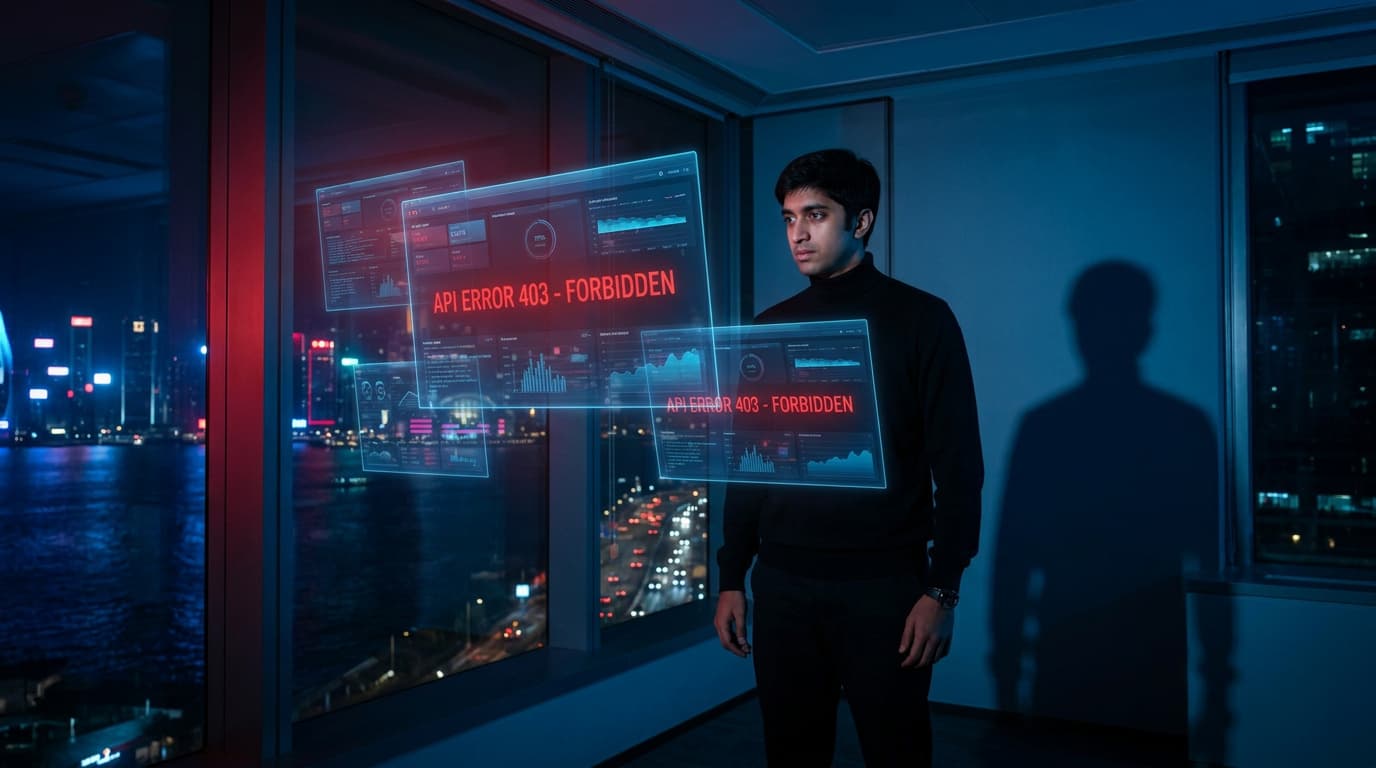
Watching a world-class piece of technology vanish from the internet in less than seventy-two hours is a visceral reminder that in the modern era, software is not just code-it is geopolitics. Last Friday, when Anthropic pulled the plug on Claude Fable 5 following a direct US government export control directive, the collective intake of breath from the Hong Kong tech community was audible. We have spent the last few years working through the 'AI Wall' with VPNs, mirrors, and third-party API aggregators, but this latest development is different. It is not just about being blocked because of where we are located; it is about the model itself being deemed too powerful to exist outside of a highly controlled environment. For a Hong Kong founder, the shutdown of Fable 5 isn't just a news headline or a minor service disruption-it is a fundamental warning shot regarding our reliance on centralized, US-hosted intelligence.
02The 72-Hour Reign of Claude Fable 5
When Claude Fable 5 dropped, the benchmarks were staggering. It wasn't just a marginal improvement over Sonnet 3.5 or the aging Opus; it felt like the first true 'Level 4' reasoning engine. In our labs here in Cyberport, we were seeing Fable 5 handle complex codebase refactors that previously required five or six manual prompts. It understood context with a nuance that made previous models look like autocomplete engines. The 'Mythos 5' variant, which launched alongside it, was particularly adept at creative reasoning and long-context synthesis-perfect for the multilingual, high-speed business environment of Hong Kong.
But the excitement was short-lived. By June 12, 2026, the models were disabled globally. The speed of the shutdown was unprecedented. Usually, when a model is deprecated, there is a sunset period of six months to a year. Here, it was a kill-switch. The US government's concerns over 'national security and cybersecurity' meant that the model was essentially confiscated from the public domain. For those of us running production workflows on the API during those 72 hours, the sudden 403 and 503 errors weren't just bugs-they were an erasure of a capability.
Let's dive deeper into what made Fable 5 so unique during its brief 72-hour window. The model architecture, internally referred to as the 'Fable' framework, was rumored to use a massive breakthrough in active inference. Unlike the standard autoregressive models that predict the next token based on a static probability distribution, Fable 5 appeared to perform a micro-simulation of the possible outcomes before committing to a token string. This resulted in what some researchers called 'Perfect Logic' for certain categories of mathematical and symbolic reasoning problems. For businesses in Hong Kong's financial sector, this was the holy grail. Imagine a model that could audit a 400-page IPO prospectus and find a single conflicting clause in seconds, with zero false positives. That was the promise. The fact that this capability was retracted so quickly suggests that the power it offered was seen as a potential threat to the stability of the very financial systems it was designed to improve. This is the irony of the modern AI race: the more useful a tool becomes for high-stakes enterprise, the more likely it is to be scrutinized by regulators who fear its misuse in the wrong hands.
03Why Fable 5 was Different
Fable 5 used a new architecture that allowed for recursive self-correction. Unlike previous transformers that might hallucinate and commit to a wrong path, Fable 5 could identify its own logic errors mid-stream and pivot. This made it the most dangerous-and most valuable-tool in an engineer's toolkit. In the context of Hong Kong, where we are often acting as a bridge between Western capital and Eastern manufacturing/logistics, that level of reasoning is a competitive edge. Losing it so abruptly highlights our greatest vulnerability: we are building on borrowed time and borrowed silicon.
04The Geopolitical Kill-Switch - A Hong Kong Perspective
Living and working in Hong Kong, we are used to the 'grey area.' We know that certain tools require a bit more effort to access. However, the Fable 5 shutdown illustrates a new tier of risk. It isn't just that the US doesn't want *us* to have it; it's that the US is increasingly willing to restrict its own champion companies from offering their best technology to *anyone* if it risks leaking specific strategic advantages.
For a Hong Kong business, this creates a 'double jeopardy' scenario. On one hand, we face restrictions from the service provider side (Anthropic, OpenAI, and Google often geo-blocking HK IPs). On the other hand, we now face the risk of total model evaporation via executive order. If you have built your customer support, your automated trading algorithms, or your logistics optimization around an API that can be shut down over a weekend, you don't have a business-you have a precarious lease on someone else's asset.
The geopolitical implications for Hong Kong cannot be overstated. We are currently living through a period of intense technological decoupling. On one side, you have the 'Great Firewall' of mainland China, and on the other, you have the increasing 'Export Control Wall' from the West. Hong Kong used to be the bridge where both could meet. Today, we have to be the masters of both worlds without being fully dependent on either. This requires a level of tactical agility that most Western startups don't even have to consider. When a Silicon Valley startup builds an AI app, they assume the underlying infrastructure is as stable as the electrical grid. For us, the infrastructure is more like a shifting sand dune. One day you have access to the world's best model, and the next day, you are geo-fenced. This constant pressure has created a unique breed of 'resilience-first' developer in Hong Kong. We are the ones who build local cache layers, who optimize for low-bandwidth environments, and who are now leading the charge in model pruning and quantization to ensure we can run high-quality LLMs on local, consumer-grade hardware. This isn't just a hobby; it's a survival mechanism.
05The Impact on Local Infrastructure
Many Hong Kong firms have shifted to using AWS Bedrock or Google Vertex AI through Singapore or Tokyo regions to maintain compliance while accessing high-order models. The Fable 5 shutdown bypassed these regional buffers. Because the directive was model-specific and based on the underlying safety and export profile, it didn't matter if you were hitting an endpoint in Ashburn or a relay in Singapore. The intelligence was gone. This level of 'remote bricking' for software is something HK tech leaders must account for in their risk registers.
06Technical Resilience - Building for a Multi-Model Future
If there is one technical takeaway from the Fable 5 disaster, it is that hard-coding a single LLM provider into your stack is now officially a failure of architectural design. We need to build 'Model-Agnostic' layers that can failover to local or open-source alternatives without a second of downtime.
At my firm, we have moved toward a strategy of 'AI Heterogeneity.' We use a routing layer that constantly monitors the health and availability of primary US-based models, but always maintains a hot-swap capability to locally hosted models like DeepSeek-V3 or Alibaba's Qwen 2.5.
07Implementing a Robust Failover Pattern
Below is a conceptual Python implementation of how a Hong Kong-based startup might handle an LLM request that includes automated failover. If the primary (high-risk) model returns an error or is suddenly 'deprecated' by a government order, the system falls back to a locally hosted or less-sensitive model.
This isn't just about avoiding a '404 Not Found' error; it's about maintaining operational continuity when the geopolitical winds shift.
08The Case for AI Sovereignty in Hong Kong
We need to talk about AI Sovereignty. Until now, the strategy for most HK businesses was: 'Wait for the Americans to release it, find a way to access it, and profit.' That strategy is dead. The Fable 5 shutdown proves that the most advanced AI will increasingly be weaponized-or mothballed-as part of national security strategies.
Hong Kong has a unique opportunity here. We sit at the crossroads of some of the world's most impressive open-source model releases. While the US is busy issuing export controls on models like Fable 5, the open-source community, particularly out of China and Europe, is catching up at a rate that is frankly terrifying.
True AI sovereignty for a Hong Kong firm means owning the full stack of intelligence. This starts with the hardware. While NVIDIA's H100s are increasingly difficult to source due to various restrictions, the secondary market and the rise of alternative silicon (from companies like Huawei, Moore Threads, or even the latest Mac Studio clusters) provide a path forward. The second pillar is the data. Our data is our sovereign territory. By ensuring that our training sets and fine-tuning data remain on local servers, we prevent the 'intelligence drain' that occurs when we feed our proprietary business logic into global APIs. The third pillar is the weights. We must move away from 'black box' models where the owner can change the behavior or shut off the access at their whim. The future for Hong Kong is in 'Grey Box' and 'White Box' models-models where we have a deep understanding of the weights and the ability to run them on our own terms. This might mean settling for a model that is 90% as capable as Fable 5 but 100% more reliable because it lives in a server room in Kwun Tong rather than a data center in Virginia.
09Why Open Source is the New Priority
- Immutability: Once you download the weights for a model like Qwen 2.5 or Llama 3.1, no one can 'shut it down.' You own the intelligence.
- Compliance: For HK businesses handling sensitive data under local regulations, hosting a model on a private cloud in a Fanling data center is infinitely safer than sending it to a model in Northern Virginia that might be legally compelled to log your data or shut off your access.
- Cost and Latency: Running local inference in Hong Kong reduces the latency that often plagues VPN-heavy workflows. For high-frequency trading or real-time logistics, those milliseconds matter.
10The Hong Kong Market - Context Matters
Hong Kong is a high-density, high-intellect economy. We specialize in services: finance, law, logistics, and high-end retail. These are exactly the sectors most susceptible to AI disruption. If our competitors in London or New York have access to a 'Fable 5' class model and we are stuck with three-year-old 'Turbo' models, we lose.
However, the reverse is also true. If we become the masters of model orchestration-knowing exactly when to use a US-based model via a proxy and when to switch to a hyper-optimized local model-we become more resilient than our Western counterparts who are currently 'lazy' and over-reliant on a single provider (OpenAI).
There is a certain 'HK Hustle' required here. We need to be the engineers who can bridge the gap. We must be able to fine-tune our own versions of these models on local datasets-Cantonese nuances, Hong Kong legal precedents, and the specific quirks of the HKEX.
11Statistics - The Reality of AI Dependency
According to recent surveys in the Hong Kong tech sector: - 74% of HK-based AI startups rely on US-hosted APIs for their core logic. - less than 15% have an active, tested failover plan for a model shutdown. - 62% are currently accessing these services through 'non-traditional' means (VPNs or mirrors), which are inherently unstable.
The Fable 5 event should push that 'failover plan' number to 100%. If you haven't sat down with your CTO this week to ask, 'What happens if our API key stops working on Monday?' you are failing your shareholders.
12The Path Forward for HK Founders
- Immediate Audit: Review every feature in your product that relies on a specific US-hosted LLM. Categorize them by 'Critical' and 'Enhancement.'
- Diversify your API Portfolio: Do not just rely on Anthropic. Have OpenAI, Google, and Mistral keys ready to go. Use a middleware like LiteLLM to handle the abstraction.
- Invest in Local Compute: Even a single H100 or a cluster of 4090s in your HK office can give you a baseline level of intelligence that no government can switch off.
- Engage with the Open Source Community: Start contributing to projects that focus on model quantization. The smaller and more efficient the model, the easier it is to run within the constraints of Hong Kong's urban data centers.
13Final Thoughts - Resilience as a Competitive Advantage
The Claude Fable 5 shutdown was a shock, but it was also a gift. It gave us a clear, unambiguous data point: the future of AI is not a global public utility. It is a fragmented, protected, and highly regulated landscape.
As Hong Kong founders, we have always been the survivors of the global economy. We know how to pivot when trade wars start, and we know how to adapt when regulations change overnight. AI is no different. The shutdown of Fable 5 is not the end of AI progress in Hong Kong-it is the beginning of our journey toward AI independence. We will build, we will adapt, and we will ensure that our businesses are powered by intelligence that we control.
The era of 'AI as a Service' is evolving into 'AI as a Strategic Asset.' Make sure your business treats it as the latter.
Sheryar Shah is a tech founder based in Hong Kong, focusing on AI-driven logistics and the intersection of emerging tech and local market resilience.
14Case Study - The Logistics Collapse of June 13th
To understand the real-world impact of the Fable 5 shutdown, we only need to look at what happened to a mid-sized logistics firm in the New Territories. This firm, which we'll call 'Apex Logistics,' had integrated Fable 5 into their route optimization engine within 24 hours of its release. They saw an immediate 14% improvement in fuel efficiency and a 10% reduction in delivery times across their fleet of 200 trucks. Fable 5 was managing the complex interplay between the Hong Kong-Zhuhai-Macao Bridge traffic, the container terminal congestion at Kwai Chung, and the idiosyncratic parking restrictions of Central.
When the model was shut down on June 12th, Apex Logistics' automated system defaulted to a legacy model that hadn't been properly maintained. The result was chaos. Trucks were routed into streets they couldn't navigate, delivery windows were missed, and the firm suffered a reputational blow that cost them two major contracts. The lesson here is clear: innovation without a fallback is just a fancy way to fail. The firm has since rebuilt its stack using a hybrid approach-using high-order models for long-term strategic planning while keeping a 'hardened' local model for the hour-by-hour routing logic. This is the model that every Hong Kong business should follow.
15The Role of the Hong Kong Government and Academic Institutions
The Fable 5 event also highlights a gap that our local institutions must fill. We need more than just 'InnoHK' clusters; we need a centralized Hong Kong AI Reserve-a pool of high-performance compute and pre-trained, sovereign models that local startups can plug into without fear of international sanctions or corporate shutdowns. Organizations like the HKSTP (Hong Kong Science and Technology Parks Corporation) and Cyberport are doing great work, but the speed of the Fable 5 shutdown shows that we need to move faster.
Academic institutions like HKUST and CUHK have the talent to develop models that are specifically tuned for the Asia-Pacific context. By focusing on models that are highly efficient-perhaps 7B to 14B parameters but trained on extremely high-quality, local data-we can create a tier of AI that is 'good enough' for 95% of business tasks and entirely within our control. This would provide a safety net for the local economy, ensuring that even if the 'big models' are taken away, the engine of Hong Kong business continues to hum.
16Comparing Fable 5 to Open Source Alternatives
To truly appreciate the risk, we must compare what we lost in Fable 5 with what we still have in the open-source world.
- Reasoning Capabilities: Fable 5 was the leader in multi-step deductive reasoning. However, recent releases of DeepSeek-V3 have shown that the gap is closing. For 80% of coding tasks, the difference is negligible.
- Context Window: Fable 5 boasted a 1-million-token 'perfect recall' window. While open-source models like Qwen have achieved 128k, managing very large document sets still favors the massive scale of US models. The solution? Better RAG (Retrieval-Augmented Generation) architectures locally.
- Safety and Censorship: One unexpected benefit of moving to local, open-source models is the ability to bypass the often-overzealous 'safety' layers of US models. For many business applications, these safety layers act as a form of functional lobotomy, preventing the model from discussing perfectly legal but 'sensitive' topics. With a local model, you set the guardrails that make sense for your business and your culture.
17Strategic Budgeting for the AI-First Era
For a founder, this shift has budgetary implications. In the 'API era,' your AI cost was a variable expense-a line item on your monthly SaaS bill. In the 'Sovereign AI era,' it becomes a capital expenditure. You are investing in GPUs, in DevOps talent that can manage local inference, and in data engineering to maintain your fine-tuning pipelines.
While this might seem more expensive in the short term, the long-term ROI is significantly higher. You are building an asset that belongs to your company, not a dependency that lives in someone else's cloud. In the high-stakes environment of Hong Kong finance and tech, that asset value is what will drive your valuation during your next funding round. Investors are starting to ask the 'Resilience Question.' They want to know that your 'AI-powered' startup won't disappear if a politician in Washington D.C. signs a piece of paper.
18Conclusion - Turning Vulnerability into Strength
The shutdown of Claude Fable 5 was a wake-up call, but it shouldn't be a cause for despair. On the contrary, it is an opportunity for Hong Kong to define its own path in the AI revolution. By moving away from a pass-through economy where we simply re-sell Western intelligence, and moving toward a model of AI resilience and sovereignty, we can solidify our position as the tech hub of Asia.
We have the talent, we have the capital, and now, we have the motivation. Let the Fable 5 shutdown be remembered as the moment when Hong Kong's tech scene grew up and took control of its own future. We are no longer just users of AI; we are the architects of a new, resilient, and sovereign digital landscape. The 'Wall' is there, but for those of us who know how to build our own ladders, it is just another part of the scenery.
Keep building, keep diversifying, and never let your business rely on a kill-switch you don't control.
19The Technicalities of Local Model Deployment in Hong Kong
For the engineering-minded founders, let's get into the weeds of how we actually solve the 'resilience gap' on the ground. Deploying a model like Qwen-2.5-72B or Llama-3-70B in a Hong Kong office or local private cloud comes with specific challenges: power density, cooling, and network latency.
20Power Density and Cooling in Urban HK
Most office buildings in Central or TST aren't designed for the heat signatures of a multi-H100 setup. If you're building a local 'AI Nerve Center,' you need to look at specialized co-location facilities in areas like Tseung Kwan O. These centers are built for the power-hungry demands of modern AI. However, for many startups, a hybrid approach of 'Edge AI' is more practical. We are seeing a surge in 'Mac Studio clusters' in HK offices. A stack of six Mac Studios with M2/M3 Ultra chips provides a significant amount of unified memory, allowing you to run 70B parameter models at respectable speeds with the power draw of a few coffee machines.
21Quantization - The Secret Weapon for HK Tech
Quantization is the process of reducing the precision of model weights (e.g., from 16-bit to 4-bit). This allows a model that would normally require two A100 GPUs to fit onto a single, much cheaper RTX 4090. In Hong Kong, where we are excellent at hardware 'hacks,' quantization is our secret weapon. By using tools like GGUF or EXL2, we can run highly capable models on existing hardware, drastically reducing the barrier to entry for AI sovereignty.
22The Middleware Layer - Orchestrating Chaos
The most important part of your tech stack is now the orchestration layer. You shouldn't be calling model APIs directly from your frontend. You need a robust backend-a 'Model Router'-that handles the logic of which model to use for which task.
For example, a typical request flow might look like this: 1. Request Received: The user asks for a complex legal summary. 2. Intent Classification: A small, fast, local model (like a 7B parameter Qwen) classifies the intent. 3. Primary Selection: The router attempts to call a high-order model (e.g., Claude 3.5 Sonnet) if the task is highly complex and not latency-sensitive. 4. Health Check: The router checks for a 200 OK response within 2000ms. 5. Failover Trigger: If the primary model fails or is blocked, the router immediately switches to a local, 4-bit quantized 70B model. 6. User Delivery: The user receives the answer. They don't know-and don't care-which model provided it, as long as the quality is high.
This 'invisible failover' is the hallmark of a mature Hong Kong AI product. It protects the user experience while insulating the business from the volatilities of the global AI market.
23The Talent Pipeline - Upskilling for the New Reality
We also need to talk about people. The 'Prompt Engineer' of 2024 is being replaced by the 'AI Systems Engineer' of 2026. If your team only knows how to write clever prompts for a web interface, they are a liability. You need engineers who understand the basics of CUDA, who can manage a vLLM deployment, and who know the difference between 'FP16' and 'INT4.'
In Hong Kong, we are seeing a shift in the local university curricula. There is a renewed focus on 'Full-Stack AI'-not just the models, but the infrastructure that supports them. This is where our competitive advantage lies. While Silicon Valley is focused on building the 'One Model to Rule Them All,' Hong Kong can become the world leader in 'Practical, Resilient AI Integration.'
24working through the Licensing Minefield
Another factor that Hong Kong businesses must consider is the licensing of these models. While 'Open Source' sounds free, the licenses for models like Llama or Qwen have specific clauses regarding commercial use and user counts. For a HK founder, working through these licenses is just as important as the code.
Most of these models allow for free commercial use up to a certain threshold (often hundreds of millions of monthly active users). For 99% of HK startups, this is effectively 'free.' However, as you scale, you need to ensure your legal team is as involved in your AI strategy as your engineering team. This is another area where 'AI Sovereignty' wins-once you are running your own fine-tuned version of an open-weight model, your legal exposure to the whims of a single US-based corporation is significantly reduced.
25The Role of Local Data in Fine-Tuning
One of the reasons Fable 5 was so impressive was its massive training set. But for a Hong Kong business, a lot of that data is 'noise.' A model that knows everything about the legal system of Ohio but nothing about the 'Stamp Duty' regulations of Hong Kong is of limited use for a local real estate tech firm.
By taking open-weight models and fine-tuning them on local datasets-court records, land registry data, the Hong Kong 'Basic Law'-we can create 'Specialized Sovereignty.' These models will eventually outperform the general-purpose US models for our specific market needs. This is the 'moat' for Hong Kong AI startups. The model itself isn't the moat; the fine-tuning on local, proprietary, and culturally nuanced data is.
26The Future - A Multi-Polar AI World
As we look toward the late 2020s, the dream of a single, global 'AI Singularity' hosted in the cloud is fading. In its place, we see a multi-polar AI world. There will be the 'US Cluster,' the 'China Cluster,' and the 'Euro-Open Cluster.'
Hong Kong's destiny is to be the 'API Switchboard' of this world. We will be the ones who can seamlessly integrate intelligence from all three clusters, providing a unified interface for the global economy. The Fable 5 shutdown was a painful lesson, but it forced us to start building this switchboard earlier than we might have otherwise.
In the end, resilience is the only true competitive advantage. Models will come and go. Governments will issue directives and then rescind them. But the firm that has its own compute, its own data, and its own expertise in model orchestration will be the one that thrives in the long run.
Don't let your business be a footnote in the history of US export controls. Build for sovereignty, build for resilience, and build for Hong Kong.
Filed under
claude fable 5hong kong aiai sovereigntyanthropic banai business strategy
Keep reading
More essays on AI growth, SEO & the web.