All writing
Content Strategy17 min read
How to Build a Personal Brand Online as a Hong Kong Founder
How to Build a Personal Brand Online as a Hong Kong Founder — a practical guide for Hong Kong businesses.
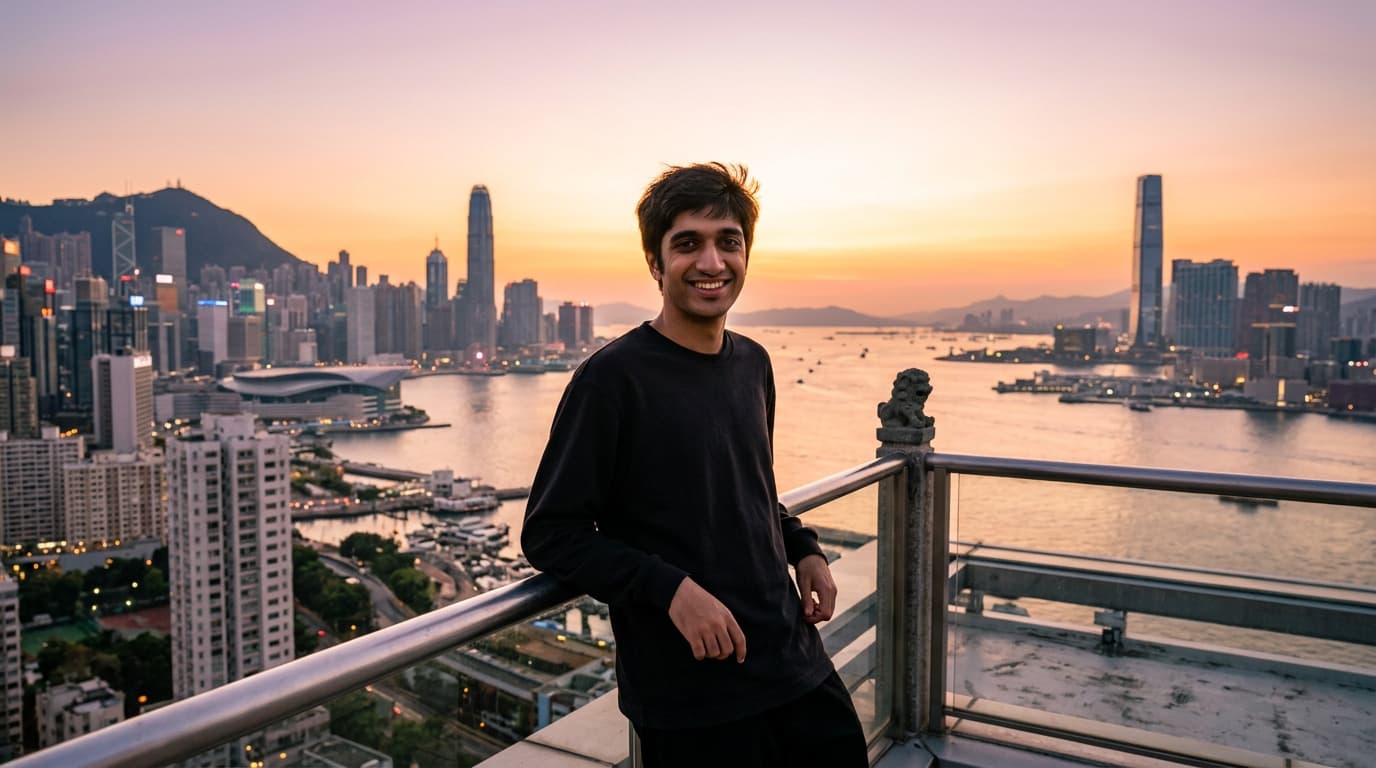
01Beyond the Pitch Deck - The Hong Kong Founder’s Guide to Building an Unstoppable Personal Brand in 2026
If you’re still relying solely on your pitch deck and a half-baked LinkedIn profile to navigate the Hong Kong venture scene, you’re essentially fighting a 2026 battle with 2018 weaponry. Over the last few years, the landscape here in Hong Kong has shifted dramatically. With over 5,200 startups now calling this city home - an 11% jump since last year - the "signal to noise" ratio is at an all-time low. If you aren't visible, you don't exist.
I've seen it firsthand. As a founder building in the tech space here, I can tell you that the Hong Kong market is unique. We sit at the crossroads of the Greater Bay Area's manufacturing and engineering might and the West's financial capital. But that position also means competition is global. In 2026, 70% of professionals believe personal branding is critical, yet only 15% of founders have a documented strategy. That 55% gap is where you win.
This isn't about being "Instagram famous." It's about building technical authority and trust at scale. When a VC or a potential partner Googles your name after a coffee in Central, what do they see? If it's just a placeholder LinkedIn page, you've already lost. Building a brand in this city isn't just about vanity; it's about survival in an ecosystem that is becoming increasingly densified with global talent and capital.
02Why Personal Branding Is the New Venture Capital
In the current economic climate, capital has become more discerning. In 2026, around 2,150 startups in Hong Kong secured venture capital, but the ones that raised the fastest weren't just the ones with the best EBITDA-they were the ones where the founder had a clear, authoritative voice online. Investors are no longer just looking at the product; they are looking at the person behind the product. They want to know if you can lead, if you can attract talent, and if you can command a market's attention.
A personal brand is "trust at scale." It allows you to: 1. Attract Top Talent: In a city where engineers are constantly being poached by Mainland giants or global banks, your vision is your best recruiting tool. When you share your philosophy on engineering culture or your roadmap for the future of AI in the GBA, you're not just speaking to customers-you're speaking to your future CTO. 2. Shorten Sales Cycles: When you're a known entity, the "who is this guy?" phase of a B2B sale is eliminated. If a procurement officer at a major bank has seen your insights on data security, they already have a level of comfort with your expertise. 3. Command Better Terms: Founders with strong brands often see a "valuation premium" because they bring an audience and credibility that de-risks the investment. A brand is a moat that competitors can't easily cross with just a bigger marketing budget.
03The Numbers Don't Lie
Research shows that content shared by employees (and founders) gets 8x more engagement than content shared by brand channels. Furthermore, 82% of people are more likely to trust a company when their senior executives are active on social media. In the Hong Kong context, where Guanxi (relationships) is everything, digital personal branding is simply Guanxi that works while you sleep. We often think of Guanxi as face-to-face dinners in Tsim Sha Tsui, but in 2026, it starts with a thoughtful post that resonates with a peer's problem.
04The 4 Pillars of a 2026 Founder Strategy
Building a brand in 2026 requires more than just "posting more." It requires a system. Here is the framework I use and recommend for founders in the GBA ecosystem. It's designed to be sustainable for someone who is already working 80 hours a week running a company.
051. Document - Don't Create
Vaynerchuk was right about this years ago, but it’s even more relevant now. You don’t have time to be a full-time content creator. You are running a company. Instead, document your reality. Authenticity is the currency of 2026. The more "polished" your content looks, the more people tend to distrust it. They want the raw, real-time insights from someone actually doing the work.
- Sharing a screenshot of a bug you finally squashed and explaining the logic behind the fix.
- Talking about the cultural friction of expanding from Hong Kong into Shenzhen and how you adapted your team's communication style.
- Explaining why you chose one tech stack over another, citing specific performance metrics or developer experience trade-offs.
This "behind-the-scenes" content feels authentic because it *is* authentic. It builds a narrative of a founder who is in the trenches, making hard decisions and learning from them. This level of transparency is what builds deep trust with an audience.
062. The Tech Stack of Authority
In 2026, you should be using AI to amplify your voice, not replace it. I use local LLMs and tools like Hermes to help me structure my thoughts, but the final output is always my own. If you're a technical founder, your content should reflect your technical depth. Don't just say "AI is the future"-show the code.
For example, when I talk about automating our internal market research, I might share a snippet of how we interface with our database to track regional trends:
python
import requests
import os

def get_hong_kong_startup_trends():
    # Constructing a targeted query for GBA tech signals
    # We use this internally to monitor sector-specific growth
    KEY = os.getenv('SUPABASE_KEY')
    URL = "https://qneeqqrerhcjfigqtrci.supabase.co/rest/v1/market_signals"
    headers = {
        'apikey': KEY,
        'Authorization': f'Bearer {KEY}',
        'Range': '0-9'
    }

    # Filter for AI and Fintech sectors in HK/Shenzhen
    # These represent the core high-growth regions in the GBA
    params = {
        'sector': 'eq.AI',
        'region': 'eq.Hong Kong',
        'order': 'growth_score.desc'
    }

    try:
        response = requests.get(URL, headers=headers, params=params)
        response.raise_for_status()
        return response.json()
    except Exception as e:
        print(f"Error fetching signals: {e}")
        return []

# Usage example for a founder's internal dashboard
trends = get_hong_kong_startup_trends()
for trend in trends:
    print(f"Signal: {trend['title']} | Growth: {trend['growth_score']}%")
Sharing actual logic like this separates you from the "thought leaders" who only speak in buzzwords. It proves you understand the "how" as well as the "why."
073. Regional Specificity - The GBA Advantage
Your personal brand should lean heavily into where you are. Hong Kong founders have a perspective that Silicon Valley or London founders lack. We understand the complexity of cross-border data transfer, the nuances of the "One Country, Two Systems" digital economy, and the speed of the Shenzhen supply chain.
Highlight these specific regional advantages. Write about: - The 1-hour living circle: How the high-speed rail changed your hiring strategy. - Regulatory Arbitrage: How you navigate the different legal landscapes of HK versus the Mainland. - The impact of the HKMA’s latest stablecoin regulations or the Cyberport expansion.
This makes you the "go-to" person for a specific intersection of geography and technology. You become the global authority on "AI in the GBA," rather than just another person talking about "AI in general."
084. Consistency Over Intensity
It is better to post one high-quality, insightful piece once a week than to spam low-value AI-generated "today landscape" posts every day. The 2026 algorithm (and humans) rewards depth.
09The Founder’s Content Flywheel
How do you actually find the time? You build a flywheel that feeds itself.
- The Deep Dive (Monthly): Write one long-form article (like this one) or a technical whitepaper. This is your cornerstone content where you establish deep authority.
- The Deconstruction (Weekly): Break that long-form piece into 4-5 LinkedIn posts. Each post should focus on one specific insight or data point.
- The Real-time Pulse (Daily): Spend 15-20 minutes responding to comments or reacting to news in your industry. This keeps you visible and humanizes your brand.
This approach ensures you are covering the full spectrum of the "trust funnel": Awareness (daily interactions), Consideration (weekly insights), and Authority (monthly deep dives).
10Handling the "Hong Kong Humble" Trap
There is a cultural tendency in Hong Kong to keep one's head down and work hard. While a great trait for execution, it’s a terrible trait for branding. There is a fine line between arrogance and authority.
Authority is saying: "We solved this problem using X, here's how you can too." Arrogance is saying: "I am the best at X, no one else comes close."
Focus on being helpful. If your content helps another founder avoid a mistake or gives an investor a new way to look at a sector, you aren't "bragging"-you're providing value. This "servant leadership" approach to content is how you build a brand that people actually want to follow. It’s about contributing to the ecosystem rather than just trying to extract from it.
11Common Pitfalls to Avoid in 2026
I see founders make the same three mistakes constantly. Avoiding these will put you ahead of 90% of the field: - Using Generic AI Output: If I see one more post starting with "In the changing fast digital landscape...", I'm going to lose it. AI should be your research assistant, not your voice. If a post doesn't sound like you're talking over a coffee in SoHo, don't post it. - Ignoring the Network: Getting views on your post is only half the battle. The real magic happens in the DMs and the comments. That’s where the deals are actually done. If someone takes the time to comment on your post, give them a thoughtful reply. - Lack of Opinion: If you agree with everyone, you are invisible. Have a stance. Maybe you think LLMs are hitting a plateau, or maybe you think Hong Kong's role as a financial hub is shifting towards a tech-first hub. Pick a side and defend it with data. Controversy, when backed by logic, is a powerful magnet for attention.
12Your Personal Strategic Moat
In late 2025, I spoke with a series of angel investors at an event in Cyberport. They all said the same thing-they were no longer just betting on the horse or the jockey; they were betting on the jockey's ability to attract the stable. In technical terms, your personal brand is your customer acquisition cost (CAC) reducer.
As a founder, your time is your most precious resource. But if you spend 100% of your time on building the product and 0% on building the distribution channel for that product, you are leaving your success to chance. A founder's brand is often the first "channel" that actually works for an early-stage startup.
13The Network Effect of Being Known
When you have a strong personal brand, the network effects start to kick in. This is where the work you did in the first 12 months starts to pay compound interest. 1. The inbound effect: Partnerships, speaking gigs, and even acquisition offers start coming to you instead of you hunting for them. 2. The authority effect: You are invited to advise or speak at events like the Hong Kong FinTech Week, which further cements your brand in the minds of key stakeholders. 3. The hiring effect: The best talent wants to work with individuals they respect and learn from. Your brand becomes a talent magnet.
In Hong Kong, where the tech ecosystem is incredibly tight-knit, these effects are magnified. One viral post on LinkedIn can lead to a meeting with the head of innovation at a major bank or a top-tier VC who was previously "unavailable."
14Bridging the Gap between HK and the GBA
One of the most valuable angles you can take as a Hong Kong founder is your role as a bridge. The Greater Bay Area is a $1.9 trillion economy. But it’s also a complex one with different regulatory environments, different consumer behaviors, and different technical standards.
If you can position yourself as the person who understands how to bridge the gap between HK's legal/financial framework and the Mainland's technological scale, you become indispensable. - Share your experiences with the HK-SZX cross-border collaboration zones. - Talk about the "H-share" market versus the local tech grants. - Discuss the practicalities of setting up a development team in both cities.
This level of insight is rare. It’s what makes your brand unique and high-utility for anyone looking to enter or understand this massive market.
15Why 2026 is the Year of the Transparent Founder
The "polished" corporate executive is a relic. Today, people want transparency. They want to know your failures as much as your successes. In 2026, vulnerability is actually a signal of strength. It shows you are confident enough in your journey to show the messy parts.
- Did a server migration go wrong and bring down your service for 4 hours? Write about the post-mortem and what you changed.
- Did you lose a major client to a competitor? Share what you learned about your product-market fit.
- Are you struggling with work-life balance in the high-pressure environment of HK? Be honest about the mental health challenges of being a founder.
This vulnerability builds a human connection that a corporate press release never could. It turns followers into advocates.
16Implementing your First 30 Days
If you're starting from scratch today, don't try to build a 2500-word content strategy on day one. Here's a manageable plan:
- Week 1: Digital Audit. Update your LinkedIn, X, and personal website. Ensure your "tagline" is a clear value proposition, not just your title. "Building the first AI-native SEO engine for the GBA" is better than "CEO at Startup X."
- Week 2: Niche Identification. Identify three specific topics you are an expert in. Not "AI," but "Fine-tuning Small Language Models for Cantonese dialect."
- Week 3: Active Engagement. Spend 15 minutes a day commenting on five posts from other leaders in the HK ecosystem. Don't just say "Great post!" Add a counter-point or an additional piece of data.
- Week 4: The First Authority Piece. Publish your first "Authority" piece-a 500-word post about a specific challenge you've overcome. It doesn't have to be perfect. It just has to be uniquely yours.
17The Future of Founder Brand Equity
As we look toward 2030, the line between "personal brand" and "business brand" will continue to blur. Your reputation is portable. Even if your current startup fails, your personal brand remains. It is your "career insurance."
In Hong Kong, we have the infrastructure, the talent, and the location. What we often lack is the vocal leadership that tells the world what we are building. The world sees the tech hubs of Silicon Valley and Bangalore, but they often overlook the depth of what’s happening in the GBA. By building your brand, you aren't just helping yourself; you're helping put Hong Kong tech on the map.
Be that leader. Start documenting your journey, share your technical insights, and build a brand that reflects the ambition of the company you are building.
The best time to start was two years ago. The second best time is now. Don't wait for your product to be "perfect" before you start talking. The conversation is part of the product development process.
18Statistics Summary for Founders in 2026
- Startup Count: Over 5,200 startups in HK (11% YoY growth).
- VC Density: 2,150+ startups funded in 2026.
- Trust Gap: 70% of respondents say personal branding is important, yet only 15% report having a clearly defined strategy.
- Engagement Performance: Content shared by founders gets 8x more engagement than brand channels.
- Trust Factor: 82% of people are more likely to trust a company when their senior executives are active on social media.
19Frequently Asked Questions
20Should I hire a PR agency for my personal brand?
In 2026, probably not-at least not at the start. Agencies often produce "sanitized" content that lacks the grit and the "soul" of a founder. Use AI tools to help with research and drafting, but the final editorial control should always be yours. Once you're at Series B, an agency can help with distribution, but the content generation should remain close to the source.
21Which platform is best for Hong Kong founders?
LinkedIn remains the undisputed king for B2B, investor relations, and hiring. However, if you are looking for technical talent or are in the consumer space, don't sleep on platforms like X (Twitter) or even specialized communities on Discord/Telegram where the HK tech scene is increasingly active. We are seeing a massive shift toward "private networks" for high-value tech discussions.
22How do I measure the ROI of my personal brand?
Don't look at vanity metrics like "likes" or "shares." Look at the "lagging indicators" of brand strength: - How many inbound messages from Tier-1 VCs you receive per quarter. - How many high-quality candidates mentioned your content during an interview. - The "warmth" of your cold outreach (high-profile people recognizing your name). - Invites to speak at regional events like the StartmeupHK Festival or the GBA Innovation Summit. - The reduction in your sales discovery time.
23What if I'm an introvert?
Building a brand doesn't mean you have to be "loud." It means you have to be "useful." Some of the best personal brands in tech belong to introverts who share deep, technical research or thoughtful, quiet reflections on industry trends. You don't need to be on camera; you just need to be on the record.
*About the Author: Sheryar Shah is a tech founder based in Hong Kong, focusing on AI-driven search and agentic workflows. He is the creator of OpenClaw and Hermes Agent. He believes that the future of the internet is human-centric, even as it becomes increasingly powered by autonomous agents.*
24Deep Dive into the GBA Ecosystem Dynamics
To truly understand why a personal brand is so vital in Hong Kong, we have to look closer at the Greater Bay Area (GBA) dynamics. In 2026, the GBA is no longer just a collection of cities; it's a unified economic engine. As a Hong Kong founder, you are uniquely positioned to navigate both the international financial markets of HK and the rapid prototyping and manufacturing capabilities of Shenzhen and Dongguan.
25The Rise of the "GBA Agentic Founder"
We are seeing a new breed of founder emerge-the "Agentic Founder." This is someone who uses autonomous systems to handle the mundane tasks, freeing up their time to focus on high-level strategy and relationship building (branding). Sheryar Shah’s philosophy, which I’ve iterated on through the development of Hermes Agent, is that every founder should have a digital "twin" that helps them maintain visibility while they are heads-down in code.
#### How to Automate Visibility Without Losing Soul
The key is "Semi-Autonomous Content." You can use a script to scrape your own internal Slack channels for interesting discussions, then use an LLM to draft a LinkedIn post based on those discussions. But the "soul" comes in the final 5 minutes where you add your personal take.
Here is a simple logic for how we track our own technical progress to turn into content:
python
import datetime

def generate_weekly_founder_pulse(achievements, challenges, learnings):
    # This function helps me reflect on the week and prep for content sharing
    print(f"Founder Pulse Report: {datetime.date.today()}")
    print("--- Achievements ---")
    for a in achievements:
        print(f"[POST IDEA] How we hit: {a}")

    print("\n--- Challenges ---")
    for c in challenges:
        print(f"[POST IDEA] Why {c} was a nightmare and how we're winning.")

    print("\n--- Learnings ---")
    for l in learnings:
        print(f"[INSIGHT] One thing I learned that changed my mind about {l}")

# Example of a Friday afternoon reflection
generate_weekly_founder_pulse(
    achievements=["Successful Hermes integration with Supabase", "10k users reached"],
    challenges=["Data latency in cross-border DB calls", "Hiring a lead frontend dev"],
    learnings=["RAG is better than fine-tuning for this specific use case", "Central is better than TST for office space"]
)
Running a simple "Pulse" check like this once a week gives you enough raw material for 3-4 high-value posts. It ensures you never have "writer's block" because you are just reporting on what happened.
26The Cultural Nuance of Asia-Pacific Branding
Personal branding in the West often focuses on the individual's "hero journey." In Asia, and specifically in the Hong Kong/China context, it's often more effective to tie your personal brand to the "collective progress."
When you share an insight, don't just say "Look what I did." Say "Here is how our ecosystem is evolving and how we can all adapt." This aligns with the "Guanxi" culture-it's about mutual benefit. Your brand becomes a hub for sharing knowledge that helps the entire community grow. This is particularly resonant in the HK startup scene, where there is a strong sense of "us against the world" given the unique geopolitical pressures.
27Why 70% of Respondents Agree, yet only 15% Act
This statistic from the 2026 branding reports is a massive opportunity. The reason 55% of your competitors aren't acting is simple: Fear of Judgment.
Founders in Hong Kong often fear that if they post something and it doesn't get 1000 likes, they will "lose face." Or they fear that if they talk about a failure, investors will run away. In reality, the opposite is true. In 2026, investors are more scared of the founder who claims everything is perfect. Authenticity is the ultimate de-risking strategy.
28Advanced Strategies for the Technical Founder
If you are a CTO-turned-CEO, your brand is your superpower. Your ability to bridge the gap between "Business Value" and "Technical Execution" is incredibly rare.
- The Developer Experience (DX) Angle: Talk about how you built your team's culture. In a talent-starved market like HK, this is your best recruiting tool.
- The Architecture Angle: Explain how you built a scalable system. This attracts technical investors who understand the "moat" of a well-built technical foundation.
- The Open Source Angle: Contributing to or creating open-source projects (like OpenClaw) is the ultimate technical personal brand. It's a "live resume" that never expires.
29Conclusion - Leave the Shadow of your Company
Your company is a vehicle, but you are the driver. Vehicles can change-I've seen many founders in HK pivot three times before hitting a home run. But the driver's reputation is consistent. By building a brand that is independent of your current company's success or failure, you are building a lifetime of optionality.
In the fast-moving tech environment of the Greater Bay Area, your personal brand is the stable anchor in a sea of constant change. It’s what ensures that when you move on to your next big thing, the market is already waiting for it.
The question isn't whether you have a personal brand-you already do. Every time you speak at a meetup or send an email, you are branding yourself. The question is whether you are going to take control of that brand or let the market define it for you.
Choose to take control. Start today.
--- *Sheryar Shah's guide for the next generation of Hong Kong tech leaders.*
Filed under
hongkongpersonalfounderbrand
Keep reading
More essays on AI growth, SEO & the web.