All writing
SEO14 min read
The Beginner's Guide to Local SEO in Hong Kong
The Beginner's Guide to Local SEO in Hong Kong — a practical guide for Hong Kong businesses.
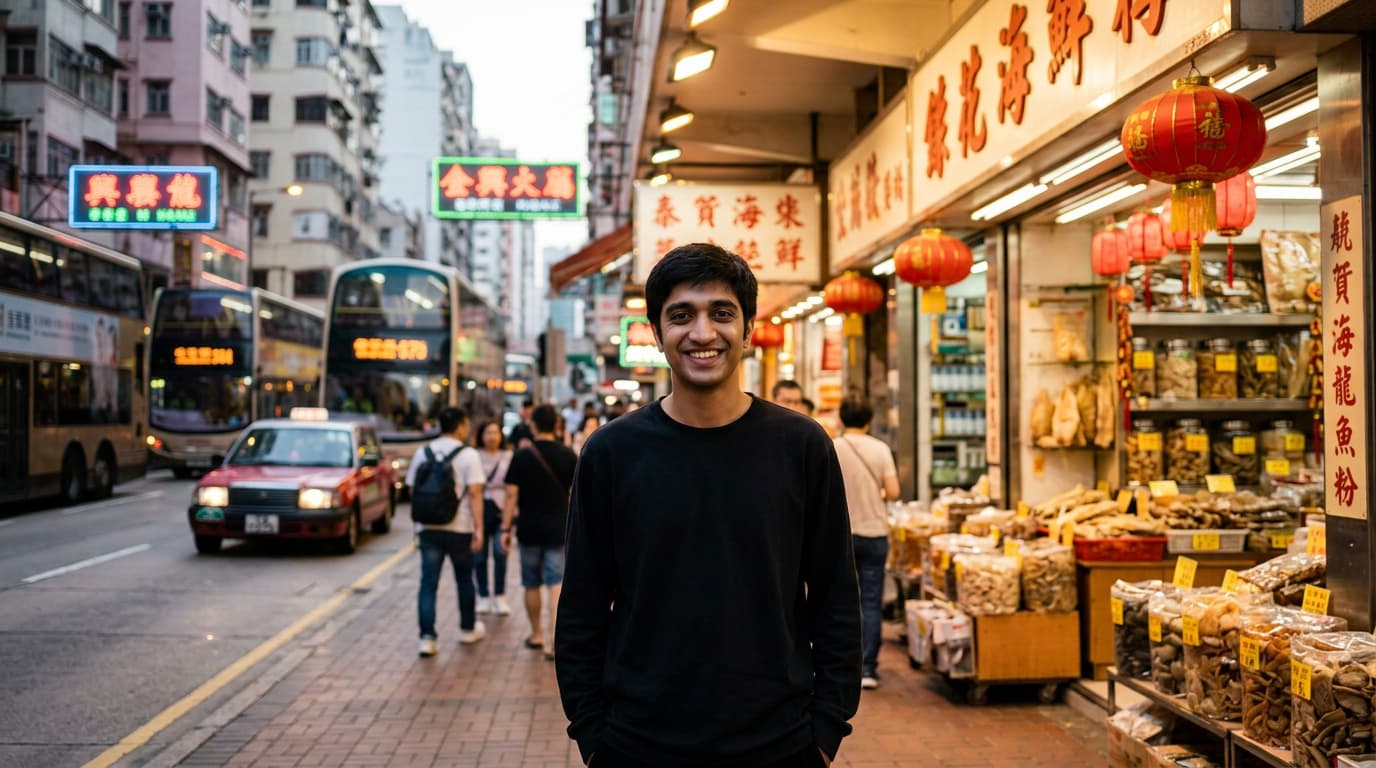
With a mobile connection rate of 235% and 100% of the population living in dense urban pockets, Hong Kong is arguably the most hyper-local digital market on the planet. For a business operating in Central, Tsim Sha Tsui, or Causeway Bay, "search" isn’t just a research tool-it’s the digital equivalent of a shopfront window on Queen’s Road Central, visible to millions who are rarely more than 500 meters away from your front door.
02Why Local SEO is Different in the Fragrant Harbour
Most SEO advice you read online is written for the American or European markets-huge landmasses where "local" might mean a 20-mile radius. In Hong Kong, "local" means the difference between being on the 3rd floor of a commercial building in Mong Kok versus the ground floor of a luxury mall in Admiralty. The density here creates a unique search environment.
When someone searches for "best coffee near me" while walking out of the MTR, Google’s proximity algorithm is pushed to its absolute limits. If your Google Business Profile (GBP) isn't precisely calibrated to your specific street and district, you might as well be in another country. In a city like Hong Kong, where time is the ultimate currency, "close" doesn't just mean physical distance-it means "easily accessible from the nearest MTR exit."
In my experience building and scaling operations here, I’ve seen businesses lose 40% of their foot traffic simply because their "Openrice" tags were inconsistent with their "Google Maps" data. Hong Kongers are busy, impatient, and mobile-reliant. If they can’t find your entrance in under 30 seconds of scrolling, they’re going to your competitor two blocks away. They won't call to ask for directions; they'll just move on to the next pin on the map.
03The Vertical Challenge - SEO for a High-Rise City
One of the most overlooked aspects of Local SEO in Hong Kong is the vertical nature of our real estate. In London or New York, a business is usually on the ground floor. In Hong Kong, a world-class dental clinic might be on the 22nd floor of a building in Central, while a hidden gem of a sneaker shop might be on the 7th floor of a Tsim Sha Tsui commercial block.
Google Maps was originally designed for a 2D world. While it has improved with indoor mapping and "Live View," it still struggles with verticality. To win here, you must be explicit in your addressing.
04Strategy for Up-Stairs Businesses
If your business is located in a high-rise building, your SEO needs to combat the "ground floor bias."
- Floor and Suite number: Never leave these out. They should be in your GBP, your website footer, and every citation.
- Building Name: In HK, buildings often have more brand recognition than addresses. Everyone knows where "The Landmark" or "International Commerce Centre" is, but many might struggle with the street number.
- Visual Cues: Use your GBP photo gallery to show the building entrance and the directory board. This reduces the friction of a user entering a building they aren't familiar with.
- Landmark Associations: Phrases like "Next to the HSBC Main Building" or "Opposite MTR Exit B1" are gold for both users and search crawlers.
05The Pillars of Hong Kong Local SEO
To dominate the local landscape in 2026, you need to understand that Google isn't just looking at your website. It’s looking at a constellation of signals that prove you are a legitimate, high-quality, and physically present entity in Hong Kong.
061. Google Business Profile (GBP) Mastery
This is no longer optional. With 46% of all searches now having local intent, your GBP profile is often more important than your homepage. In Hong Kong, this means more than just a phone number.
- Precise Pin Placement: Given our vertical architecture, ensure your pin is exactly where the entrance is.
- Attributes: Use HK-specific attributes like "Octopus Card accepted" or "Close to MTR" if applicable.
- Regular Updates: Post photos of your storefront. In a city that changes as fast as HK, users need to see that your shop still exists and looks the way it does in the photos.
- Google Posts: Use these to show your current promotions. Hong Kongers love a good deal. If you have a happy hour in Soho, post it on GBP every week.
072. Traditional vs. Simplified Chinese vs. English
We live in a trilingual hub. While English is the language of business, Traditional Chinese is the heartbeat of local search.
Many businesses make the mistake of only using English. But think about the user behavior: a local residing in Sha Tin is likely searching in Traditional Chinese. A Mainland tourist visiting for the weekend is searching in Simplified Chinese. An expat in Mid-Levels is searching in English. To capture all three, your Local SEO strategy must be multi-lingual.
083. The OpenRice Factor - The King of HK Local Search
You cannot talk about Local SEO in Hong Kong without discussing OpenRice. For F&B businesses, OpenRice is often the primary discovery engine.
Google knows this. Google actually crawls OpenRice data and integrates it into his Map results. If you have a 4.5 rating on OpenRice but a 3.0 on Google, Google might show "Reviews from around the web" to bridge the gap. - Optimization Tip: Ensure your OpenRice categories match your Google Business Profile categories. - Consistency: Your phone number and address Must be identical on both platforms. Discrepancies lead to "trust" issues in the algorithm.
09Comparison - Local SEO vs. National/Global SEO
| Feature | Local SEO (Hong Kong) | Global/National SEO |
|---|---|---|
| Primary Goal | Foot traffic & Local Calls | Online Traffic & Brand Reach |
| Search Intent | Immediate (within 24 hours) | Research-oriented |
| Key Platform | Google Maps / OpenRice / Yelp HK | Google Search / Bing / DuckDuckGo |
| Main Signal | Proximity to user (MTR distance) | Domain Authority / Content Depth |
10The Data Behind the Strategy - Hong Kong 2026
Looking at the digital landscape of 2026, the numbers tell a compelling story. Internet penetration in Hong Kong is at 96.8%. But here’s the kicker: mobile connections are at 283% of the population. Everyone has multiple devices, and they are constantly "pinging" local towers.
According to 2026 projections: - 76% of people who search for something nearby visit a business within 24 hours. - 28% of those searches result in a purchase the same day. - 87% of consumers read online reviews before choosing a local business.
When we look at ranking factors, the weights have shifted significantly toward "Real-World Signals":
- GBP Signals (32%): Your proximity to the searcher remains the #1 factor. This is why having multiple locations-if you can afford it-is the ultimate Local SEO hack.
- On-Page Signals (19%): Having your district (e.g., "Wan Chai") in your H1 and Meta tags is critical.
- Review Signals (16%): Google is getting smarter at detecting fake reviews. In HK, reviews that mention specific MTR exits or nearby landmarks (like "The HSBC Building") are treated as higher-quality signals of authentic local experience.
11District-Specific Strategies - Not All Neighbourhoods are Equal
In Hong Kong, your SEO strategy should change based on the district you are targeting.
12Central & Western - The B2B and High-End Hub
In Central, target keywords are heavily English-skewed but competition is fierce. Here, "Professionalism" and "Efficiency" are the key hooks. Your GBP photos should look pristine. Reviews should emphasize "punctuality" and "expertise." Backlinks from business journals and LinkedIn are more valuable here.
13Mong Kok & Sham Shui Po - The High-Volume Local Market
Here, Traditional Chinese is king. People are looking for value, local favorites, and "hidden gems." Your content should be more casual and frequent. Focus on high-review volume. Even a 4.2-star rating can be a killer if you have 1,000+ reviews compared to a 4.8 with only 10 reviews.
14Causeway Bay - The Retail Battlefield
It’s all about visual discovery. If you are in retail or F&B in Causeway Bay, your Local SEO must be backed by a strong Instagram strategy. Geotags are your best friend. Google often shows "Pictures from the web" in the map results-highly aesthetic photos of your products tagged in CWB will help you stand out in the map pack.
15The Psychology of the Hong Kong Searcher
To effectively optimize, you must understand the mind of the person holding the smartphone. A searcher in Hong Kong is usually in one of three modes:
1. The "Immediate Need" Mode: This is the person standing on the street corner. They need a "tailor" or a "printer" or "sushi" *now*. They are looking for the top 3 results in the Map Pack. They don't scroll past the first page.
2. The "Reservation" Mode: This usually happens at the office or on the MTR home. They are planning for the weekend. They look at photos, they read reviews carefully, and they check the "Book" button. If you don't have an integration with platforms like SevenRooms for direct booking, you’ve already lost them.
3. The "Discovery" Mode: Driven by social media trends. They see a video on Instagram about a "secret cafe in Kennedy Town." They then go to Google to find the exact location and the "Best time to visit" (popular times feature).
16Modern Local SEO - Voice Search and AEO
Artificial Intelligence is changing how local results are served. "Answer Engine Optimization" (AEO) is the new frontier. Searchers are moving away from typing "Italian restaurant Soho" and starting to ask their AI assistant: "Where's the best place for a quiet business lunch in Central with vegan options and good Wi-Fi?"
17Cantonese Voice Search
One of the unique challenges in HK is Cantonese voice search. Cantonese is a spoken language that differs from written Traditional Chinese. However, Google’s voice recognition for Cantonese is surprisingly good. People often use voice search when they are driving or carrying bags. They use long-tail queries: "Where can I buy the best egg tarts?". If your website content is too formal and only uses written "literary" Chinese, you might miss out on these conversational queries. Incorporating "conversational" sections or FAQs on your site that use common spoken phrases can give you an edge in voice discovery.
18Local Link Building - The HK Ecosystem
In traditional SEO, you want links from high-authority domains like Wikipedia. In Local SEO, you want links that prove you are part of the Hong Kong community.
19Where to get local links -
- University Alumni Directories: If you or your founders went to HKU, CUHK, or UST, get a link from the alumni business directory.
- Charity Donations: Support local charities like HandsOn Hong Kong. They often have "supporter" pages.
- Local Industry Associations: The Hong Kong Retail Management Association (HKRMA) or the American Chamber of Commerce in Hong Kong.
- Local Guest Posting: Write for sites like Lifestyle Asia HK or Sassy Hong Kong. A single link from Sassy can drive more qualified local leads than ten links from global tech blogs.
20Multi-Location Strategy for HK Brands
If you are a manager for a chain-say, a bubble tea shop with 15 locations across the MTR network-your Local SEO challenge is maintaining consistency without being "spammy."
- Individual Pages: Each location needs its own landing page on your main website.
- Unique Local Content: Don't just copy-paste the same text. Mention the specific MTR exit for each shop. Mention the specific "Lunch Specials" that might only exist in the industrial areas like Kwun Tong.
- Local GBP Management: You must claim a separate GBP for every physical store. Managing these at scale is difficult, but necessary.
21Technical SEO - Schema and Mobile Performance
22The JSON-LD Essential
You should be using JSON-LD schema markup to tell search engines exactly what you are. For a Hong Kong business, this means:
- @type: LocalBusiness or a more specific one like Dentist, Restaurant, or LawOffice.
- geo: Latitude and longitude. This helps Google pin your location even if the textual address is complex.
- areaServed: Define your service area by districts (e.g., "Kowloon", "New Territories").
- priceRange: Highly relevant for the HK consumer.
23Site Speed and the "Mobile-First" Mandate
With a 96% internet penetration and a population that spends hours on the MTR every day, your site must load instantly on mobile. 53% of mobile users abandon a site if it takes more than 3 seconds to load. In the context of "Near Me" searches, that abandonment is often permanent. They will simply click the next result in the map pack.
24Case Study - The "Kennedy Town" Effect
A few years ago, when the MTR extended to Kennedy Town, the "Local SEO" landscape of the district changed overnight. Businesses that were previously "local secrets" suddenly faced a surge of search intent from people in Central and Tsim Sha Tsui looking to explore the "new" western district.
The businesses that won were the ones that: 1. Updated their GBP to show they were "3 mins from Kennedy Town MTR Exit C." 2. Engaged with "Western District" groups and forums. 3. Optimized for keywords like "Pet-friendly cafe K-Town."
This shows that Local SEO isn't static. It moves with the infrastructure of the city. As new developments arrive (like the Northern Metropolis or Kai Tak), the local search landscape will shift again. If you aren't monitoring these trends, you're falling behind.
25The Roadmap to Local Dominance
If you are just starting, here is your 90-day checklist:
Days 1-30: Foundation - Claim and fully optimize your Google Business Profile. - Audit your NAP (Name, Address, Phone) across the web. Fix every inconsistency. - Implement Local Business Schema on your website. - Take high-quality photos (Interior, Exterior, and Street View) and upload them.
Days 31-60: Content and Language - Create dedicated pages for each district you serve. - Translate your core service pages into Traditional Chinese. - Start a review acquisition campaign with your existing customer base. - Setup Google Search Console to track which "local" keywords are actually driving traffic.
Days 61-90: Authority Building - Reach out to 3-5 local Hong Kong websites for guest posts or citations. - Start posting weekly updates/photos to your GBP. - Monitor your "Local Map Pack" rankings for your 10 most important keywords.
26Conclusion - Start at the Street Level
Local SEO in Hong Kong isn't a "set and forget" task. It's a continuous process of proving to Google-and your customers-that you are an active, reputable, and accessible part of the local community. In a city as dense and fast-paced as ours, your digital footprint is often the only thing that separates you from being globally ignored or locally dominant.
Success here requires a mix of technical precision (Schema, Hreflang), cultural attunement (Traditional Chinese, Local Slang), and sheer persistence in review management. You need to think like a commuter on the MTR: "Is this information clear? Is it accurate? Can I get there easily?"
If you’re looking to scale your digital presence in Hong Kong and want to move beyond basic SEO into a strategy that actually drives revenue, let’s chat. We specialize in working through the unique complexities of the HK market, from the "Vertical SEO" of Central to the high-volume discovery of Mong Kok.
Visit sheryarshah.com to learn how we help businesses dominate the Hong Kong market and turn search intent into real-world foot traffic.
*About the Author: Sheryar Shah is a Hong Kong-based founder and digital strategist focused on helping local and international brands navigate the complex digital landscape of North Asia. With a track record of scaling businesses in one of the world's most competitive markets, he brings a practical, "street-level" perspective to digital marketing.*
27Expanding the Research - Real-World Data Points
When we look at the Digital 2025 report for Hong Kong, we see some fascinating trends that directly impact Local SEO. For instance, the population is aging, with the 65+ bracket being the largest (23.7%). This means accessibility information in your Local SEO (e.g., "Wheelchair accessible") is becoming more than just a nice-to-have; it's a critical ranking and conversion factor.
Furthermore, while TikTok has a massive growth rate (+101%), LinkedIn remains the primary B2B channel with a 51.4% reach. If your local business serves other businesses (like a catering company or a commercial cleaning service), your "local" authority is built on LinkedIn as much as it is on Google Maps.
The internet speed in HK is among the fastest in the world, with median fixed downloads at 302 Mbps. This sets a high bar for your site's performance. "Fast" in HK means something different than "fast" in London. If your local landing page takes 2 seconds to load on a 302 Mbps connection, the user will perceive it as a technical failure.
28The Future of Local SEO in 2027 and Beyond
As we peer into the future, the integration of Augmented Reality (AR) with Local SEO is the next massive shift. Imagine a user walking down Nathan Road, looking through their "Apple Vision" or smart glasses, and seeing your GBP rating floating above your shop.
This isn't science fiction; Google is already testing "Live View" for Maps. Your Local SEO strategy needs to account for visual discovery. This means: - Consistent Exterior Branding: Your physical shopfront must look like your GBP photos so the AR can recognize it. - Product Inventory Integration: Using tools like "See What's In Store" (SWIS) to sync your real-time inventory with your local search profile. - Micro-Location Accuracy: Getting your shop's location down to the centimeter.
The competitive landscape of Hong Kong reward the meticulous. If you treat Local SEO as a technical checkbox, you will get technical results. If you treat it as a fundamental part of how you welcome people into your business, you will dominate the street level.
In closing, remember that Hong Kong is a city of networks-the MTR network, the social network, and the digital network. Success in Local SEO is about positioning yourself at the center of where those networks intersect. Whether you are a small boutique in Soho or a multi-national firm in the ICC, your local presence is your most valuable asset.
Visit sheryarshah.com to start your journey toward local search dominance.
Filed under
localhongkongguidedigital
Keep reading
More essays on AI growth, SEO & the web.